

Journalism & Creative Writing BA(Hons)
Become a multi-skilled, progressive journalist and writer.
Course overview
Whether you imagine yourself reporting from the front lines or a busy newsroom, penning a commercial script or writing a novel, this course supports you to explore all aspects of written communication to become a distinctive storyteller with sought-after skills.
You’ll explore media-conscious storytelling through creative technologies, from writing for blended realities to the rise of AI, examining the role of writing in how we understand ourselves and our relationship with nature, technology and culture.
You’ll also learn to seek out great stories, research your themes, interview with confidence and write with clarity, mastering the craft of writing in an eclectic range of optional contexts including broadcast media, screenwriting, poetry, magazines, writing for games, romance and science-fiction.
By experimenting with subject and style, you’ll graduate with practical and business skills, professional contacts and a standout portfolio – ready to thrive in today’s multi-channel media landscape.
Why study Journalism & Creative Writing at Falmouth?
- Draw inspiration for your writing from Cornwall’s dramatic landscape, rich folkloric history and unique creative community.
- Combine the rigour of journalism – taking account of legal and regulatory frameworks and ethical considerations – with critical and creative thinking, to develop as a versatile communicator across a range of digital platforms.
- Work in vibrant collaborative spaces including newsrooms, studios and creative workshops, as part of a supportive writing community.
- Learn from an academic team who are also published and award-winning journalists, novelists and poets.
Course details
On this Journalism & Creative Writing degree, you'll have the opportunity to gain a BA(Hons) degree over three years or study Journalism & Creative Writing BA(Hons) with a professional placement option.
You will develop your professional and intellectual skills by exploring journalism and creative writing in a range of contexts and genres, and set up your practice within the creative, ethical and legal frameworks of past and present practitioners.
As you progress, you will learn how to generate fresh ideas through experimentation, write for different readers and publishing platforms, solve problems, collaborate, research both professionally and academically, and promote your work to employers and audiences.
From module information to course aims and assessment criteria, discover the full course details:

| Students collaborated on weekly live radio show The Mouth and with Illustration and Creative Advertising BA students to produce regional newspaper Made in Redruth |

| Students Tia Boddey and Danielle Hutchinson reported from Boardmasters 2025 for Cornwall Live’s digital platforms |
Th first year introduces you to fundamental study, writing, reporting and audiovisual skills, immersing you in the mindset, cultures and methods of journalists and creatives. You will explore a range of writing genres and are then encouraged to break the rules by responding creatively to others’ work. You’ll also learn about the publishing business and explore key issues and trends affecting your work and lives in the digital sphere, such as the impact of AI, online communities and fake news.
Modules
Writing: Craft and Contexts
Explore the practice of writing as a discipline across multiple forms of creative writing.
You will develop your critical skills, strategies for writing to deadlines, and understanding of the cultural context and traditions writers and readers work within. There is a highly practical element to the module, as you create original pieces with constructive feedback from tutors and peers.
Writing Studio
Develop your writing for academic and professional purposes. Learn the fundamentals of academic research, study and writing. Explore reading and writing as tools for creative practice, and develop a persuasive and effective writing style, applying these skills in a wide range of contexts, such as news, social media, and apps. Examine how language shapes the experience of different audiences on different platforms.
News Lab: Multimedia Reporting 1
In the first module on our News Lab strand, you will learn the fundamentals of reporting and news writing, and how to record and edit audiovisual stories. It aims to inspire your curiosity, helping you to understand what news is, how to interrogate digital and real-world sources to generate good story ideas, and how to interview people with confidence.
Breaking the Rules: Remix and Writing Back
A radical and provocative creative writing module which covers remix and writing back in theory and practice. You will be writing about, back to, and from texts of all kinds (including the written, spoken, and visual as well as poetry, fiction and non-fiction). This includes reversionary writing, collage, reviewing, adaptation, pastiche and parody, using texts as source material. You will also consider genre, information content, point of view, tone and context.
Publishing Studio: Technologizing the Word
This module introduces you to a range of publishing and production methods and contexts. You'll design your own project in the studio and choose bespoke training to align to your ambitions. Projects might include book design, zine making, performances, stage shows or exhibitions. You’ll participate in publishing activities, such as typography, binding, curation, exhibiting and event management.
Discovering Digital Cultures
This module provides a framework for understanding media-conscious storytelling through creative technologies. It explores the approaches of content creators, digital story-makers and creative disrupters to social media, brand identity and digital citizenship. You will also explore how blended realities, VR/AR and generative AI are shaping our understanding of the body and the environment.
Your second year explores longer-form writing in a wider range of non-fiction contexts, more complex reporting tasks and specific craft and production contexts. You will also engage in news trends and methods from around the world and take part in more explicitly collaborative work, with a strong focus on transferrable employability skills including pitching and business planning. Creatively, you can develop a specialism with optional modules such as Screenwriting, Poetry and Magic & the Impossible.
Modules
News Lab: Local is Global
Develop your multimedia storytelling skills by exploring stories connected across borders. You will focus your work, individually and collaboratively, around a theme, with resonance both regionally and beyond, exploring through practice journalism’s role in promoting social justice and challenging Eurocentric assumptions about news cultures.
Creative Non-Fiction
Explore how creative, journalistic and critical skills can be used to create essays, interviews, travel writing, reviews, journals, diaries, and biography; areas which until recently were often not seen as creative writing. You will consider how the need to convey factual information can be balanced with the creative potential of language narrative and form, and consider the ethical issues involved.
Making Magazines
Work as part of a team to conceive, plan and create a new magazine with digital and print editions, built on a sound business plan. You will learn about the creative and commercial contexts of magazine production, and the processes involved in planning, funding, distribution and promotion. Using industry-standard software, you will create a prototype edition, taking responsibility for all the editorial and visual content.
Collaboration
This module invites you to work with your peers and external clients to research and realise a collaborative project, applying your skills alongside valuable transferable ones, such as negotiation, problem-solving, teamwork and project management. It uses a Challenge Based Learning (CBL) approach that develops these employability skills and the ability to critically reflect on your professional practice.
Optional modules
Games
Learn the craft of writing for games. How do established narrative techniques apply and adapt to interactivity? What does it mean to write for an active audience and players with agency? You’ll critically consider everything from small indie titles to AAA blockbusters, from mixed reality to immersive, to help you unpack writing and narrative design methods to use in your own games.
Poetry
You will not only write your own poetry, but also give it a context within current practice. Through reading and discussing a wide range of historical and contemporary writing, workshopping your own poems, attending seminars and guest readings, you will be able to show an understanding of contemporary poetry which will help you write, revise and think about your own work.
Satire & Scandal
In 1729 Jonathan Swift advocated that people ‘eat unwanted and poor children’. He was writing satire that showed up poverty and inequality in a brutal, unforgiving light.
Since then, shocking, scandalous and satirical texts have continued this work. This module will examine some of the texts that ripped apart societal taboos and held a light up to hypocrisy and humbug.
Screenwriting
This module introduces you to the craft and creativity of writing for the screen, invluding cinema, television and online. Learning by doing, you will form a Script Development Team, responsible for the development of individual writing projects. You will therefore work in a ‘Writers' Room’ style, common in the industry. As a team member, you will act as script editors as well as writers to see projects through to completion.
Fiction
Explore the craft of fiction, learning about characterisation, narrative structure and building language landscapes. You will study various published works as craftspeople considering how fiction is made. You will consider the varying demands of the short story, the novella and the novel, before taking your work into public contexts, either as submissions to established venues, organised public readings or DIY publications.
Magic & the Impossible
This module explores science fiction, fantasy and contemporary fairytales, focusing primarily on contemporary texts. You will explore representations of the future and the past, in both real and imaginary worlds, and consider them within wider cultural, historical and social contexts. Using a range of conceptual and critical tools, you will evaluate representations of gender, reality, the body, time and place.
Radio & Theatre
Learn to write plays for theatre and radio. You will consider the many aspects of writing for a live medium, including staging, budget, production and audience, and consider how to write for specific venues or companies. For radio, you will investigate the advantages and disadvantages of writing for a ‘blind’ medium, and the very specific relationship between sound and listener.
You can choose to take an optional professional placement after your second year on a three-year programme.
You’ll be responsible for finding your own placement, with support from the Employability team.
Choosing this option will enhance your industry experience and skills while studying.
How you’ll study during your professional placement
You’ll spend time working in a professional context, as part of a business or organisation. This can be in one role, or up to three, and must be for a minimum of 24 weeks.
You’ll develop in-demand workplace skills, deepen your insight into industry and grow your network of contacts, all of which could help you get ahead in your career after graduation.
Throughout this year, you’ll develop a portfolio of work that includes critical self-reflection on what has been learned from the experience. You’ll be required to evidence your experiences, the skills you’ve learned and your professional growth.
Your final year enables you to bring your skills together as you prepare for a career or further study. You will develop your professional portfolio in a live reporting project and deepen your research skills in preparation for a final project, which can be creative or critical. A dedicated module makes your CV, portfolio and online presence career-ready, helping you to find and present work experience and start applying for jobs. Creative options include modules focusing on crime, writing for children and young adults, and works exploring what it means to be human.
Modules
News Lab: Going Live
In this final News Lab module, you will apply your professional, collaborative and digital craft skills in a deadline-driven newsroom, sharing responsibility for organisation, quality and workflow. You will take on distinct editorial roles in a production cycle which will include live video and/or radio outputs, learning the importance of rigorous editing and the creative and commercial imperatives that drive successful production.
How to be Right: Advanced Investigation and Research
The vast quantity of information and data online, along with material from more traditional sources, means journalists and scholars have unprecedented access to resources and tools to process them. Building on the academic and professional skills you have developed, this module helps you to apply a range of methodologies to conduct advanced research in both contexts.
The Springboard
Prepare to step into the world of work by applying the enterprising, organisational and reflective skills which will help you stand out from the crowd in the increasingly complex media, publishing and communications landscape. You will bring together the portfolio materials you have built up during your degree and enhance them with a project focused on enterprise and entrepreneurship, as well as the opportunity to engage in work experience.
Mini-Documentary
Round off your degree with a creative flourish by producing the sort of short, powerful non-fiction film or audio that is proliferating as the world’s most dynamic organisations compete for hearts and minds in the digital age. You will learn how to refine your story idea, tailor it to the audience and pitch the concept, before working under supervision to produce the final documentary and the materials needed to share and promote it.
Dissertation
This module invites you to produce a piece of substantial written academic research on a subject arising from your studies. You will work independently, with academic support, helped by workshops which will help you refresh and expand your research and critical thinking skills, exploring a range of scholarly methodologies and developing your understanding of the conventions of structure, language, tone, citation and referencing associated with academic writing.
Creative Portfolio
Work independently, with academic support, to produce a substantial piece of writing, or a collection of pieces. Workshops will help you refresh and expand your research and craft skills. The genre, form and topic are your choice but will be informed by the culture, disciplines and purposes of your preferences – so can be creative or journalistic in nature. While the core of your project should be written work, complementary other media can be included.
Optional modules
Children and Young Adult
This module examines the market for children and young adult writing, its history and current context, and how such writing might challenge or confirm received ideas about gender or race. We look at some classics, but move quickly to focus on your writing, and the readers of this form: children and young adults themselves. The module includes work with local schools.
Crime and Dark Fiction
Crime remains a big-selling genre in the world of books. Yet the pages of these titles are filled with murder, assault and all kinds of violence and despair. There has been an upsurge in the popularity of horror films recently too and folk horror is again on the rise. This module examines the allure of all things dark, looking at how crime, horror and the monstrous shift and change in representation at different times. What do our darkest fears tell us about ourselves?
Beyond Human: writing in the Anthropocene
The concept of the ‘Human’ is entrenched in political, social and economic assumptions about superiority and power. As we begin to recognise our place in an era that has come to be known as the Anthropocene, this module will examine what role our literatures play in how we understand ourselves. How solid is our ‘humanity’ and where do we draw the lines between inside and outside, self and other, nature and culture? Can we separate ourselves from our technologies?
Writing Romance, Power and Desire
This module will explore a wide range of genres and subgenres that focus on romance, desire, and the erotic (e.g., Mills and Boon, bonkbusters, literary fiction, historical fiction, commercial women’s fiction, confessional writing, Rom-coms, Romantasy, film and TV). You will examine subjects such as theories of desire and questions of consent; sexualities and identities; AI partners and sex robots; the normal and the deviant; race, disability, and the body.
We regularly review course and module content to ensure our students receive a high-quality and rewarding academic experience. As such, there may be changes made to the curriculum which are not immediately reflected in the content displayed on our website. Optional modules may be updated to maintain the best experience. Any students or applicants affected will be informed of approved changes directly.
Our students & graduates

Journalism graduate builds award-winning podcast career
Since graduating from Falmouth, journalism graduate Chris Jones has worked across television, radio and digital, with credits ranging from US political reporting in Washington DC to producing and co-hosting the award-winning podcast American Friction.
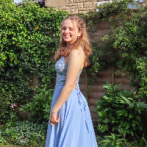
"From day one, we’ve been working on real news stories, pitching meaningful projects and creating industry-standard content. And being able to study Creative Writing alongside Journalism meant I could diversify my education and keep my career options open."
Marla, current student

"The lecturers were instrumental in instilling the drive to work hard and pursue a career in the industry. Without them I might have never known that the publishing sector is the one I’m most passionate about."
Loui, graduate

Students learn from top journalists in London masterclasses
Falmouth University partnered with the John Schofield Trust for the second year to give two of its Journalism & Creative Writing BA(Hons) students the unique opportunity of being mentored by industry professionals.
Read moreStories from our community
Explore student projects, graduate successes, staff news and industry insights

Falmouth animators help researchers tell the truth about much-maligned seagulls
30 October 2026
Seagulls are too often just seen as the pests who steal our ice creams and pasties. But a new projec...

Creative Advertising student sees her healthy eating campaign displayed at local academy
09 October 2026
Earlier this year, students on Falmouth University’s communication courses got the chance to work ...

Online Creative Writing lecturer wins Royal Society Trivedi Science Book Prize
30 September 2026
Earlier this year, Falmouth’s award-winning BA(Hons) Creative Writing (Online) lecturer, science j...

Professional Writing course leader releases new book with The History Press
29 September 2026
For Falmouth’s MA Professional Writing course leader, Dr Luke Thompson, writing about animals is a...

Meet the creative behind Falmouth's new Content Creation & Branding course
28 September 2026
Dr Kirsty Smith has been making things for as long as she can remember. From getting elbow-deep in m...

Communication Design alumna on holding open studio at Cornwall’s archive hub
03 September 2026
Inspired by the archive collection at Kresen Kernow, MA Communication Design alumna Amelia Temple re...

How Online study at Falmouth University helped turn my hometown into my campus
20 August 2026
An online MA in Graphic Design made sense. Flexibility, studying around work, learning from home —...

Business and Creative Writing graduates collaborate to create children’s publishing house
11 August 2026
“We decided if the landscape doesn’t suit us, then we’ll contribute to the landscape directly ...

Why I chose to study Writing for Script & Screen MA (Online)
11 August 2026
I chose the MA Writing for Script & Screen (Online) for a number of reasons. Firstly, it was the rep...

Studying Creative Writing BA(Hons) (Online) at Falmouth
11 August 2026
I’d put it off for so long, the deadline had become a countdown. For years, I’d talk myself out ...

MA Writing for Script & Screen alumna on award-winning period romance and working at the BBC
04 August 2026
“The quality of education I received at Falmouth gives me the belief I can now compete at the high...

Creative alumna on building a career as a freelance editorial writer
31 July 2026
After developing a strong practical foundation during her BA(Hons) Textile Design studies, which was...

Professional Writing graduate wins tourism awards for Falmouth tours
16 July 2026
After completing an MA in Professional Writing at Falmouth, Will Hazell turned his interest in loca...

Finding my way back to study
02 July 2026
So, I found myself on an MA at Falmouth. I didn’t go back into education to become something new. ...

Journalism graduate builds award-winning podcast career
29 June 2026
Since graduating from Falmouth, journalism graduate Chris Jones has worked across US politics, podca...

Award-winning author and creative writing lecturer releases new book The Spirit of Stone
11 June 2026
The Spirit of Stone is the latest publication authored by Falmouth’s Booker-nominated BA(Hons) Cre...

Credit: Tove Martens
AIGA and Falmouth University explore the future of design education in new podcast
02 June 2026
What does design education look like when your peers live across multiple continents, your studio ex...

Creative Advertising alumna on her varied career as creative director and children’s author
28 May 2026
Having seen her debut novel shortlisted for the Waterstones Children’s Book Prize in 2023, MA Crea...

Falmouth University partner with the Chartered Institute of Marketing
12 May 2026
Falmouth University and the Chartered Institute of Marketing (CIM) have signed a progression agreeme...

Award-winning author and lecturer explores what it means to be ‘seaworthy’ in ambitious collaborative project
11 May 2026
What does it mean to be ‘seaworthy’? That is the question at the heart of Booker-nominated autho...
How you'll learn & be assessed
This creative journalism degree features practical and peer-reviewed workshops, lectures, seminars, and self-directed work. You'll get tutor contact time each week, and the chance for frequent one-to-one tutorials.
Your typical week can be any combination of lectures, seminars, tutorials (with a group or individually), demonstrations, practical workshops, and guest speaker events, combined with your own independent study. ‘Independent study’ may include reading, research in the library (on campus or online), meeting your colleagues to plan projects, attending meetings or events with contacts or sources, doing work experience, or producing work in writing or other media in preparation for a coming class or deadline.
Timetabled sessions are predominately on campus, with online conferencing software available for everyone. You will have synchronous and asynchronous online teaching and learning. Your core learning is backed up with guest events, optional off-campus activities and trips and opportunities to network, find placements and pitch your writing and journalism to real publishers and other outlets, including our own platforms.
100% of your assessment will be coursework.
Assessment methods
Giving and receiving feedback is not only vital for your own development but also to help you become an effective professional – especially in the creative industries. This can be challenging, and it is with practice in the supportive environment of the course that this will become second nature and an essential part of your own growth.
The course features a variety of assessment types based on the modules chosen, which could include:
- Portfolio – a selection of your work
- Presentation – a presentation made to a lecturer, class and/or panel
- Report – a formal summary of a project or other activity
- Journal – a reflection on your practice
- Essay – an academic argument addressing a question or a hypothesis
- Practical – an example of your creative or journalistic work
- Case Study – an evaluation of a particular event, person, content, artefact, etc.
- Dissertation – an extended piece of academic writing, longform written or media project
We'll push you to make the most of any outside opportunities, so you can utilise our facilities and support. You'll also gain valuable industry insights from our visiting speakers and Writers in Residence, who have previously included Lionel Shriver, Philip Marsden and Simon Armitage.

Virtual tour
Discover where you’ll spend your time as a student with our 360° tour, showcasing our facilities, accommodation, town and scenery.

Facilities
- The Newsroom, equipped with 30 workstations and state-of-the-art software, including Adobe Creative suite
- The Soundhouse, our dedicated radio studio and podcast facility
- Exclusive use of The Lighthouse, a study and meeting space for School of Communication students and staff
- The Shed, our dedicated study area
- Access to University stores for mobile audiovisual kit, such as video cameras, microphones and portable rigs
- Opportunities to get involved with our dedicated publishing platforms, such as truthfal.com (our newsday ‘sandpit’ site); Fal Writing – falwriting.com and our associated social media platforms

Journalism Facilities
Our industry-level facilities offer everything you need to practice and produce animation, film, TV,...

Library Facilities
Offering extensive collections, our two libraries provide a wealth of digital resources, magazines, ...

Sports Centre
Our Sports Centre, on Penryn Campus, includes a spacious gym with up to 90 of the latest, new statio...
Meet the team
Our staff combine a wealth of experience from the worlds of writing and journalism with active scholarly and professional interests. They include teachers who have worked for the BBC at home and abroad, as editors in the UK regional media, or as writers and publishers across a range of specialisms and genres.

Andy Chatfield
Senior Lecturer in Journalism
Andy studied History at Cambridge University before training as a journalist. He is a former deputy ...

Dr Abigail Wincott
Associate Professor of Audio Journalism
Abigail Wincott is Leverhulme International Fellow at l'Université Paul-Valéry Montpellier, workin...

Steve Bough
Lecturer, Multimedia Journalism
Steve has enjoyed a successful 25 year career in the magazine industry with experience writing and e...

Dr Adrian Markle
Interim Course Leader, BA(Hons) Creative Writing and BA(Hons) English with Creative Writing
After joining the course team in 2019, Adrian became the Interim Course Leader for BA(hons) Creative...

Dr David Devanny
Associate Professor Multimedia Writing & Storytelling
David is an Associate Professor and acting Head of Subject for Writing and Journalism at Falmouth Un...

Martha Dixon
Tutor, Journalism MA (Online)
I am a trainer, podcaster and filmmaker with over two decades of experience working for the BBC. Dur...

Professor Ruth Heholt
Professor of Literature and Culture
Ruth Heholt is an internationally renowned scholar in the fields of Gothic, supernatural, Victorian,...

Dr Jo Parsons
Associate Professor of Popular Literature and Culture
Dr Jo Parsons specialises in popular literature and culture from the Victorian period to the present...

Kevin Bishop
Lecturer, Multimedia Journalism
Kevin Bishop is an broadcast news producer with over 30 years experience in newsgathering. Beginning...

Andy Dillion
Thesis title: Blood Pours Slower than Rye: Representations of the Irish pub in contemporary crime ge...

Dr Eoin Murray
Lecturer, Creative Writing BA(Hons)
Eoin Murray is a Welsh writer, game scripter, and ludo-narratologist from Bangor in North Wales curr...
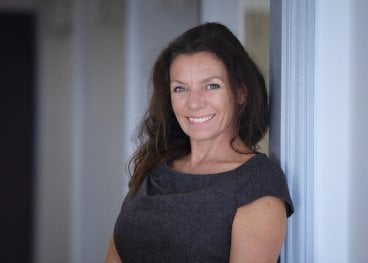
Nicola Coplin
Lecturer
Nic has taught at Falmouth University since 2013. She trained in acting at the Hub Theatre School in...

Wyl Menmuir
Senior Lecturer, Creative Writing
Wyl Menmuir is a multi award-winning author of novels, non fiction and short stories.His 2016 debut ...
Some members of staff only teach on specific modules, and your course might not feature every staff member who teaches on the course.

Got a question about this course?
If you want to know more about the course structure, our application requirements or what our graduates have gone on to achieve, our friendly course team is here to help.
Chat to AndyCareers
Jobs undertaken by recent graduates include:
- Associate Producer for CNN
- Communications Manager
- Marketing Director
- Senior SEO Executive
- Press Officer
- Essayist
- Novelist
- Magazine Editor
- Staff Writer
- Creative Copywriter
- Freelance Writer and Blogger
- Publisher and Marketing Project Manager
- Operations Manager
- Social Media Editor
- Intelligence Analyst

Today’s creative industries are thriving and diverse. Discover the Falmouth graduates whose lives have been shaped by their creativity, explore where a degree at Falmouth could take you and learn about our Employability service.

'The course offered the ideal balance of practical technique and creative nurturing, to allow me to step straight into the world of news media.'
- Nadia Leigh-Hewitson, Graduate and Associate Producer at CNN International
How to apply
| Course route | UCAS code |
|---|---|
| Journalism & Creative Writing BA(Hons) three year degree | 39B5 |
| Journalism & Creative Writing BA(Hons) with professional placement | PY49 |

Application advice & interview information
Go to ToolkitFor starting your studies in 2027
UK applications: 13 January 2027 (for equal consideration)
Applications after the 13 January will be considered on a first-come, first-served as long as there are places available. Apply for this course now.
International fee payers
International fee payers can apply throughout the year. But we recommend applying as early as possible, to make time for visa and travel arrangements.
We consider all applications on their own individual merit and potential.
Our diverse community is creative, innovative and entrepreneurial. We recognise that these qualities aren’t always shown in academic grades alone. That’s why, while many of our applicants achieve high academic grades, we also welcome those who can demonstrate their potential through an interview.
We welcome applications from all subject backgrounds, whether you’ve specialised in STEM, the arts or humanities. Find out more about our Entry Requirements here.
BA/BSc(Hons) three year degree: minimum 96 UCAS Tariff points
BA/BSc(Hons) four year degree with professional placement: minimum 96 UCAS Tariff points
At Falmouth, we'll consider the equivalency of your specific qualifications against our entry requirements and support you through your application journey.
View our International Entry Requirements
Language requirements
For applicants whose first language is English we require you to have or be working towards GCSE English Language Grade 4 (C), or equivalent.
If English is not your first language you will need to meet the same standard which is equivalent to the IELTS Academic 6.0 overall score, with at least 5.5 in Reading, Writing, Speaking and Listening. We accept a range of in country equivalencies and approved tests.
If you need a student visa to study in the UK, you may need to take a recognised language test. You can read our English Language Requirements for more information.
What we're looking for
We want someone who:
- Is enthusiastic and committed, with experience in relevant subjects.
- Has been involved in reporting or writing for a school magazine, personal blog or similar.
- Knows about current affairs and popular culture.
- Consumes fiction and non-fiction, and can comment intelligently on recent news events and on books or articles they have read.
- Shows independence and initiative.
- Has extra-curricular interests, part-time jobs or hobbies.
Similar courses

Creative Writing BA(Hons) (Online)
Whether you dream of penning novels, writing for games, creating compelling digital campaigns or wri...

Media & Communication BA(Hons)
Digital media shapes our society and culture, and needs creative storytellers to drive it forward. O...

Media & Journalism BA(Hons)
This Media & Journalism degree is for creatives who want to combine their passion for writing wi...

English & Creative Writing BA(Hons)
Join a celebration of literature and writing. You’ll read critically and widely, learning about hi...

Creative Writing BA(Hons)
Experiment with all forms of writing to find your passion and develop your writing voice. Explore au...
