Students go live with BBC Radio Cornwall to discuss new literary journal
20 November 2026
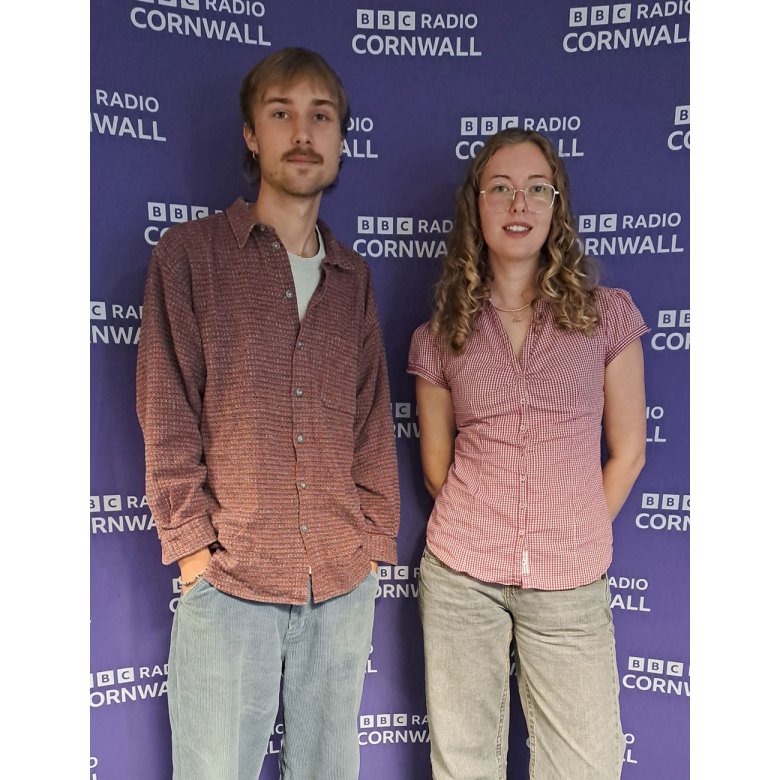
This article has been written by third-year BA(Hons) Creative Writing students, Aidan and Maia, who talk about their experience going on BBC Radio Cornwall to promote The New Cornwall Review, an upcoming literary journal made by Falmouth students.
‘Innovations’ is a third-year BA(Hons) Creative Writing module in which students are tasked with the editing and designing of Falmouth University’s new literary magazine: The New Cornwall Review (NCR). Alongside curating the magazine itself, we have also been involved in marketing the publication — both for readers as well as potential contributors.
Earlier this month, we went on BBC Radio Cornwall with our lecturer Dr Luke Thompson to speak to Julie Skentelbery about our ambitions and creative process for the journal.
Roxette’s It Must Have Been Love was playing when Julie walked out to greet us and take us into the studio, where three portentous microphones were lined up on one side of the table for us. Waiting to be introduced, watching the producers handle the sound board with ease, it was thrilling to be in a simultaneously relaxed and professional environment. Slowly, the music began to fade and the segment was about to begin.
The general theme of the interview was on the viability of printed media in the present day, and how NCR fits into that. Julie began by asking us our inspirations for the journal, as well as whether we thought digital publishing was replacing print. We feel that there is still value in physical media (in fact we feel it is having a comeback) especially as a reaction to AI and an increasingly digitalised world. There are examples of this in Cornwall and nationally, from new independent publishers to booksellers, as well as like-minded readers and writers. This module is a great experience in learning how we can be part of keeping print alive.
Being live on air was more of a relaxed experience than what we initially expected. Julie and the producers were very accommodating for us radio first-timers. But the challenge of being interviewed live — despite being broadcast across the country — is forgetting that you are having a conversation with a normal person. For both of our first times on radio, it was hard not to feel nervous, or like we were saying the wrong thing; but in hindsight it was a great opportunity to see how none of that actually mattered. It’s best to be natural, and to say things as you would normally, especially if you are talking about something you are invested in. Although that is easier said than done, as writers we will always be responsible for promoting our work, and going on air is a great way to do so.
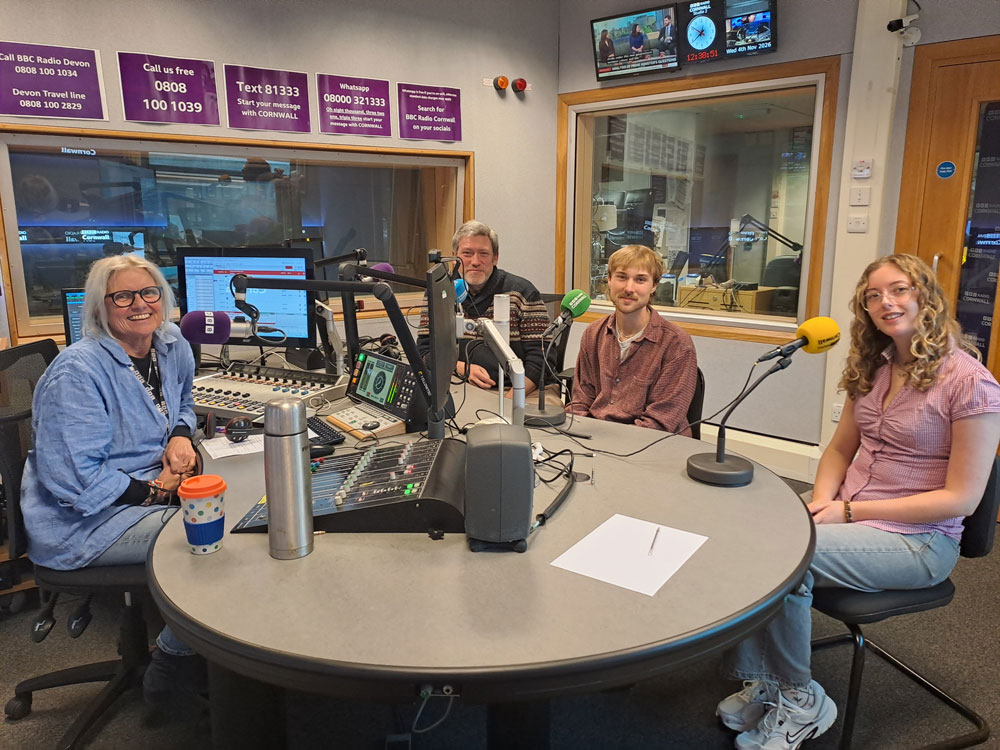
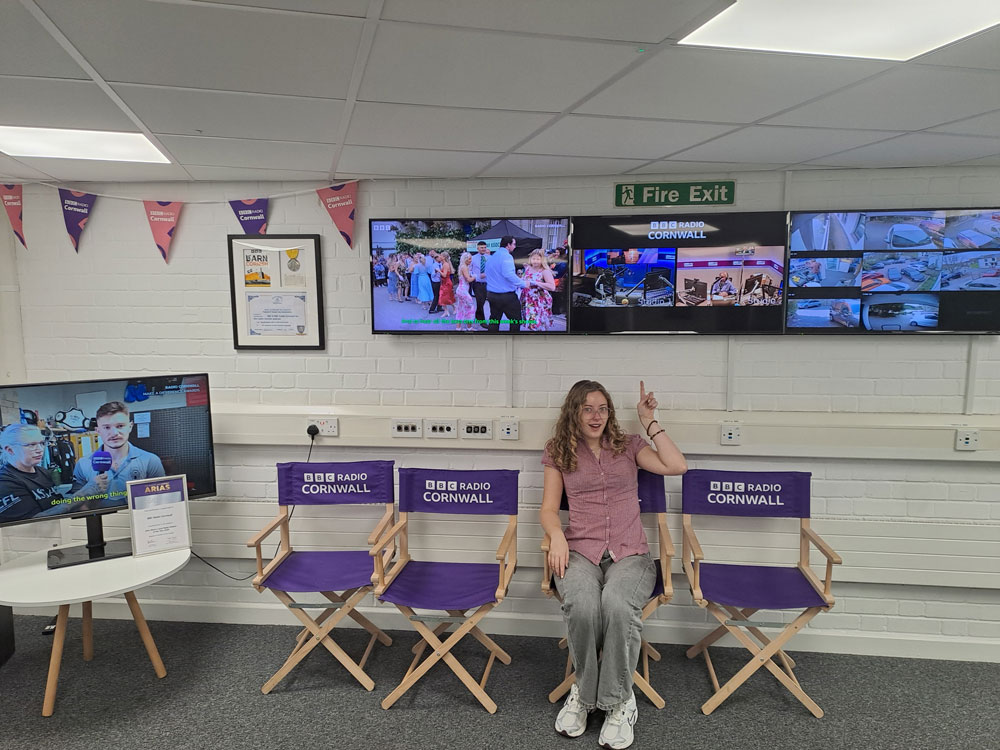
Like printed media, radio isn’t going anywhere anytime soon and seems to be a more human alternative to other forms of marketing. It was a great opportunity to get to understand the broadcasting process more and to be able to utilise it for the advertising of this project. Although neither of us are going to be radio DJs anytime soon, it was fun to see the inner workings of a local radio station, and to meet the people that make it all happen.
As well as marketing on the radio, we have been developing social media accounts for the Journal, in hopes of reaching more readers and writers. We have found success on both Instagram and Bluesky where we post updates about the development process of the journal with reminders to submit writing before our deadline closes.
At the time of writing, we have received over two hundred submissions, all of which we are in the process of reading and deliberating on what we will ultimately want to include – including work from well-known Cornish and National writers. The collaborative elements of the module extend outside of the course as well, as we are working with MA Illustration: Authorial Practice student Scarlet Winter to design a cover for the print edition of the journal.
So far, it has been a great learning experience as well as an opportunity to build professional editing and publishing career skills. We are excited to see how the project progresses over the coming months and to finally see the journal in print in the new year.
You might also like

How a Music Business module turned Arts Council funding into a live gig

Music student secures £23k to bring traditional music and dance festival to Cornwall

Third-year Sound Design student, part-time acoustic consultant

Falmouth animators help researchers tell the truth about much-maligned seagulls
