Falmouth animators help researchers tell the truth about much-maligned seagulls
30 October 2026
By Thomas Wilby, BA(Hons) Journalism & Creative Writing student
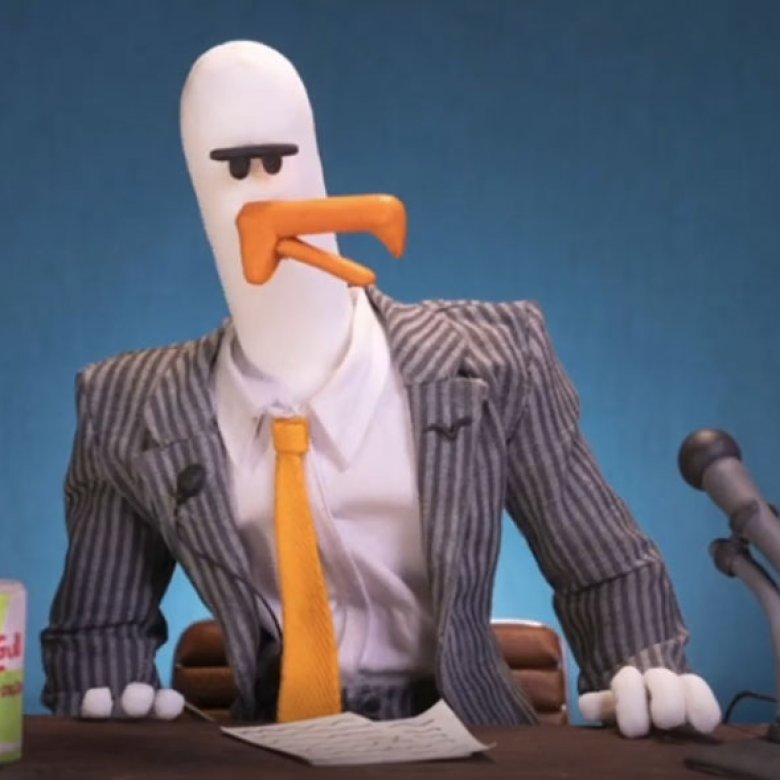
Seagulls are too often just seen as the pests who steal our ice creams and pasties. But a new project involving staff and recent graduates from BA(Hons) Animation aims to challenge the stereotype of the now critically endangered herring gull, to better understand and support their preservation.
Senior Lecturer Katharine Nicholls has helped lead an initiative to generate three short films that use a combination of stop-motion and hand-drawn 2d animation. The animators make use of comedy to help viewers understand the world from the gulls’ point of view, through the character of a presenter called Steven Seagull (geddit?).
The client was Neeltje Boogert, an Ecology and Conservation expert at Exeter University in Penryn, who had seen undergraduate animation work produced from live briefs for real clients. Neeltje decided to use part of a grant from the Royal Society to employ animators to raise awareness of her gull research.
Katharine recruited recent graduates Syd Murphy and Betty Norman to co-direct, herself acting as producer alongside colleagues Rosa Mulaney and Derek Hayes. The creatives were helped by two other graduates, Tim Eweoya and Matthew Hendry, and a stop-motion technician on the BA(Hons) Animation course at Falmouth.
Katharine said the Animation team are really interested in the intersection between the arts and other disciplines. In this case, it meant using animation to “interpret science and change that dull data into something exciting and interesting — something delightfully silly and wonderful”.
She says animation is a great method to communicate complicated messages, including ones from scientific research. “By just making something entertaining, and raising a laugh or a smile or a new perspective that might be delivered in a way that is bizarre, it just engages wide audiences. From very young children to 100-year-olds, everybody engages with good animation.”
The films were first shown to an audience of BA(Hons) Animation and BA(Hons) Post-Production and Visual Effects students in September at a screening event on Penryn Campus, with student feedback sent to Neeltje for analysis as part of her research. They were also shown to an audience of citizen marine scientists at the Marine Recorders Evening with the Cornwall Wildlife Trust in October.
You might also like

Film & TV student on BAFTA scholarship and living with bipolar

Creative Advertising student sees her healthy eating campaign displayed at local academy

Army veteran on returning to education in his 40s to study software engineering

Prosthetic Effects graduand wins global award for World of Warcraft creations
