Meet the creative behind Falmouth's new Content Creation & Branding course
28 September 2026
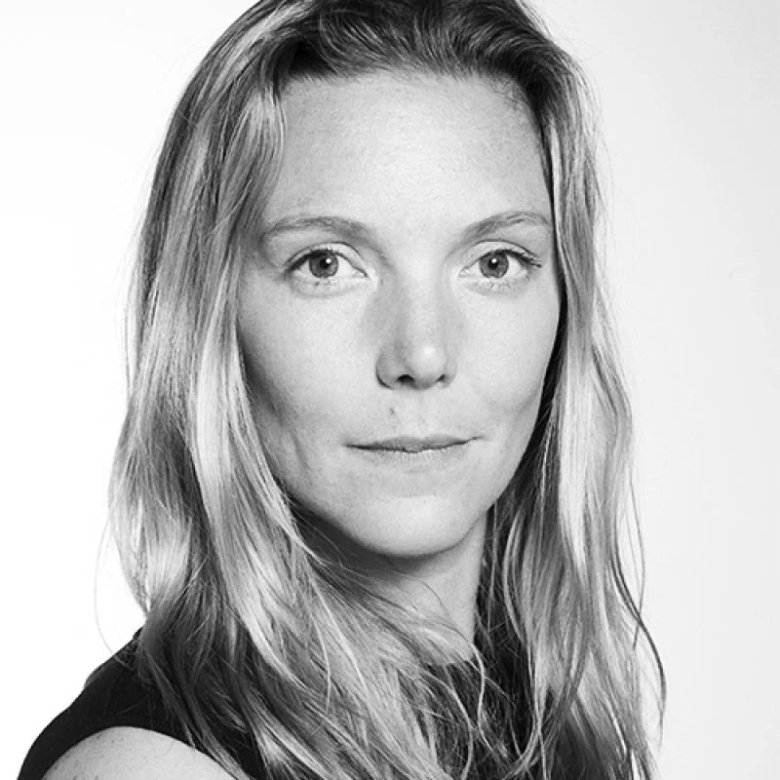
Dr Kirsty Smith has been making things for as long as she can remember. From getting elbow-deep in mud, glue and paint as a child to receiving her first camera from her grandfather, that early curiosity grew into a career spanning photography, fashion, sports and creative direction.
Today, Kirsty is Course Leader for Falmouth’s new BA(Hons) Content Creation & Branding course. Drawing on years of experience working with brands including Nike, Adidas and Vogue, she’s helping students understand what it takes to create content in an industry that is constantly changing. We spoke with Kirsty about her creative journey, the future of content creation and why she believes creativity is a way of thinking, not simply a career path.
When did you first discover your creative side?
For as long as I can remember, you would have found me elbow-deep in mud, glue, paint, whatever I could get my hands on, building something. I love creating. But the moment that really set things in motion was being given my first camera. My grandfather, an engineer and keen traveller, gave me one when I was young. He was the kind of person who took things apart just to understand how they worked, who was endlessly curious about whatever new technology had just arrived and who loved to travel and record his visits to other countries. That curiosity rubbed off on me. Looking back, that's the moment I got hooked, not just on taking pictures, but on the whole idea of capturing a moment, still or moving, and understanding the tools that let you do it.
A selection of Kirsty's work can be found below.
What was the first project you worked on that made you realise you wanted to pursue a career in content creation?
I've been making what we now call "content" for decades, long before that word meant what it means today. My photography ended up in campaigns and editorials and fed my academic research into media itself. Along the way I got to work with people who genuinely shaped fashion and sports media and moulded how I think about this career, as the industry shifted underneath us from analogue to digital media.
The real turning point came in the early 2000s. Being a photographer suddenly wasn't enough. Clients started asking for more: digital platforms, marketing strategy, a different way of thinking. That felt completely alien at the time but is second nature now. I've always thrived on being challenged, so instead of resisting that shift, I leaned into it and built new skills around it. These days I work with brands on campaigns that run across multiple platforms, both still and moving image. It's exciting to think about where the next twenty years will take this industry, because if the last twenty are anything to go by, it won't stand still.
What are you most excited about in leading Falmouth's new BA(Hons) Content Creation & Branding course?
I love media, and I love working with brands; every client brings their own view of the world to the table, and there's real passion behind that. This course is about giving students the chance to properly understand what that looks and feels like from the inside, what it takes to shape a brand's vision, to take an idea and run with it, and to build the visuals, graphics and text that pull a story together.
We're in a highly technological moment, and that means constantly asking what's next for content, testing ideas, forming hypotheses and learning from what's worked (and what hasn't) in the past. It's a challenging, exciting industry, and I want this course to carry that same energy. It’s great to be leading a course that genuinely reflects what the industry needs and what young people are looking for.
With extensive experience in teaching creative subjects, why do you think young people should invest in a creative degree?
Through no fault of its own, creativity often gets treated like the "soft" option, something separate from the serious business of the world. I don't see it that way. Creativity isn't just making things; it's a way of thinking about and visualising the world around you. It lets you see things from other people's perspectives, question the past and imagine the future differently.
More of Kirsty's work can be found below.
I think humans need that kind of space, instinctively. Room to express themselves and think freely. Studying a creative degree isn't only about becoming a content creator, a photographer, a painter or a designer. It's about giving yourself the time to properly understand the role creativity plays in decision-making, policy and in shaping what comes next. Some of the sharpest thinkers and inventors of our time got there because they valued thinking creatively and outside the box. I want those who study with us to have access to that same way of thinking, because it matters far beyond the studio.
Of all the roles available in today's content creation industries, can you name a few you think are most exciting? Or any new ones that you think will emerge?
It's a genuinely exciting time to be looking at roles in this industry, because half the job titles I'd point students towards didn't exist when I started out. Brand strategist, content designer, platform-specific creative; even five years ago 'TikTok creative lead' wasn't a real job. I think the most exciting space right now is where content, data and technology meet; people who can create something visually brilliant but also understand why it works on a platform, not just how it looks. I'd also watch the space around immersive and interactive content closely; brands are only just starting to work out what that means for them, and someone who understands both the creative and the technical side of that is going to be in real demand.
You've also got years of experience working in industry as a fashion and sportswear photographer and Creative Director for big brands and organisations like Nike, Adidas, Vogue, Harvey Nichols and more. What's something about working with big-name clients like this that people might not realise?
People assume it's all fun and games, or in the case of fashion, glamorous, and there are moments like that for sure. But what surprises people most is how much of it is problem-solving by committee. A shoot for a brand isn't one creative vision; it's dozens of people, legal, marketing, regional teams, all needing to sign off, and your job is to protect the idea through all of that without it getting watered down.
The other thing people don't expect is how much trust matters. The brands I've worked with longest are the ones where they've learned they can hand me a brief and real creative freedom, rather than a rigid spec. That trust takes years to build, not one good shoot.
As an expert in the intersections between creativity and sports, what interests you the most about working in this interdisciplinary space?
Women's sport is having its moment, and I'm here for it. I follow the WNBA, women's baseball, love the Olympics, and I've participated in sport myself for as long as I can remember in everything, from Taekwondo and Jeet Kune Do to fell running and road and off-road running. What strikes me is that creativity is what makes a great athlete. The best boxers, gymnasts, sprinters and skateboarders all have one thing in common; they too are thinking outside the box. Watching players like the Williams sisters, who can read a game and react in ways that leave opponents completely wrong-footed, is a masterclass in creative thinking under pressure.
Years of participating and working as a fashion and sportswear photographer pulled me towards athletic bodies for a similar reason; there's an incredible power in the human form, and you don't need to be heavily muscled to hold it. For me, movement and sport sit right alongside creative thinking in importance. They come from the same place.
What freelance projects have you currently got going on in your life?
Like most people in this industry, non-disclosure agreements mean I can't talk about a lot of what's live right now. But the last big project I worked on was with my partner. We shot a campaign for Adidas around the Paris Olympics, which was great, because they're a brand that gives media makers real creative freedom and genuinely values what you bring to the table. We got to shoot at Mount Hawke skatepark here in Cornwall, which was a brilliant location for it.
Working with big brands like that is always insightful; you see how their ideas develop, what content they're chasing, and how it all fits into the wider world of sportswear. Our piece was an in-store and online branded campaign. Working alongside creative directors on projects like that teaches you exactly what a brand needs, and that's knowledge I bring straight back into lectures and workshops. Those experiences translate well into my role as a course leader.
Right now, I'm working with another big brand, though that one's still under wraps. I'm also filming with some skateboard brands, which I'm loving because I'm back shooting on analogue Super 8 and 35mm film; there's something genuinely exciting about brands choosing to push against the AI trend and going back to loading film and processing images by hand. On top of that, I'm continuing research that grew out of my PhD, writing up findings with more research trips to America planned. I could easily fill my days three times over, but that's exactly what working in media is like, and I wouldn't change it.
Finally, what do you love most about Cornwall as a place to live and work?
Cornwall is a breath of fresh air, genuinely. Everyone should experience it at some point. I grew up in Manchester and lived in cities all over the world, and like a lot of people starting out in this industry, I was drawn to the bright lights early on. But that pace catches up with you eventually.
Being in Cornwall, I can still work with brands, still develop projects, and still travel easily when I need to, and brands themselves love the idea of coming down here to work. It has some genuinely unique views, and after being here for sixteen years, I still find that the beaches and the pace of life can't really be replicated anywhere else. I still travel nationally and internationally for work, but Cornwall is the place worth coming home to. I can't see that changing.
You might also like


Creatives on Creatives: Denzil Forrester MBE and Duncan Cameron

Quality of teaching keeps Falmouth’s Events and Tourism courses among the best in the country

Online Creative Writing lecturer wins Royal Society Trivedi Science Book Prize
