Journalism graduate builds award-winning podcast career
29 June 2026
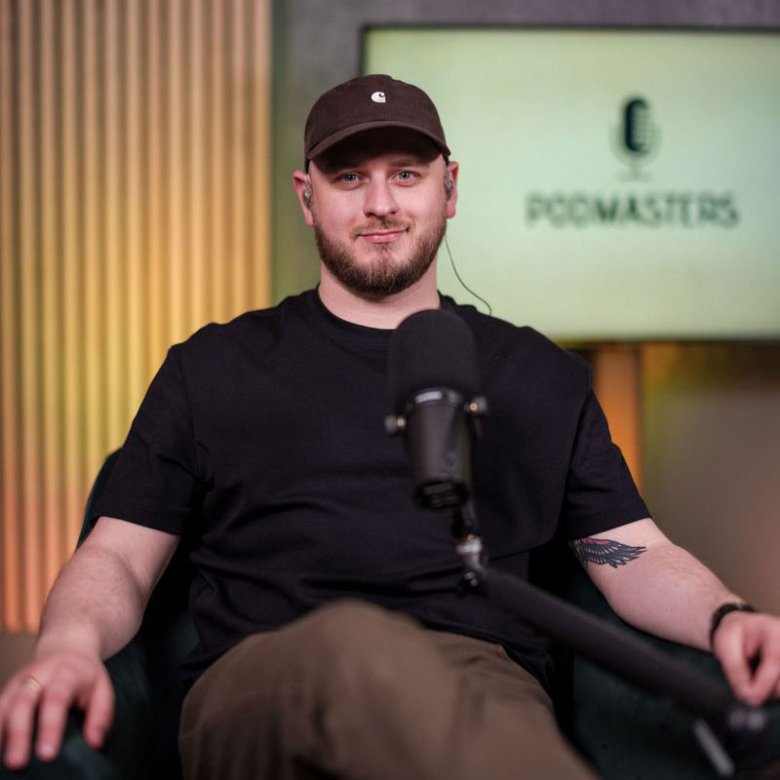
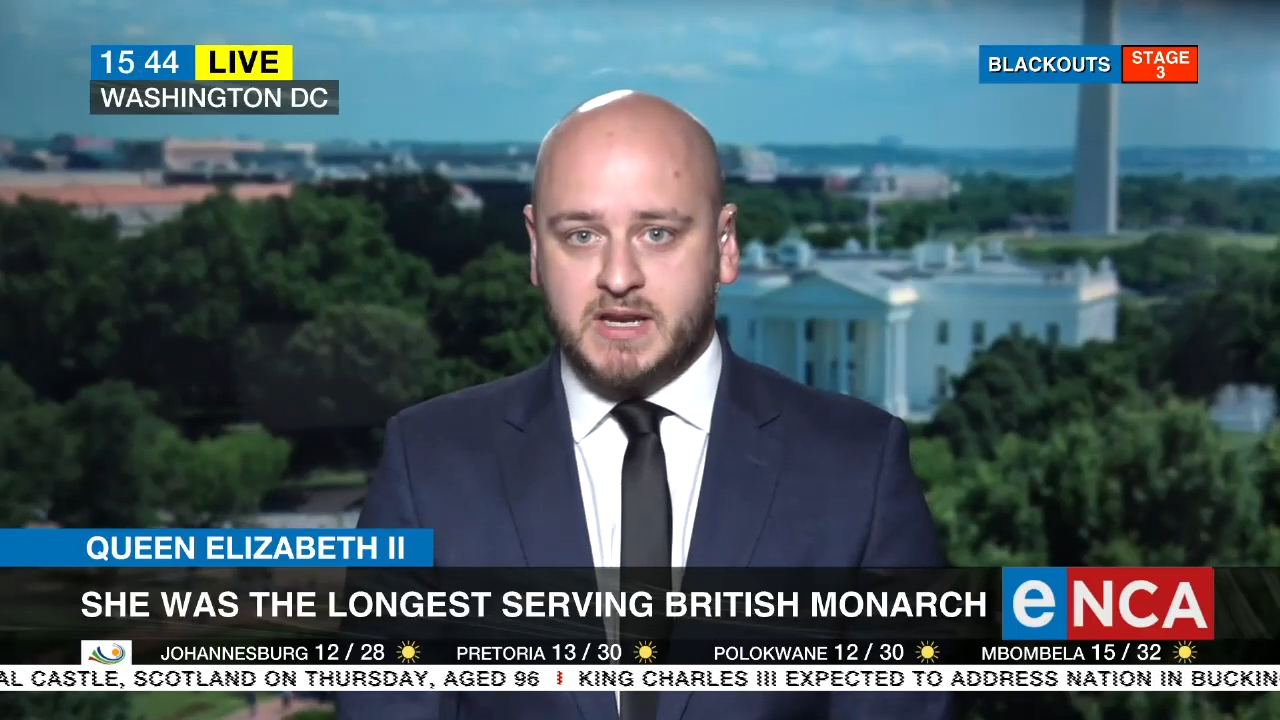
Since graduating from Falmouth, journalism graduate Chris Jones has worked across television, radio and digital, with credits ranging from US political reporting in Washington DC to producing and co-hosting the award-winning podcast American Friction.
Now Audio Visual Lead at Podmasters, an independent podcast production company in London, we caught up with Chris to discuss the story that has stayed with him most, how Falmouth helped him build the foundations for his journalism career and why podcasting continues to connect with audiences.
Chris studied BA(Hons) Sports Journalism, which has since been integrated into the BA(Hons) Media & Journalism course.
You've reported from Washington DC, covered US politics and worked across television, radio and digital platforms. Which story has stayed with you the most and why?
Where to start! There is one story in particular I covered in Philadelphia that will never leave me.
There's a place, well, a street really, called Kensington Avenue. It stretches for a couple of miles and is one of the greatest real-life examples of the opioid crisis that grips the US.
Along that road, I saw maybe hundreds of people openly injecting drugs such as fentanyl, a synthetic opioid that is cheap to buy, highly addictive and very easily fatal. Many of the people I saw were either unconscious and lying on the pavement, missing clothing or in the grips of a manic high. But in that chaos, there was also the best example of humanity.
I spoke to Megan Cohen, a former fentanyl user on Kensington Avenue, like the people that I had seen lining the street. She had got herself clean and had founded the Grace Project, a charity that helps people battling addiction restart their lives.
I joined her as she set up with her team of volunteers on Kensington Avenue to provide free food and aid. There, she told me she used to feel "like an insect" and that it was the kindness from others that got her out of that life.
Megan wanted to repay that and remind the people who were still living through addiction and homelessness that they are human, they are loved and that their present doesn't have to be or define their future.
I'm privileged that I was able to tell her story and it's one that will stick with me forever. You can watch Chris's report here.
Can you tell us a bit about your role as Audio Visual Lead at Podmasters and what a typical week looks like?
Every day can be different. Podcasts are largely becoming video-first and at Podmasters we've had to move with that trend. It's my job to make sure that, when it comes to video, everything works as it should and we have everything we need to make it work.
It's very tech heavy, and can be very complicated, but I enjoy the process of solving problems when things go wrong. A lot of our work revolves around client podcasts and so we need to be adaptable to each and every one of them.
With that in mind, we built a bespoke studio that is set up for multicam recording and can be tailored to the needs of anyone that wants to use it. That can be anything from lighting setup to the number of cameras on set, or even the entire setup of the room.
So that's one part of my job. The other is to help our team to generate quality content that people want to hear. That includes booking guests, researching and writing scripts, delegating tasks and organising the team's workflow, videography, mixing audio and live streaming shows in the studio or remotely.
Editing is also a big part of my role, and I've edited quite a lot of podcasts, from things like The Managers with former Premier League managers Mick McCarthy and Tony Pulis, to anti-betting podcasts and political podcasts. It's very busy but it's fun!
Looking back, which experiences at Falmouth best prepared you for the career you've built since graduating?
I worked hard at university, and because of that I often missed out on going to Club I with my housemates like others did (which might actually be a blessing depending on how you look at it, to be honest!)
But it was worth it, because it helped me to develop the core skills I needed in journalism, and it's really where I got my start in podcasting.
Within the University itself, I set up a podcast with my classmate William Gavin, called Chris and Gav's Thoughts on Sports (catchy, I know). No one asked us to; we just did it.
We'd record that in the studio on Penryn Campus and even had guests like Molly Caudery, who is now a GB pole vault world champion.
On top of that university work, I got involved in community reporting and with Falmouth Rugby Club to write their match reports, as well as writing for Cornwall RFU, which resulted in me following the U21s all the way to the County Championship final at Twickenham.
I also wrote 50-word match reports for the Sunday Independent every weekend, which usually comprised me calling up the old boys of at least 12 clubs on a Saturday afternoon to ask how the game went and what the scores were. It was often a struggle to get them off the phone, but if anything, it taught me how to write faster to meet strict deadlines.
All of that, though, was made possible by the support I had from my lecturers, in particular Kevin Bishop, who's the best mentor any student could have asked for, without a doubt.
If you could give one piece of advice to current journalism students, what would it be?
Get out there, find the story and be confident! That idea you have right now, whether it's a podcast, a YouTube channel, a book, anything: make it happen and learn from it.
But also know that in journalism you will have to make sacrifices. You'll maybe miss a few birthdays or miss a few nights out with your friends. I missed Dad's 60th birthday when I moved to DC, which I'm incredibly sad about, but I know he didn't want me to miss the opportunity that had been presented to me. And ultimately, my career has been better for that decision. So, prepare yourself for that and make sure the people you surround yourself with know that that's the reality of the path you've chosen.
The other last bit of advice is very simple, but sometimes you need reminding of it. Uni is tough, I know at times I struggled. But there is help available if you need it; don't be afraid to ask for it.
American Friction has grown to more than 150,000 monthly downloads and views and won an Independent Podcast Award. Why do you think the show has connected with audiences?
We started American Friction in April 2024 as a way to better inform an international audience about the US presidential election. It just so happened that that election was particularly exciting and there was a lot to talk about, and people wanted to hear what we had to say.
The success of the podcast, and the election of Donald Trump, means that we're still making it two years later and are fast approaching three million downloads and streams on all platforms.
People often come to a podcast for very simple reasons: they like the hosts, they're entertained and they want to stay informed. I think all three of us are fairly likeable, we make the show fun – unlike many other politics podcasts – and we are all journalists of some kind and so are good at communicating information. That has enabled us to build a community of listeners who like hanging out with us twice a week, so much so that they support us financially on Patreon. That is vital because it gives us an independent revenue source away from advertising, which allows us to keep the podcast alive.
Overall, my role currently is as co-host, editor and producer, so I am involved at every stage of production.
How is AI and emerging technology changing how you work?
It's always a topic of conversation and the limits of its use in journalism are often debated. So far, my career has only been touched lightly by AI. Currently I use one piece of AI software called Autopod, which cuts down my video editing time but does not eliminate the human element from my work at all. I wouldn't recommend students try it until they have a firm understanding of how to edit manually, though.
External links

You might also like

Film graduate shortlisted at Young Arrows for shoestring skate campaign

Meet the Drawing graduate nominated for the New Blood Emerging Art Prize

Acting alumna on forging a creative practice that's entirely your own

Product Design graduate on being shortlisted for award and having her work discussed with Queen Camilla
