MA Writing for Script & Screen alumna on award-winning period romance and working at the BBC
04 August 2026

“The quality of education I received at Falmouth gives me the belief I can now compete at the highest level,” shared MA Writing for Script & Screen (Online) alumna Emily Joshua, when asked about receiving 43 awards for her student project, Foxton Hall.
Crediting her love of storytelling, the course’s guidance towards writing with purpose and the unique perspective working as a BBC Production Assistant has given her, Emily is now a confident screenwriter.
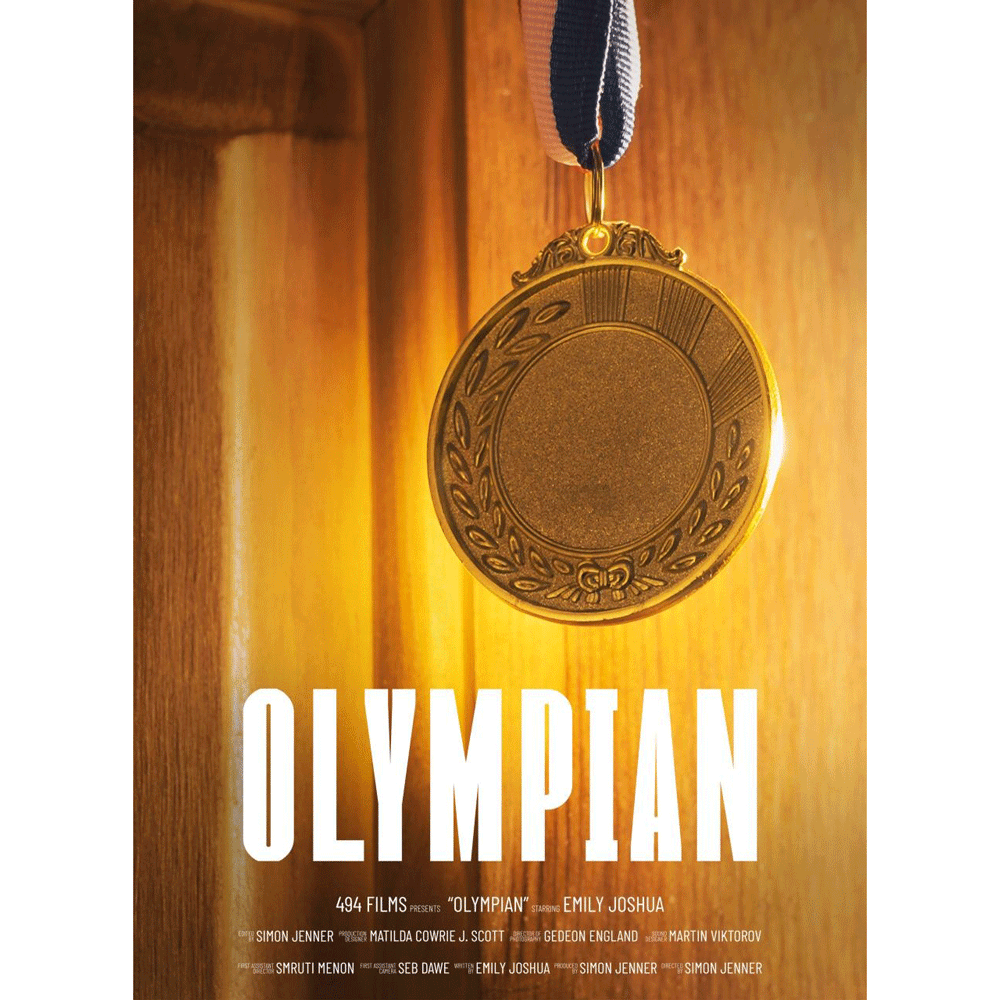
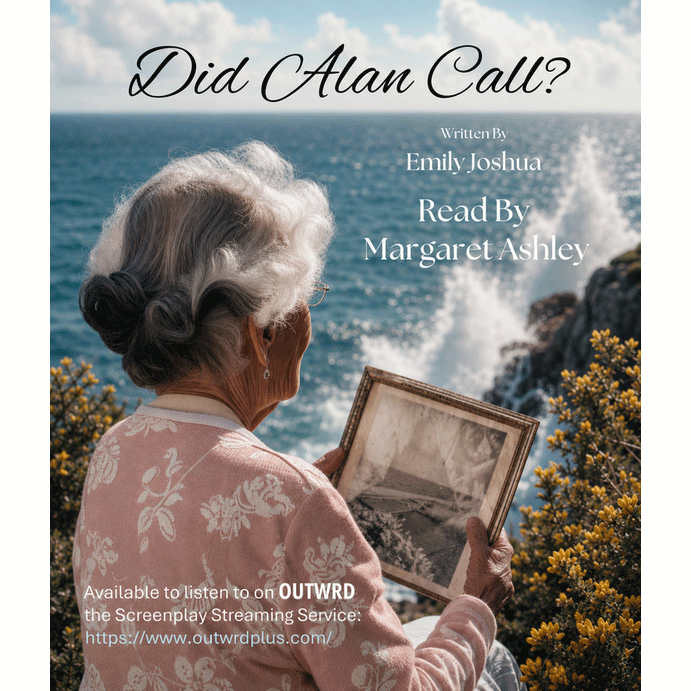
Within her writing portfolio are several original television series, a short film entitled Olympian, which is now screening on the competition circuit and a produced audio screenplay, Did Alan Call?, now streaming on OutWrd.
We chatted with Emily to learn more about her series, Foxton Hall, the awards she’s won, how her experience in the film and television industry has influenced her writing and the ways studying online at Falmouth has helped her hone her craft and become an award-winning writer.
Can you give us an insight into Foxton Hall?
Foxton Hall grew from two observations: how opportunities in life are often shaped by birthright and the universal desire to belong. Being wealthy buys the protagonist access to the upper echelons of society; yet racial prejudice prevents her from feeling accepted.
I wanted to write a Regency romance that wasn't simply about who falls in love with whom, but about friendship, identity, class and the price people pay for trying to fit into a world that was never designed for them. Stepping out of your lane had severe consequences in Regency England. I want to show how — because many women still live under rules that exact severe punishments for overstepping the line — that feeling is still relatable today.
The story follows Phoebe, a wealthy young woman of colour, and Amelia, the housekeeper's daughter who has been raised almost as her sister. When they enter Regency society together, they're forced to navigate a world built on rigid expectations, where every decision can change the course of their lives. I wanted to explore how friendship can transcend barriers, punishments and poor decisions.
As a disabled and neurodivergent writer, I naturally gravitate towards characters searching for where they belong and who survive despite the odds. Although Foxton Hall is set in 1807, its emotional questions feel strikingly contemporary: ‘How much of yourself do you hide to be accepted? What happens when love and loyalty pull you in different directions?’ Those questions remain just as relevant today, which is why I believe period drama can still speak powerfully to modern audiences.
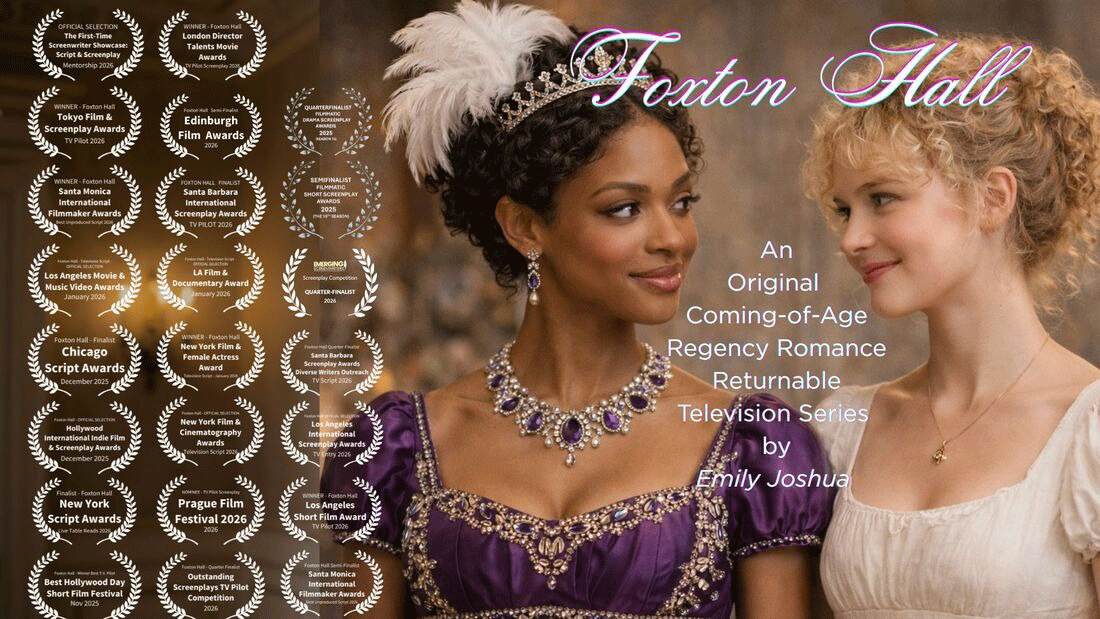
Can you tell us about some of the awards you've won, and which ones have meant the most to receive?
It's been a wonderful surprise to see Foxton Hall resonate with readers and judges at competitions around the world. The script has picked up awards and official selections across Europe, the United States and Asia, including recognition at the London Director Talents Awards, the Tokyo Film & Screenplay Awards, Santa Monica International Filmmaker Awards and many others.
The London Director Talents Award means so much because it recognised the script within a filmmaking community rather than solely as a piece of writing. It was also one of the few awards presented in person, giving me the opportunity to meet an enthusiastic and talented community of filmmakers. Those conversations make the possibility of bringing Foxton Hall to the screen feel much more tangible.
It's especially rewarding to receive so many awards for this project, because Foxton Hall was developed both during and after my MA at Falmouth. Each bit of feedback, rewriting and award gained has felt like another step in the journey that began there.
How did you find your time studying Falmouth's MA Writing for Script & Screen (Online) course?
I genuinely loved it. Studying online meant I could fit the course around family life and my health needs, but I never felt disconnected. The tutors were generous with their time and experience, and the feedback was always constructive, thoughtful and challenging in exactly the right way.
What I appreciated most was how the course expected us to think like professional writers, gradually equipping us with the skills and confidence needed. We weren't just encouraged to write scripts; we were taught how television and film projects are developed, rewritten, pitched and taken into the industry.
The course taught me the importance of structure, rewriting and writing with purpose. One of the biggest lessons was learning that every scene has to earn its place. If a scene doesn't move character, plot or theme forward, then it probably doesn't belong.
Most importantly, the MA gave me the confidence to tackle larger projects. Writing an eight-hour television series suddenly felt achievable because I'd learned how to build the story across multiple episodes while keeping character at the heart of everything. Without the course, I wouldn't have developed the professional screenwriting skills I needed to pursue the industry seriously.
You’ve worked as a BBC Production Assistant and Researcher. In what ways has this role helped your work?
Working at the BBC gave me a completely different perspective on storytelling because I saw how much work happens before a programme ever reaches the screen. Research taught me the importance of accuracy and detail, and I still spend a huge amount of time researching locations, professions and historical settings before I begin writing.
Working in production also gave me a much greater appreciation of collaboration; screenwriting doesn't exist in isolation. Every script is interpreted by producers, directors, designers, actors and editors, so I try to write in a way that communicates my creative intentions clearly while leaving space for others to bring their own expertise to the project.
That experience taught me to think not only as a writer, but as someone who understands how productions are actually made.
What do you plan to do next?
My immediate goal is to bring one of my original television dramas into development with a production company and secure representation.
Alongside Foxton Hall, I'm currently developing Hobbs & Pengelly, a regional detective drama set in North Cornwall, as well as several other television projects spanning science fiction, horror and animation. I enjoy working across genres, but all my stories have one thing in common: they're character-led dramas about people searching for connection, purpose, identity and belonging.
Longer term, I'd love to work in television writers' rooms, even and continue creating inclusive stories that entertain broad audiences while quietly expanding who gets to be at the centre of the narrative. For me, that's the deeper purpose of drama: to entertain while helping us better understand one another.
You might also like

Creative Advertising alumnus on working across more than 100 brands in New York

Drawing alumna on working as assistant curator for renowned UK exhibition

Games Programming graduates sign BELTFED publishing deal

