Popular Music graduates on forging eclectic creative careers
12 November 2026
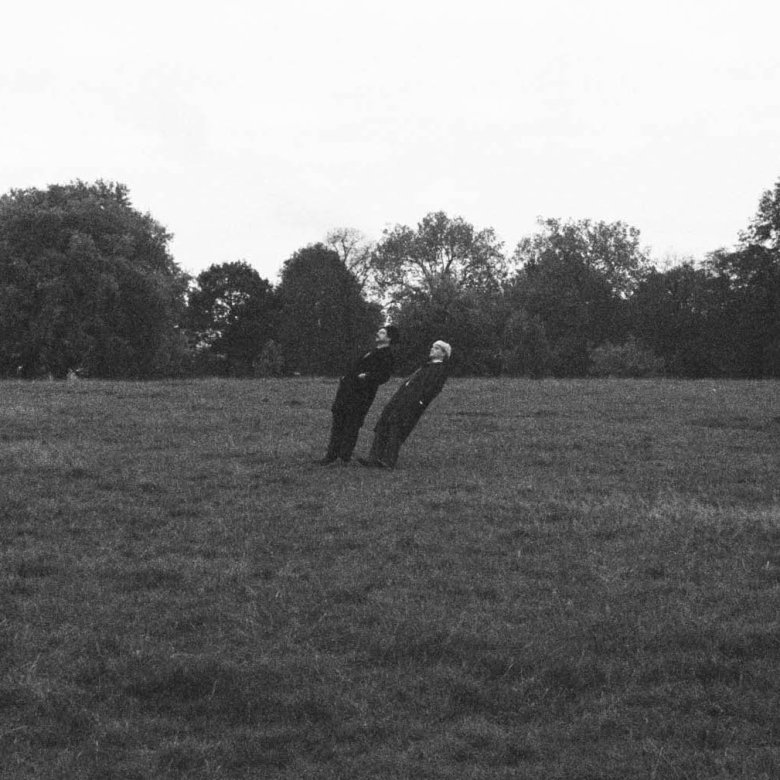
Brothers Tom and Ned Armstrong, both BA(Hons) Popular Music graduates, point to people they met at Falmouth when they talk about their careers. Ned’s first audio job came through a Falmouth contact, and Tom’s friendship with fellow graduate Ben Woods led to his band Dunce’s second album, Lo, coming out in June this year. The pair also share a fascination with analogue tape, from four-track recordings to reel-to-reel productions.
The brothers now play together in Dunce and another band, Familiar Action. We caught up with them to talk about working together, why they choose tape and what advice they would give to current students.
You make music together in both Dunce and Familiar Action. How does working with your brother shape the creative process, and who tends to do what?
Ned: I think working with your brother is much the same as working with any creative partner that you trust, the biggest benefit of which is being able to be honest with each other about what’s working and more importantly what’s not working. We’ve naturally fallen into two distinct roles, wherein Tom will often be the one to generate the ideas and I will typically be refining those ideas. Of course, the roles reverse at times, but this is the general way in which we find ourselves working.
Analogue tape runs through the work you both produce, from Tom’s 4-track recordings to Ned’s reel-to-reel productions. Where did that shared fascination begin, and what does tape give you that digital doesn’t?
Tom: I think we both find there are two huge advantages to working with analogue equipment. Firstly, it has a huge effect on process and workflow: the limitations that this equipment imposes force you to come up with solutions and approach things differently. When we’ve worked digitally, we’ve found ourselves trying to self-impose limitations in order to recreate the creativity that those analogue limitations extract.
Secondly, this is a more abstract draw from the physicality of the medium. There’s something eerie and exciting about the sound being impressed on the physical world and taking up space as well as time. Maybe the best example is the role that saturation plays; it is the sound of the machine not able to contain the size of the sound.
Dunce’s second album Lo came out in June on Joy of Life International, a label set up by Ben Woods of The Golden Dregs with support from End of the Road. How did the relationship with the label come about, and is there a Falmouth connection behind it?
Tom: Absolutely! I met Ben down in Falmouth some 10 years ago and have remained in touch ever since. When Ben started his label, I reached out and he was interested in releasing the album. It’s hard to overstate the impact the connections we both made in Falmouth have had on our creative, social and professional lives.
You both studied BA(Hons) Popular Music at Falmouth. What drew each of you to the course and to Cornwall?
Tom: I had a phone interview with Senior Lecturer Johny Lamb, and that alone convinced me it was the right place to be.
Popular Music seems like the right course for anyone who is into music but not classically trained (although I think you’d still get a lot out of it if you were), and it pushed us to engage with all aspects of music, not simply technical aptitude.
Ned: It was one of the easiest decisions I’ve made, having seen the work Tom was producing as well as the time he was having. It’s hard to find Falmouth graduates who don’t sing its praises.
Ned, alongside the music you work as an audio editor and producer for audiobooks and podcasts, with clients including Penguin, Noiser and The Economist. How did you move into that world, and how does it feed back into your own music?
Ned: As with most things in the professional world, I got my first job in this field through a contact I made in Falmouth, which enabled me to build experience and slowly pick up other jobs. The main way in which this has fed back into my own work is through a greater understanding of production and studio skills in a professional environment.
Tom, you play trumpet and synthesisers in Findom, an eight-piece jazz, punk, no-wave and dub collective, and co-founded the Exchange Collective with its residency at Avalon Cafe in Bermondsey. What does improvising with a collective give you that your other projects don’t?
Tom: I’ve always enjoyed the collaborative aspect of music and found that live improvisation is the purest form of collaboration and communication, where you have to work with people, some of whom you haven’t even met before, to create music that accommodates people of all musical backgrounds and persuasions. When playing with the collective, our priority was to create an anti-elitist environment, where music was the priority.
Neither of you sticks to music alone. Tom, you paint, print and have published the zine Who’s Kicking Me Now?, and Ned, you’ve composed for Edinburgh Fringe shows and are finishing a book of short stories. How do those other practices sit alongside the music?
Tom: I’ve worked as an artist assistant for the past six years, oil painting and drawing every day. I always enjoyed visual art and found it to be an important thing to engage with in tandem with music. I’m always interested in the visual side of a music project and enjoy creating a visual world for the music to exist in. The zine was more of a reason for me to show off my friends’ work, and I have a lot of friends who make art or write, so I wanted to make something to capture a moment.
Ned: The Edinburgh Fringe project was one that was made in Falmouth with people from other courses and disciplines. It was my first experience of writing music for another medium, and I have recently been able to utilise these skills with my work alongside Tom in film composition. We’ve recently finished our first film score and are beginning to move into this field. In terms of the writing, my view of artistic mediums is that each has its strength and weakness, and writing, for me, is less abstract than music and allows me to be more literal in my expression.
What advice would you give to current Popular Music students hoping to build a varied creative career like yours?
Ned: I think my real advice is to not pretend to be successful, to ask people for help and advice at every opportunity and make the most of the people you know and their strengths. In our experience, the vast majority of work comes through contacts. It’s a good idea to say yes to opportunities, regardless of how tangentially related they might appear. You never know where they might lead.
Tom: My primary advice is to make friends with people and put the work into supporting each other. You should never underestimate the power of a scene.
External links

You might also like

From Warsaw to St Louis: MA Film & Television graduates on their successful film circuit

Marine Photography alumnus wins Wildlife Photographer of the Year award

Creative Music Technology graduate on mixing her own album

Creative Advertising alumnus on working across more than 100 brands in New York
