Communication Design alumna on holding open studio at Cornwall’s archive hub
03 September 2026
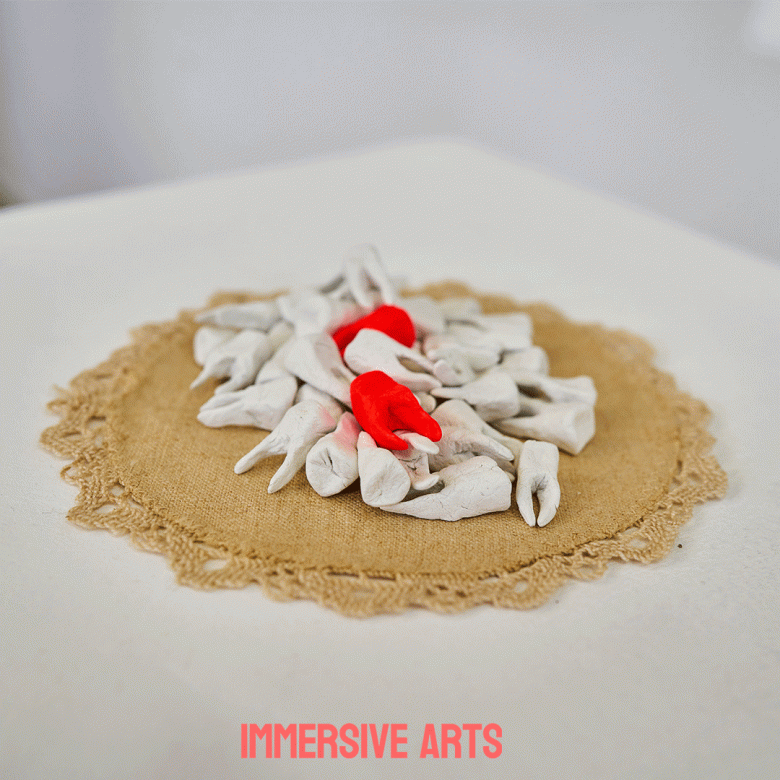
Inspired by the archive collection at Kresen Kernow, MA Communication Design alumna Amelia Temple recently held an open studio at the creative space where she built prototype exhibit pieces, including prints that use copper tape to respond to interaction.
Entitled ‘Sites of Memory’, Amelia’s work explores the ways in which audience engagement can create sites of memory, both capturing and preserving human touch and motion in different ways.
We caught up with Amelia to learn more about what interested her in the project and how her time at Falmouth gave her the confidence to apply for funding and exhibit her work.
Can you tell us how your collaboration with Kresen Kernow first began?
I first became really interested in archival research while working on my final major project at Falmouth; I was looking at critical theorists analysing the archive and its role in how we remember parts of history. During this project I started talking with the team at Kresen Kernow regularly, as I carried out research and referenced their material in my exhibitions. I applied for a National Lottery grant and, although I was not successful, I did achieve a £5,000 learning and development grant from Immersive Arts UK which meant I could carry out a small-scale project in a similar area. Kresen Kernow have been really happy to support me in both project ideas, allowing me to use their spaces to platform the work.
Can you tell us about your work and what you hope those viewing the open studio took from their visit?
In the work-in-progress open studio, I shared with people how human interaction and personal experience can be documented, using immersive technology such as Touch Designer and electric circuits.
I made a series of prints interactive by using copper tape and printed conductive inks. I had support from Creative Technologist, Nathanial Mason, who is currently studying a PhD at Falmouth, to programme an Arduino to touch sensors and connect this to Touch Designer, which reacted to the human input. I also used the Claude.AI tool to learn how to document what was touched and when, and this will be developed into the next stages of the project — creating a living archival piece from the open studio event.
I hope this can bring a new perspective to archival materials, reflecting on the different ways we remember parts of history, particularly those that could be suggested as difficult to document.
How did you find your time studying MA Communication Design at Falmouth and how have the skills gained impacted your work since?
The master’s programme really prepared me well for different types of career paths in art and design. When I applied, I was strict about wanting to learn “commercial” design skills I felt would improve my employability. I hadn't thought about pursuing a funded artist route until I later considered it based on the interests I’d started to explore. Putting together work for service design, public engagement and exhibitions really helped me to build skills that enabled me to do things like apply for funding and present my work in a certain way.
Amelia will be hosting another open studio at Kresen Kernow in the autumn, with dates soon to be announced on her socials.
External links
Learn more about Kresen Kernow
You might also like

Meet the Film alumnus producing a Cornish-language short film


Film graduate shortlisted at Young Arrows for shoestring skate campaign

Meet the Drawing graduate nominated for the New Blood Emerging Art Prize
