Meet the Drawing graduate nominated for the New Blood Emerging Art Prize
29 September 2026
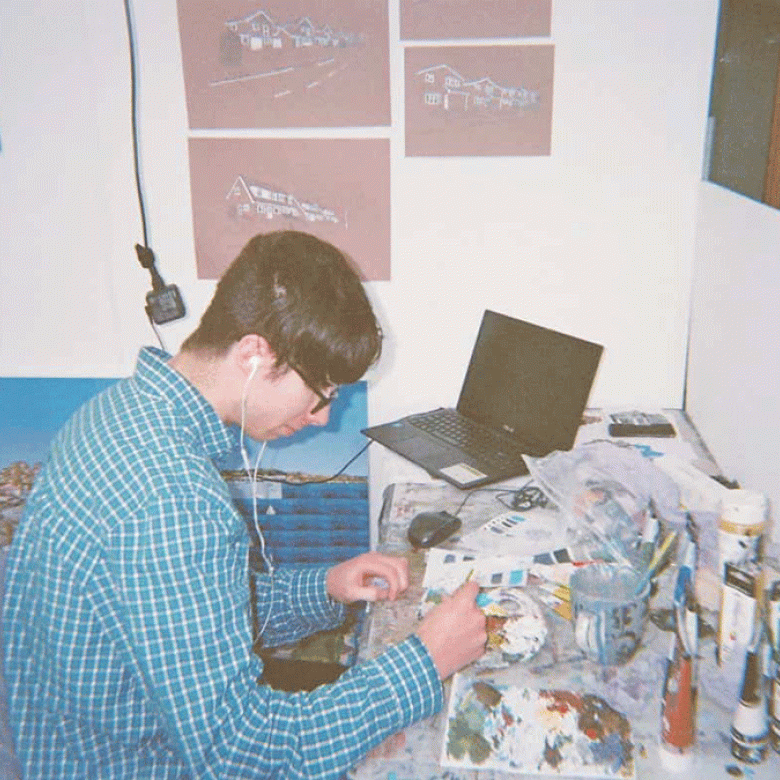
For BA(Hons) Drawing graduate Matthew Amos, having his work displayed at Falmouth’s end of year degree show led towards receiving a New Blood Emerging Art Prize nomination, after a visitor was struck by the quality of his work. Matthew's art, which captures the nostalgia of his hometown, is now shortlisted for the award that highlights exceptional emerging artists.
We chatted with Matthew to learn more about what inspires his artistry and how Falmouth’s drawing course offered a creative mix of different specialisms, offering not just the opportunity to draw, but to explore graphic design, illustration, fine art and more.
Congratulations on being nominated for the New Blood Emerging Art Prize 2026! How do you feel to be nominated, and can you talk us through the art you submitted?
I’m still quite surprised; I never expected it! I was nominated for the prize with my degree show work, which was a series of six paintings: Welcome to the Neighbourhood. The project explores a suburban neighbourhood in Reading where I grew up, with the paintings highlighting the visual language of suburbia and finding beauty within what’s typically seen as a boring, mundane environment. Each painting holds personal memories, depicting locations I visited regularly, such as the local corner shop.
I was put forward for the prize by Sarah Ryan, who happened to be looking around at the various degree shows. She was struck by the saturated colour palette and quasi-sculptural quality of the paintings. I gave her my business card and didn’t think much of our conversation until I got a message to say that I had been nominated!
Your nominated art was part of a project you created at university. How did you find your experience of studying drawing at Falmouth?
The degree went so quickly; I can’t believe the three years are now already over. I liked that it’s a small course; there were only fourteen of us in my year. Because of the small cohort size, we got to know each other quickly and had a lot of contact time with our tutors. This meant they knew our work well, but also that we knew their practices well too.
My highlights include the short workshops we did in first year that gave us a grounding in a range of drawing techniques and applications. For example, life drawing, observational drawing and perspective drawing sessions. I also enjoyed the freedom we had on the course; though it’s labelled as a “drawing” degree, we weren’t limited to making drawings as our final pieces. Rather, drawing is thought of as a methodology, a means to an end. In my work, I made a lot of paintings that often started with concept drawings or under-paintings.
Something I miss is having my own studio space, while also having access to great workshop facilities such as woodwork, metal and print. I enjoyed having that designated studio space where I could experiment, take risks and be creative. I would be in the studio whenever I could, often getting carried away and having to be kicked out by security who were locking up! My best advice to anyone starting at Falmouth is make the best use of the resources available to you.
The studios would also sometimes be frequented by the friendly campus cats who would show up at the door wanting to take part in whatever was going on. It was great to have some furry company, and it added to the university experience.
Your work explores the idea of place. What drew you towards centralising your artistry on this theme?
Place has been a theme in my work in some capacity for as long as I can remember. I think it goes hand-in-hand with my interest in geography and understanding the world around me. My mum actually keeps a folder of some early drawings I made when I must’ve been about three or four years old, these were drawings created from memory of the buildings I passed on the way to and from nursery.
Did Falmouth as a place inspire your work, and if so, in what ways?
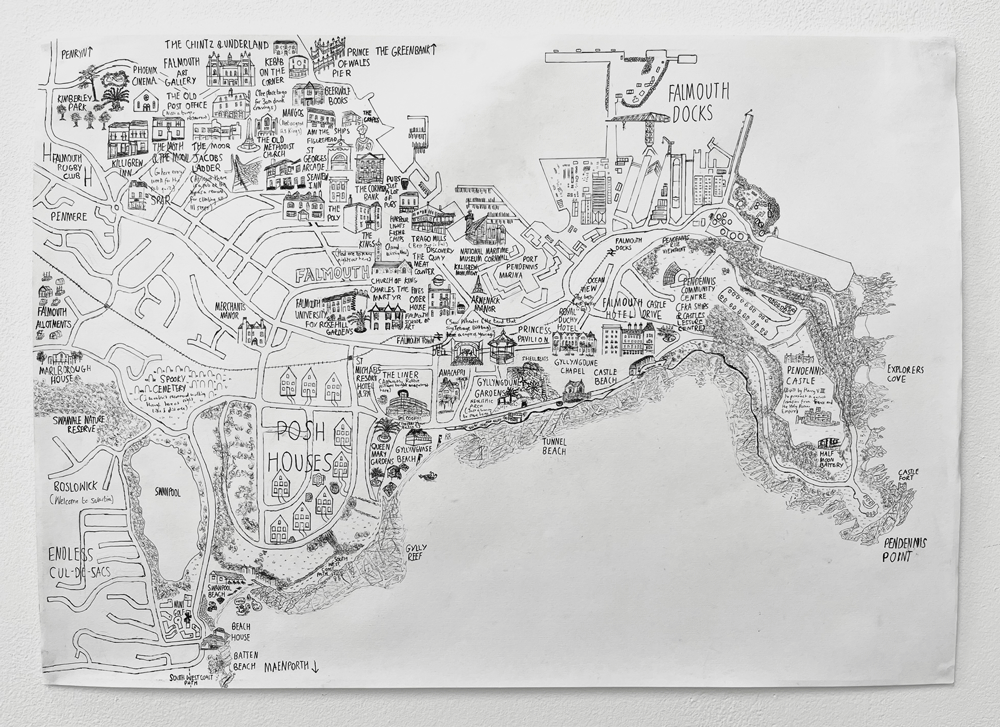
My artistry tends to be inspired by the places and landscapes around me. In third year, as part of my final project that led up to the degree show, I made work that reflected my experiences in Falmouth. I thought about how places are constructed through a variety of locales (locations where activities take place), and how that creates a unique identity that means different things to different people. In response, I made a map of Falmouth including many local landmarks. The piece was annotated with memories and anecdotes, reflecting my bond with Falmouth.
In terms of my degree show work, even though it wasn’t inspired by Falmouth itself, I think being in Falmouth shaped its meaning. Falmouth was five hours away from home, and though I loved it, there was always a small part of me that felt homesick. The paintings capture that sense of longing, and the fact I was growing up and had moved away. Within it, I reminisced for my childhood, with the paintings acting as a nostalgic window.
What would you say to someone considering whether they should study a degree in Drawing?
BA(Hons) Drawing is a unique course that’s not offered by most art schools. It combines elements from graphic design, illustration and fine art, and gives you the scope to try a range of disciplines and approaches to working. I would highly recommend coming to an open day and taking the time to visit the various departments and speak to staff and students. This way you get a feel for the different studio cultures, course structures, the kind of work being produced and whether it’s right for you.
You might also like

Games Programming graduates sign BELTFED publishing deal

Meet the Film alumnus producing a Cornish-language short film


Film graduate shortlisted at Young Arrows for shoestring skate campaign
