Drawing alumna on working as assistant curator for renowned UK exhibition
20 October 2026
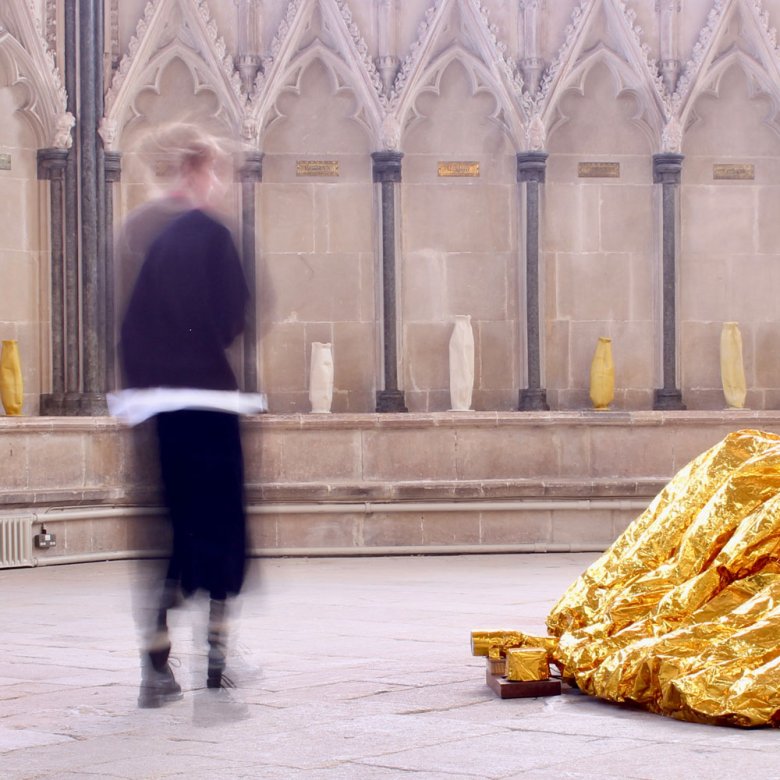
“I feel proud to be advocating for Drawing in the wider contemporary art scene,” says BA(Hons) Drawing alumna Evie Rich. The assistant curator for Wells Art Contemporary currently spends her days coordinating installation artists, liaising between artists and cathedral stonemasons and attending selection meetings for the exhibition.
Crediting her time at Falmouth for inspiring her to build a career on the "other side" of exhibitions, Evie shares how Falmouth's tutors and technicians with backgrounds in everything from stone carving and printmaking to filmmaking showed her how drawing is transferable to any kind of creative role.
We chatted with Evie to find out more about the new position, and learn how her degree has brought “a drawing practitioner’s perspective to the role” allowing her to consider “space, process, composition and narrative” through a creative lens.
You’ve recently started working as an assistant curator for Wells Art Contemporary 2026. Can you tell us what you’re most looking forward to in the role?
I’m looking forward to the opportunity to be trusted by artists, and to see little bits of my own creative visions within a renowned UK exhibition. Wells Art Contemporary has over 2,000 entries every year from all over the world, with around 100 gallery works and 30 installations being chosen.
In my role I’ve been able to attend the selection meeting where artworks were meticulously grouped together to make up a cohesive exhibition for the cathedral space. It’s exciting to have this much authority as a fresh art school graduate, and I hope that the skills I developed in my three years of Drawing will shine through.
I'm also intrigued to see how an exhibition is organised in an unconventional space like Wells Cathedral, and how the balance of art, architecture, history and spirituality is achieved. Some artworks embrace this environment and others reject it completely. It will be interesting to see how individual artworks influence the feelings conveyed by the show as a whole.
Can you tell us more about what your role will include?
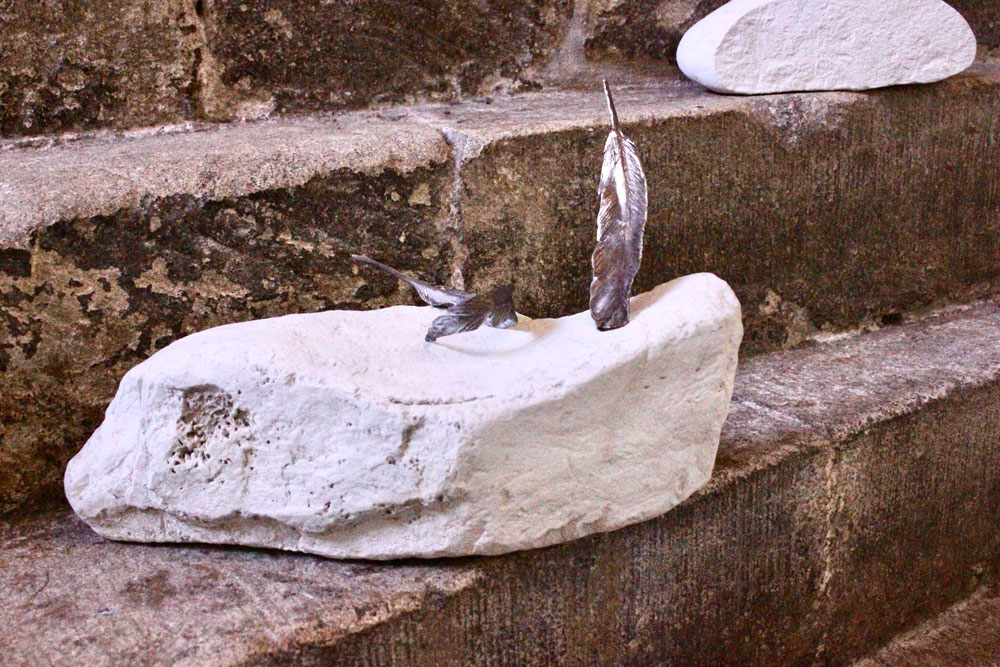
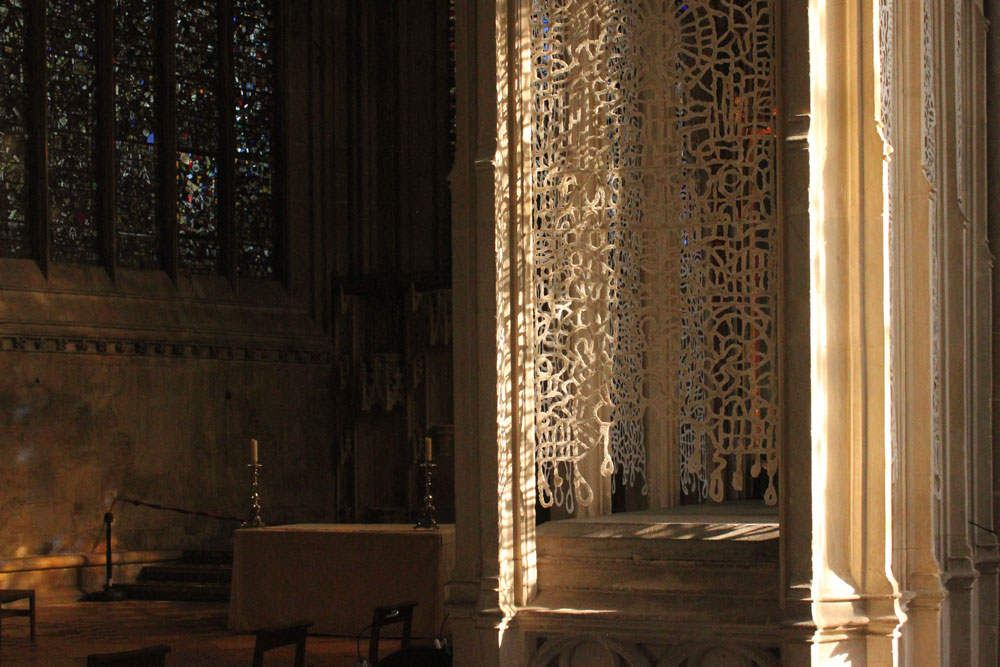
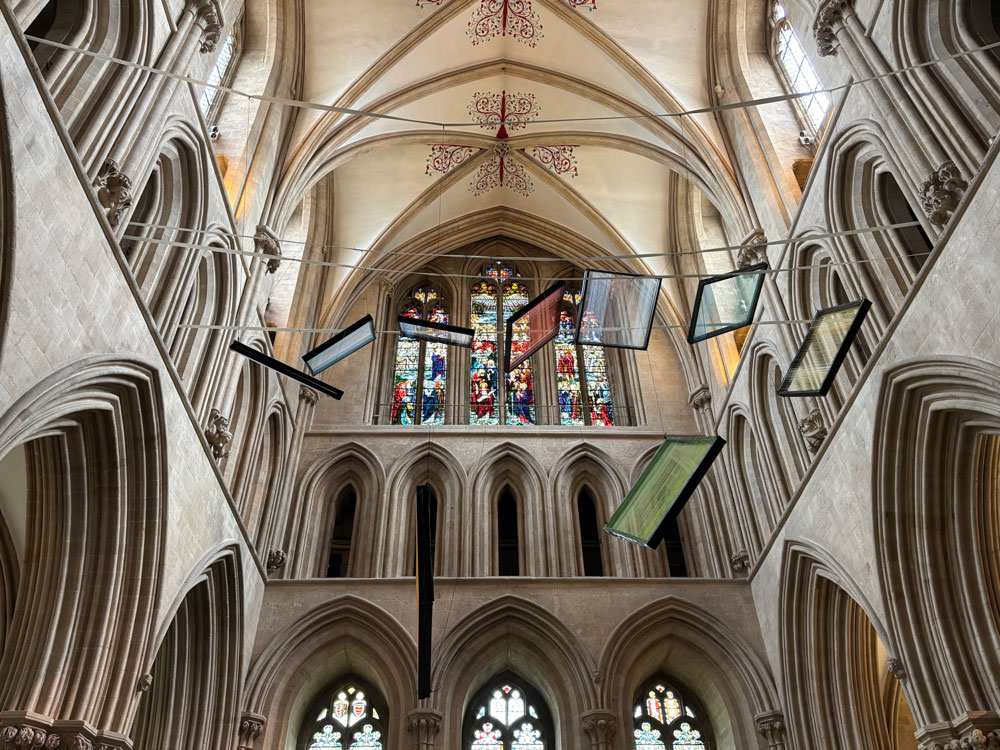
My main job is to coordinate artists, particularly installation artists, who submit site-specific proposals for their work to appear in the cathedral. I’m there for encouragement, advice and to offer an extra pair of hands and eyes. I’m also responsible for moving, placing and tweaking any artwork in the exhibition, as well as liaising between artists and the cathedral’s stonemasons to help make every proposal come true.
It’s important for the artists to feel confident and accomplished in their work, since a lot of them have been making these pieces for months leading up to the exhibition. Things don’t always go to plan, as the artists ultimately need to slot their work into the complex architecture of a 13th-Century gothic cathedral, which can be logistically quite challenging. The pieces I’ve helped unpack, inspect and place are situated in every area of the cathedral, from the wet grass of the churchyard to the 50ft rafters of the nave. Sometimes all it takes is to shift something an inch to the left, and the work feels like it has always belonged there.
I’m here to make the artists feel like they’ve done the best they possibly can, and that starts with how I make them feel about the work they’ve made for this historic space. Alongside curating, I was asked to help select the winner of the St Cuthberts Mill Prize for a work on paper, which was very exciting. I feel proud to be advocating for Drawing in the wider contemporary art scene.
In what ways will you bring your learnings from your course to your new role?
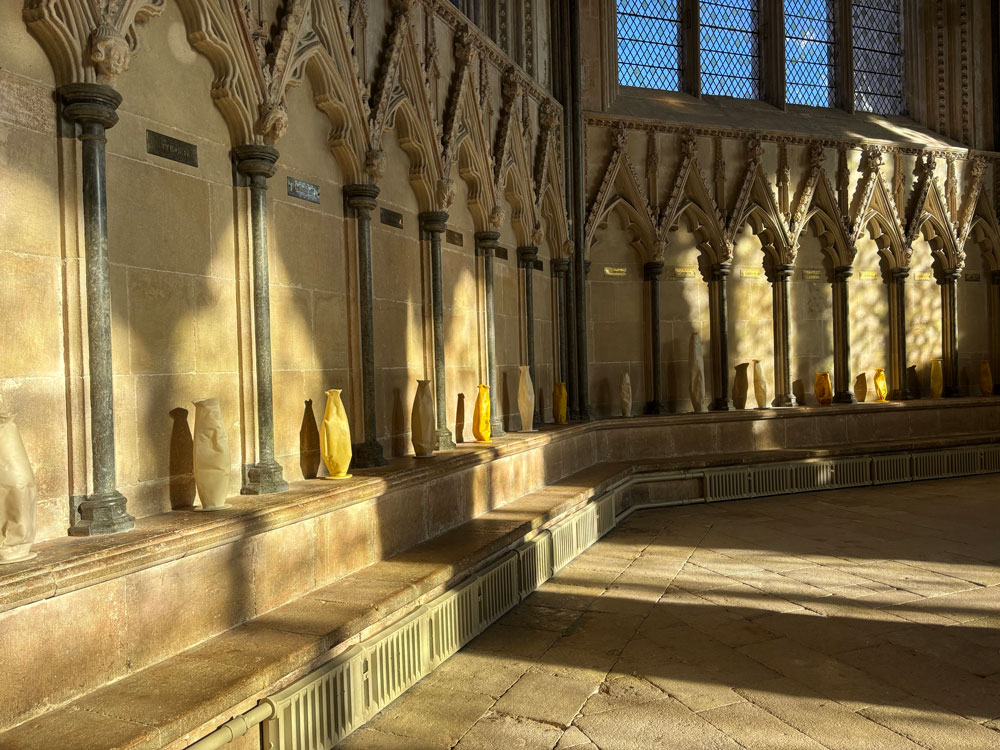
My degree in Drawing has given me a strong understanding of visual language and the relationship between art and its surroundings. These aspects are central to my role as an assistant curator, especially when working with site-specific installation.
My degree encouraged me to look closely, think critically and remain open to interpretation, all of which inform how I approach the curation of installations in an unconventional show space. I hope to bring a drawing practitioner’s perspective to the role, considering space, process, composition and narrative.
How did you find your experience of studying BA(Hons) Drawing at Falmouth?
The BA(Hons) Drawing course shaped the way I see. What I loved about the course was how our tutors and technicians came from backgrounds in research, professional practice, stone carving, printmaking, filmmaking and more, so I was always backed by the idea that drawing is transferable to any kind of creative role.
The course takes on a small group each year, so you get a real in-depth understanding of different people’s processes, practices and aspirations. I was always encouraged to explore my interests in curation alongside my studio practice, whether that was in the presentation of my own work or the work of my peers. We were often challenged on the perceptions of our work and the choices we made in presenting it, and I think that was what made me realise I could build a career from being on the ‘other side’ of exhibitions. I feel ready to tackle the art industry with this degree.
You might also like

Games Programming graduates sign BELTFED publishing deal

Meet the Film alumnus producing a Cornish-language short film


Film graduate shortlisted at Young Arrows for shoestring skate campaign
