Games Programming graduates sign BELTFED publishing deal
16 October 2026
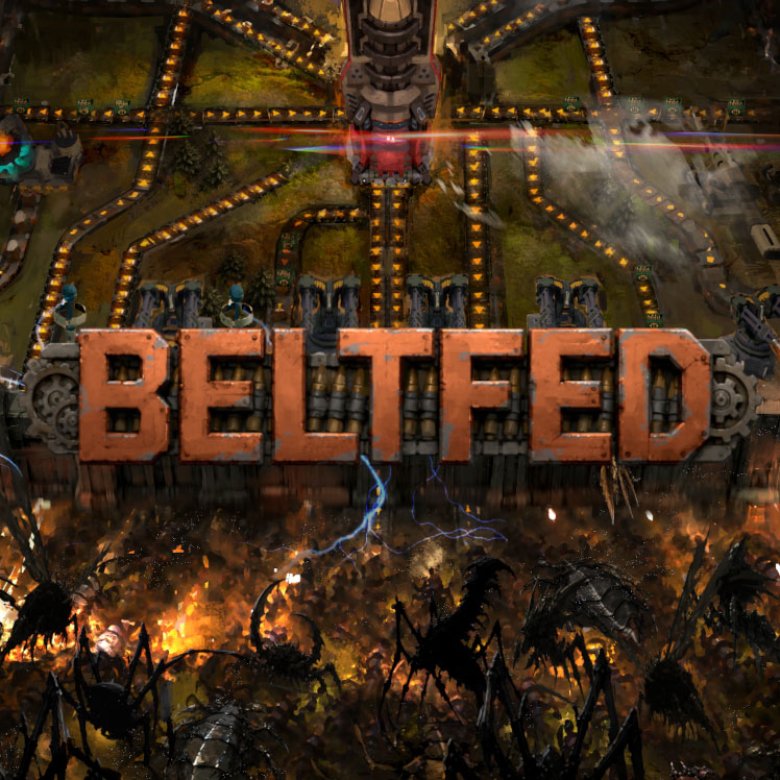
Troy Atkinson and his younger brother Toby, both graduates of BA(Hons) Game Development: Programming, have signed a publishing deal with Hooded Horse for their game BELTFED. A roguelike factory defence game, it casts players as a rogue AI with one directive: automate death. The game has passed 200,000 wishlists and is planned for a PC release in 2027.
We caught up with Troy to talk about where the idea came from, how the brothers split the work and what he’d say to current games students.
Where did the idea come from and how did it grow into a roguelike factory defence game?
When we decided to build a game together back in 2023, we had lots of ideas, 20+ probably, and we took all of them and ranked them each by feasibility, scope, passion, market gap, alignment of skill sets and some other categories. BELTFED scored the highest overall, so that was what we went forward with. We got really lucky the first time around. We were planning to drop ideas and move down the list as time went on.
BELTFED was one of Toby’s genre-mashup ideas. He noticed there wasn’t an established automation roguelike crossover game on Steam at the time. It also fit exactly in terms of what games we like to play (strategy for me, roguelike for Toby) and the type of games we enjoyed coding (deep systems, logic heavy). So, it was a clear winner amongst the other ideas.
The crazy enemy hordes and overkill scale elements were never a part of the original design, but came later from testing. We realised that our early playtesters just had more fun the more enemies we sent at them, so we pivoted to that being a core USP for the game, and it’s also become a really important marketing element.
The hardest thing was remaining focused on one project for three years. It’s so easy to get sidetracked, start playing with a new idea, get bored of what you’re doing and drop the project. But finishing something, seeing it through to the end, is so important and I’m proud that we managed to stay focused on BELTFED to get it where it is now.
The game passed 200,000 wishlists within two weeks of its reveal, with a PC release planned for 2027. How did the last few weeks feel and where would you love to take the studio in the next five to ten years?
The last few weeks have been a mixture of many strong emotions. Seeing the immediate traction and reading the positive feedback was overwhelming (in a good way). Doing publisher negotiations outside of work hours (I’m in full-time employment) was stressful and resulted in two weeks of not much sleep, but after signing with Hooded Horse the entire thing felt worth it, and it went back to pure excitement for the project.
I feel the added pressure to deliver something that lives up to the excitement, and there are a lot of eyes on the game now; but we’re more motivated than ever and are fully focused on making BELTFED as good as we can.
It still feels surreal that we’re now going to be running an actual independent games company. It’s what we’ve wanted our whole lives. We’re looking at BELTFED as a long-term project, so after it’s released, we’re going to continue developing it and adding more content, hopefully for years after it’s available to buy. We’re scaling up to six people within the next few months, then growing further once the game is released in full.
How do you split the work between you, and what is it like building a game together as brothers?
We both studied games development in college and university, and we have a good relationship, so I’m honestly surprised it took us so long to work on a project together. We started prototyping BELTFED in 2023, then earlier this year, when we were confident in the product, Toby left his job and moved from Falmouth to Abu Dhabi to live with me to work on the game full-time. Working with Toby has been great.
We make decisions together, but we decided early on to split “ownership” responsibility of this venture into two halves, with Toby “owning” the product and me “owning” the business. By ownership I mean being the one ultimately responsible for it, and having the final say if we don’t agree, and importantly being the one accountable for the decisions made. We both develop the game, and we both make business decisions, but the split means one person is immediately assigned to be responsible for seeing it through, and it avoids conversations like “you said you’d follow up on this” or “I thought you were managing that.”
So far it’s worked really well, and over time it led to us trusting each other a lot more in our assigned areas. Toby doesn’t need to discuss every idea or feature with me. I don’t need to discuss every email we get with him. And so far, there have been zero issues. This route of dividing and delegating responsibility only works with trust. I accept the fact that Toby has the final say when it comes to the game design, not me.
After spending six years in software engineering (the last four in a leadership position), I’ve found this approach to be far better than an “everybody decides everything together” system, which from my experience leads to endless meetings, disagreements, wonky compromises and a lot of back-and-forth.
Also, living together has made communication fast and easy. We naturally keep each other updated while eating dinner.
What has been the biggest design or technical challenge in making the game feel good to play?
Design-wise the biggest challenge has been balancing the game. It’s a strategy game and it’s not meant to be easy, but there’s a lot of content and trying to make it all work together has been a constant challenge. You’re always naturally good at the games you make yourself, as you understand them perfectly, and if you playtest with the same people you need to account for the fact that they’re also learning and getting better at your game, and will be more skilled each time they play. Playtests with new players are essential to understanding how to balance the game, and analytics can really help with that too.
The biggest technical challenge came from introducing the Data-Oriented Technology Stack (DOTS) to support the large enemy hordes. It required restarting most of the core systems and building them up in a completely new and unfamiliar way, but the challenge was fun, and it has without a doubt paid off for the game.
You both studied BA(Hons) Game Development: Programming at Falmouth. What drew each of you to Falmouth and how did you choose your courses?
For me it was a natural next step after studying games development at college, where I found coding to be my favourite aspect. I knew all my life that I wanted to build games, and for a long time knew I specifically wanted to get into indie game development.
After looking at games courses around the UK, it was pretty immediately obvious that the structure of Falmouth’s game course was the ideal way to gain experience working in small games teams, while upskilling on programming and to better understand the industry. It’s essentially three years of practising to be an indie game developer, and I think some people don’t realise how valuable that is until after they graduate. Toby saw what I was doing at Falmouth, so it was an easy call for him to join the course a few years later.
What skills or experiences from your time at the University still shape the way you both work today?
It was so beneficial just having an environment where I could make mistakes, fail and learn without real life-changing implications. It gave us essentially a three-year head start when it came time to actually doing it for real. Just that is really important, which is why you want to take full advantage of the studio space, office hours, staff etc. while you can.
Learning things about other roles in the industry was also super vital. I was learning how to code, but being in Falmouth and working with other disciplines taught me what other roles (artist, animator, etc.) need to succeed, how to collaborate with them and what they actually do at a high level.
It also taught me that more isn’t always better: small teams can build amazing things, and oftentimes will have less friction. In my third-year, we couldn’t agree on a direction and instead of trying to constantly compromise, we split into two smaller teams and both made very different and much better games.
And finally, it taught me that no matter how much you learn, study, practise, you will never know everything and you’ll never stop learning. So, ask questions, study success and review failure, watch what others do to see how/how not to approach these things yourself, and understand that there’s so much knowledge that you don’t even know exists to be learnt yet.
What would you say to current Falmouth games students who dream of releasing their own game one day?
Playtest as early and as much as possible, find the fun as fast as possible and don’t be afraid of scrapping ideas/concepts if you can’t. No amount of polish or pretty art or background lore will make a poorly designed game good. If you see people having fun with grey cubes because you’ve nailed a single core mechanic, then you know you’re onto something and then you can move onto everything else.
Also, don’t talk to your playtesters; observe them. If you explain how to play or help them if they get stuck, you make the playtest much less valuable, and you won’t be there when real users struggle with the things you missed.
Scope small, like very small. This is something I messed up in the first two years of the course. Most people, from my experience, are terrible at determining how long things take to do, and we always forget about a bunch of stuff that needs to be done. So, determine the core idea behind your game, get that working as soon as you can, then build on that idea. It’s fine to have big ideas and aspirations, but just think of them as stretch goals, things you can do when the core stuff is done and make sure the game will still work without them.
And finally, understand that your peers around you now are the future of the games industry. Be respectful and support each other. Game development is a surprisingly small world.
External links

You might also like

Meet the Film alumnus producing a Cornish-language short film


Film graduate shortlisted at Young Arrows for shoestring skate campaign

Meet the Drawing graduate nominated for the New Blood Emerging Art Prize
