Creative Advertising alumnus on working across more than 100 brands in New York
21 October 2026
From launching his career with an internship at McCann, to working as Senior Copywriter at Razorfish, to having joined the Fallout: London writing team in his spare time, Ben McCoy’s creative toolkit and perseverance have taken him from being a Falmouth student to a New York creative.
We chatted with Ben to learn more about how he built his career, discovering how Falmouth gave him both the portfolio and the mindset he needed to make his mark. Ben also delves into how his time as an MA Creative Advertising student built the habit of asking why someone should care, a tool that’s proved invaluable for building his success in the industry.
Since graduating, you’ve built an advertising career in New York. Can you tell us about some of the brands and projects you’ve worked on?
My first internship in New York was with an agency only a year or two old; I worked half a day, once a week, and was paid in cartons of vegan milk alternatives from one of their clients because they didn’t yet have the budget. Luckily, it didn’t take long to start getting paid actual money. This work helped me land an internship at McCann, which launched my freelance career and introduced me to agencies big and small across New York. Over the last decade or so, that turned into working across more than 100 brands.
The projects I remember most are the ones that seemed a little improbable at the start. My first television shoot as a junior copywriter was a baptism by fire. I wrote, pitched and got approval on six Samsung commercials in two weeks. Then we had only two days to shoot them all. Each was its own vignette, with a new cast and setup; across them we had babies, interior and exterior scenes, custom music and more. I spent most of the shoot in video village tweaking scripts with clients and creative directors critiquing every keystroke. It was stressful, but a glimpse into what I love about the job: a room full of different people trying to make the same idea better.
For The Cecilia Chorus of New York, I helped reframe the Carnegie Hall premiere of Dame Ethel Smyth’s The Prison as a chance to give overdue attention to a composer, suffragist and queer pioneer. The mini-documentary we created attracted interest from women’s and LGBTQIA+ groups as well as established classical music outlets, including Gramophone.
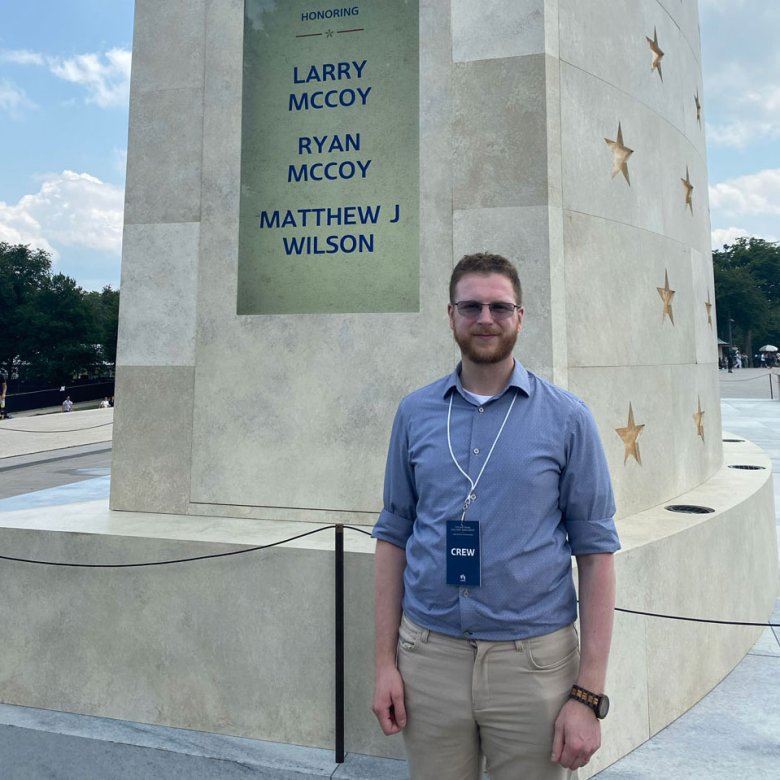
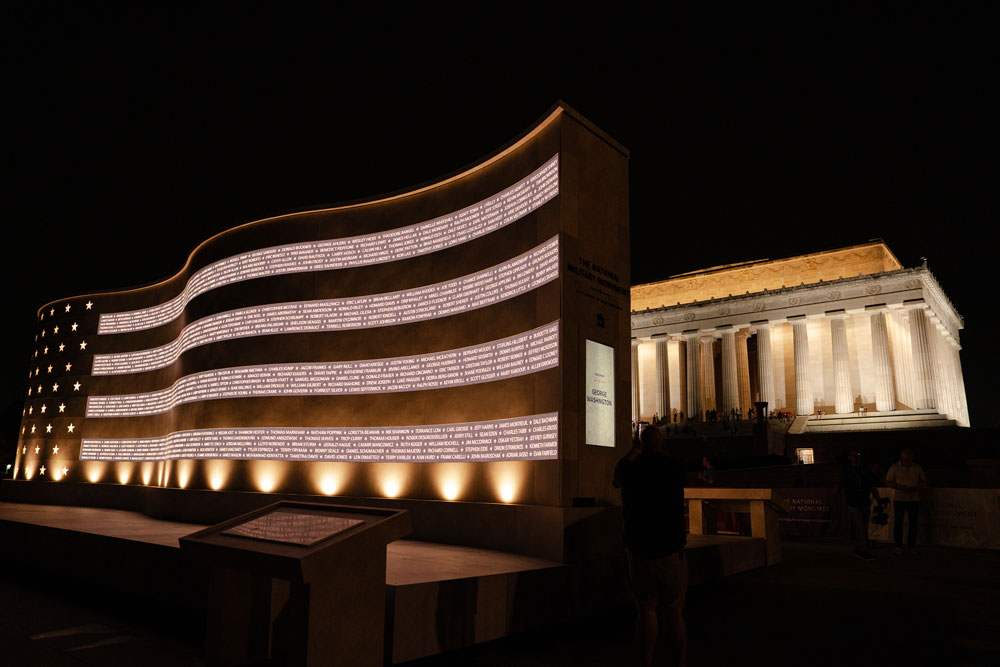
Most recently, at Razorfish, I pitched an idea for USAA that became The National Military Monument. The temporary monument comprises two installations, each nearly 5.5 metres tall, on the National Mall in Washington, D.C., honouring more than 41 million people who have served in the U.S. military since the country’s founding. Millions of names scroll across them each day. While the scale and audacity of the project captured headlines, what made it personal to me was the underlying story: there had never been a single comprehensive public list of those names. Time, fires and other losses had scattered the records. Once they were unified, we wanted to make our record searchable. Visitors can search for someone who served and call their name to a special place of honour on the monument. Most ads beg for a few seconds of attention, but people waited hours to call a loved one’s name forward, describing the wait itself as a badge of honour.
The medium and client may change, but the part I enjoy most is making something that gets people to stop, feel something and act on that feeling.
You now work as Senior Copywriter at Razorfish. What does your role involve and how has Falmouth shaped your practice?
‘Copywriter’ sounds narrow, but the job is developing concepts that solve a business problem by making people care about something.
I work closely with art directors, designers, strategists, producers, account teams, UX, technology and agency leadership, then help carry an idea from the first sketch or line through to client presentation and production. I write for practically every medium imaginable: television, social, digital, experiential, email, web, radio and more. Every day is different. Sometimes every hour is different. I have, for entirely professional reasons, spent days researching trebuchet mechanics.
Beyond the Mad Men stuff, I also present ideas to agency leadership and clients, collaborate with producers, directors, photographers, videographers, editors and colourists to bring those ideas to life, and mentor and guide other creatives.
One of the most useful things Falmouth taught me was that a copywriter isn’t just a writer; they’re a creative who happens to think naturally in words. It also taught me to start with and protect a strong idea. A creative’s job isn’t just to make something splashy, but to understand why people might want to interact with it and how to push those parts of the idea. Once you do that, you realise you can’t pull it off alone. The most ambitious things I’ve worked on have taken people with completely different skills working towards the same idea. Nobody gets to make the interesting stuff alone.
Can you tell us more about what you’ve done outside of your agency work, such as writing for Fallout: London?
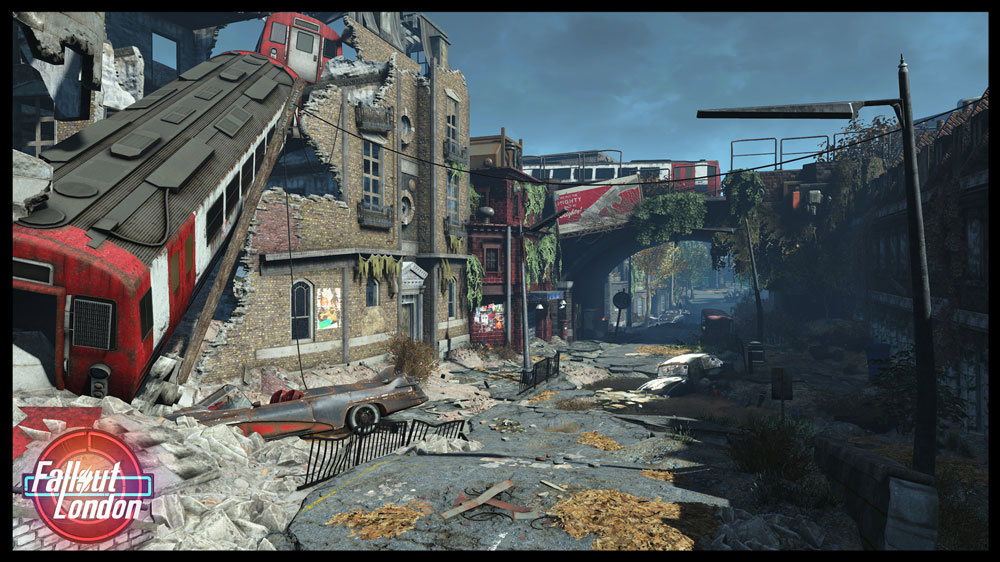
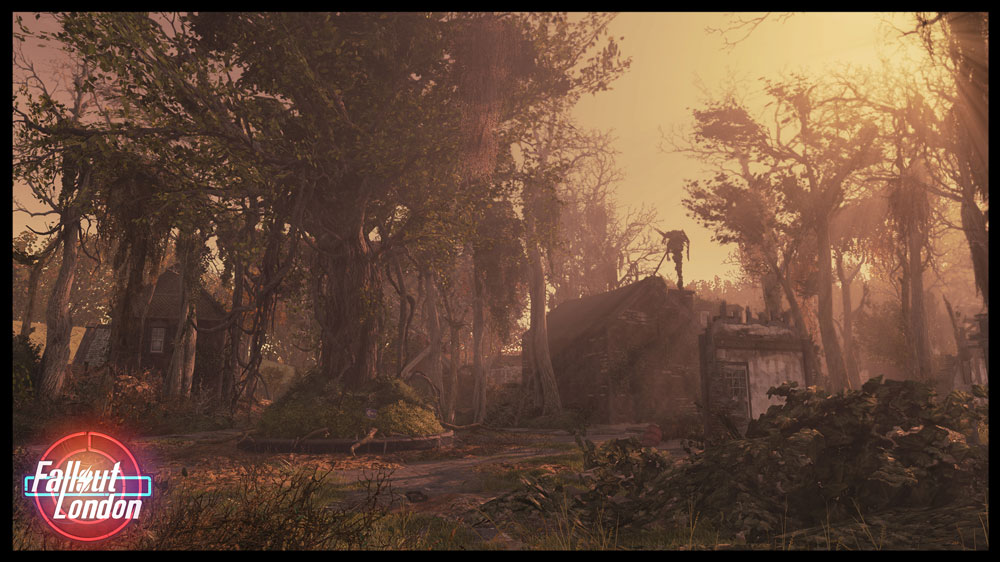
One of the strangest and most rewarding side projects has been figuring out what a British version of Fallout’s distinctly American world could sound like in Fallout: London. I spent two and a half years writing with a multinational volunteer team, contributing dozens of quests, dialogue trees, characters and other narrative material. One of the characters I’m most closely associated with is Archie, a young thief with a distinctly Dickensian flavour.
The project was released in July 2024 and went on to attract international attention, with a voice cast that included a former Speaker of the House of Commons, two former Doctors from Doctor Who and Neil Newbon. Seeing something made largely by volunteers grow to that scale was surreal.
How has your degree in Creative Advertising given you a creative toolkit for other avenues?
Falmouth gave me a creative process beyond just writing adverts: find a human truth, generate far more ideas than you think you need, work out why one of them might resonate, then find the right way to communicate it. That applies whether the audience is a potential customer, a gamer or a music fan looking for a new obsession.
That’s why the degree has travelled so well. We practised asking why something matters to people, exploring dozens of ways to express it, choosing the form most likely to make someone care. The job title doesn’t travel into all those other worlds, but that habit of asking why someone should care certainly does.
What first inspired you to want to study Falmouth’s MA Creative Advertising course?
I knew I wanted to write for a living, but I also knew I liked luxuries like food and shelter. Advertising seemed to offer both.
My undergraduate degree was in Creative Writing, and when I began looking seriously at advertising, I realised how much I didn’t know. I had no idea how important a portfolio was, let alone how to build one. I knew how to sell my writing, but not how to sell an idea. Most of the other schools I looked at were either entirely focused on portfolio-building or purely academic. Falmouth offered me both.
By the time I moved to New York, I had a portfolio, a working industry vocabulary and a creative foundation. I’m not sure I would have found my place in the city nearly as quickly without them.
What advice would you give to Creative Advertising students wanting to build a creative career?
First, remember that while your portfolio matters, being able to explain the thinking behind it is just as important. Both executive creative directors who offered me internships initially hated my portfolio but loved how I thought. When I walked them through the ideas, they wanted to work with me and see me grow. You’ll need to persuade a creative partner, creative director, or client to see the idea the way you see it before you can make it. Learning to sell the thinking is part of the craft.
Second, make things outside your assigned lane. If you’re a writer, mock up the visual. If you’re an art director, care about the copy. Prototype the odd idea. Build the side project. Don’t become so focused on being a copywriter or an art director that you forget the goal is to become a better creative.
Third, choose the people and the work as carefully as you choose the name above the agency door. One of my favourite examples is Solace. Most people have never heard of the company, even though its technology sits behind systems used by Nasdaq, NASA and other massive organisations.
We made a short video about accidentally taking LSD at work, a microsite involving a first kiss at NASA space camp and porpoises, and even actual fortune cookies for a Google Cloud convention. The team mattered as much as the brief. There were plenty of late nights, but nobody minded much because it stopped feeling like work when we were being paid to banter.
Finally, don’t chase the money; chase the work. Money, titles and prestige tend to follow. Your portfolio is effectively an advert for the work you’ll be hired to make next. Fill it with boring work and someone might decide that’s what you’re good at. People tend to offer you opportunities that match the calibre of work you show.
You might also like

Drawing alumna on working as assistant curator for renowned UK exhibition

Games Programming graduates sign BELTFED publishing deal

Meet the Film alumnus producing a Cornish-language short film

