My experience at Falmouth’s International Women’s Writing Conference
25 June 2026
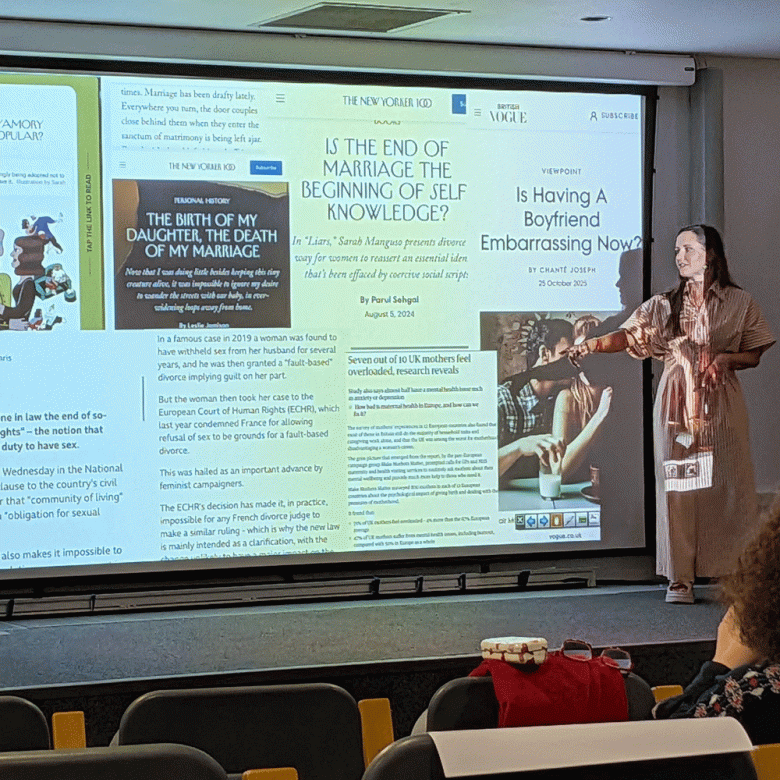
This article was written by MA Professional Writing student, Samantha Lefroy-Sims.
Falmouth Campus is alive with conversation as people from all over the world attend the International Women’s Writing Association Conference. Nestled in the heart of Falmouth, the conference focuses on women’s voices, ranging from literature, art, history and many other subjects.
The event offers a chance to connect and share interdisciplinary ideas, bringing together academics, students and enthusiasts studying aspects of women’s writing and all that encompasses. As an MA Professional Writing student, I was curious to see what talks could influence my own work and what I could take away with me into my own writing practice.
Over three days, there is a packed programme of events from talks, discussion panels, workshops and exhibitions. Each session has contributors who present their papers, sharing their research, ideas and questions. What strikes me is just how varied and in-depth each reading is. At the end the audience is invited to ask questions, digging deeper into the research and sparking interesting conversations.
I made the most of the event by attending a selection of talks that piqued my curiosity.
Writing the Body: Pain and Inscription included a presentation from a compelling, highly personal, creative non-fiction paper spoken almost as a stream of consciousness, to a researcher unearthing the stories behind the female inmates of Cornwall’s historic Lunatic Asylum. It explored how to write women back into the granite landscape where they have been forgotten.
At the conference, there’s also plenty of opportunities to take conversations further over lunch in the Fox Cafe. People share what they have learned and which panel or workshop they are going to attend next. It's a great chance to meet people and be introduced to theories and research that can help further your own work.
Next, there’s an option to attend a TEDx Talk that asked: ‘Who would you become if you could keep exploring?’. The session dissects the writing process behind the talk and how lived experience is translated into public narrative while drawing on feminist and queer theory. Place, Landscape, Wonder is another selection of papers interconnecting aspects of the natural world with women’s lives. The readings explore how women’s writing is closely interwoven with walking the surrounding landscape and how life-writing connects to place.
The last workshop of the conference is a combined reading from a student doing their PhD in creative writing. This workshop introduces and explores ‘death writing’ and ‘terminal writing’ as they interweave personal, lyrical memoir with academia. The workshop consists of rearranging prose. We cut up and interlace texts, experimenting with redacting information, breathing new life into it and creating something new. We are encouraged to reflect and think of what we can take away from the process to apply in our own writing. It’s refreshing and thought-provoking.
As an MA student, the conference offers the ideal opportunity to delve into new ideas from experienced researchers. It allows you to develop a different perspective that you might not have considered otherwise.
It’s impossible to see everything the conference has to offer, but the carefully curated programme ensures each panel is full of interesting topics. Whatever you see, there is something you can take from each session. Every paper is unique in its approach to women’s writing but there are many threads of ideas that connect people’s work. That’s what makes the conference so engaging.
You might also like

Studying at your insurance choice university

My top tips for staying safe in Falmouth

You've accepted your offer - what next?

