Business course leader publishes book drawing on 20-years of research into local sustainability
10 June 2026
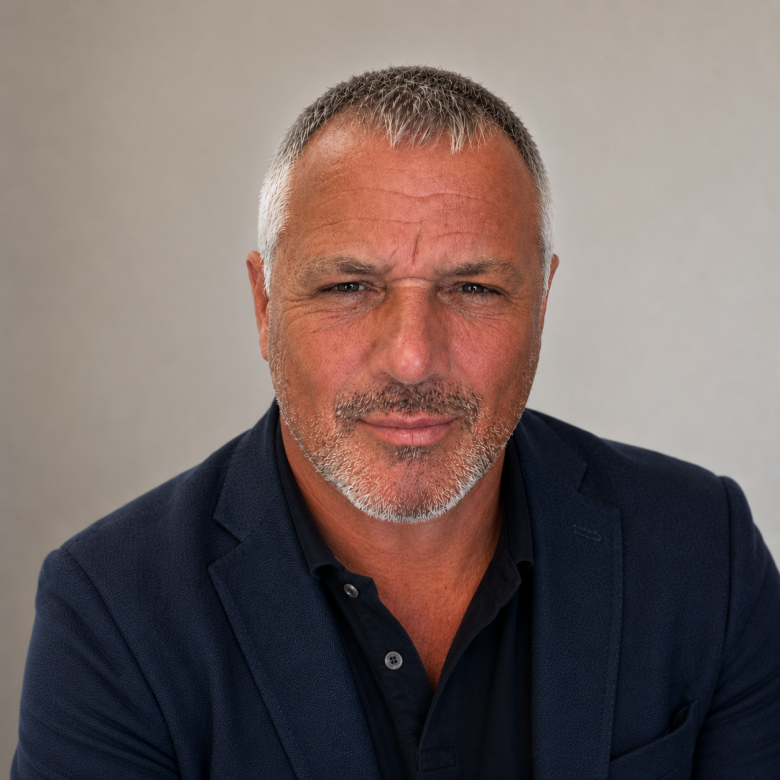
From advising at United Nations level to studying parish councils in Cornwall, MSc International Business Management Course Leader Gregory Borne has spent his career tracing how global ideas take root in local places. His new book, published by Routledge, draws on more than two decades of research and fieldwork across the county to examine how communities engage with global sustainability challenges.
We spoke to Greg about his long-standing research into local governance, the personal history that ties him to Cornwall and how a career spanning the United Nations to the town council shapes his teaching on the MSc.
Your new book focuses on parish councils as an underused bridge between communities and global governance. Where did that idea come from?
The idea has its roots in doctoral research I began as far back as 2002. While sustainable development is often discussed in terms of global agreements and national policy, these ambitions ultimately succeed or fail in the places where people live their daily lives. That led me to explore the role of parish and town councils, which are often the closest level of government to local communities.
For me, creativity does not sit alongside business and sustainability, it sits at the heart of both.
Growing up in a rural farming community, I also saw first-hand how important local institutions can be in shaping change. Parish councils may appear modest, but they provide a fascinating lens through which to explore how global ideas are translated into local action.
The book argues that if we want to understand how sustainable development is embedded in communities, we need to pay greater attention to the local level. In that sense, it is really a book about the relationship between local and global, exploring how those two scales influence one another.
Your career has taken in work with the United Nations, national government, local councils and the private sector. How does that breadth of real-world experience feed into how you teach students on the MSc?
I come from an interdisciplinary background and have worked across a wide range of organisations, from local government through to national policy initiatives, the United Nations and the private sector. That experience has taught me that many of the challenges we face today cannot be understood through a single perspective.
In the classroom, I encourage students to take a systems view of the world. My experience allows me to draw on real examples from research projects, consultancy work, policy development and international initiatives, helping students connect academic theory to practical challenges and opportunities.
You joined Falmouth in 2023 as Course Leader for the International Business Management MSc. What drew you to Falmouth specifically?
Professionally, the opportunity to develop and lead the programme was particularly appealing. What attracted me most was the chance to bring together two areas that have shaped much of my career: international business and sustainable development. Increasingly, businesses are recognised as key actors in addressing global challenges, whether that is climate change, social inequality or technological change, and the opportunity to prepare students for leadership roles within that landscape was something I found genuinely exciting.
There was also a more personal reason. My family has longstanding connections with Cornwall and Falmouth, and joining the university felt, in some ways, like a return to those roots.
How does the university's creative culture sit alongside a course focused on business and sustainability?
For me, creativity does not sit alongside business and sustainability, it sits at the heart of both. Addressing complex global challenges requires creativity, innovation and the ability to think differently. That is one of the reasons Falmouth's distinctive creative culture is such an advantage.
On the MSc, we encourage students to move beyond simply learning business tools and frameworks. In many ways, the combination of creativity, business and sustainability reflects exactly the kinds of skills that organisations increasingly need.
For students on the MSc, international business and sustainability can sometimes feel like competing priorities. How do you help them reconcile that tension?
One of the first things we explore on the programme is that tensions and contradictions are an inevitable part of both business and sustainable development. Economic growth, environmental protection and social wellbeing do not always align neatly, and organisations often have to make difficult decisions.
Rather than avoiding these tensions, we encourage students to engage with them critically. Students learn that sustainability is not simply an additional consideration for business. Increasingly, it is central to long-term success and resilience.
What would you say to a prospective student who is weighing up whether the MSc International Business Management at Falmouth is the right next step for them?
I would encourage them to explore the programme, speak to current students and consider how it aligns with their own interests and aspirations. Students join us from a wide variety of backgrounds: some arrive wanting to deepen their understanding of international business, while others come from different disciplines looking to apply their existing skills in a new context.
What unites the programme is a focus on understanding the world as it is today: interconnected, global, rapidly changing and increasingly shaped by sustainability, technology and international collaboration. My hope is that students leave with the confidence and skills to make a meaningful contribution.
You might also like

Research Fellow on artists using technology to reveal its flaws and problems

The MA Fine Art Online team explore 'thoughtful, generous and alive’ research-led teaching

Archives in Action: Heritage, culture and the power of memory through fashion

Game Development student to present research at conference
