Archives in Action: Heritage, culture and the power of memory through fashion
19 May 2026
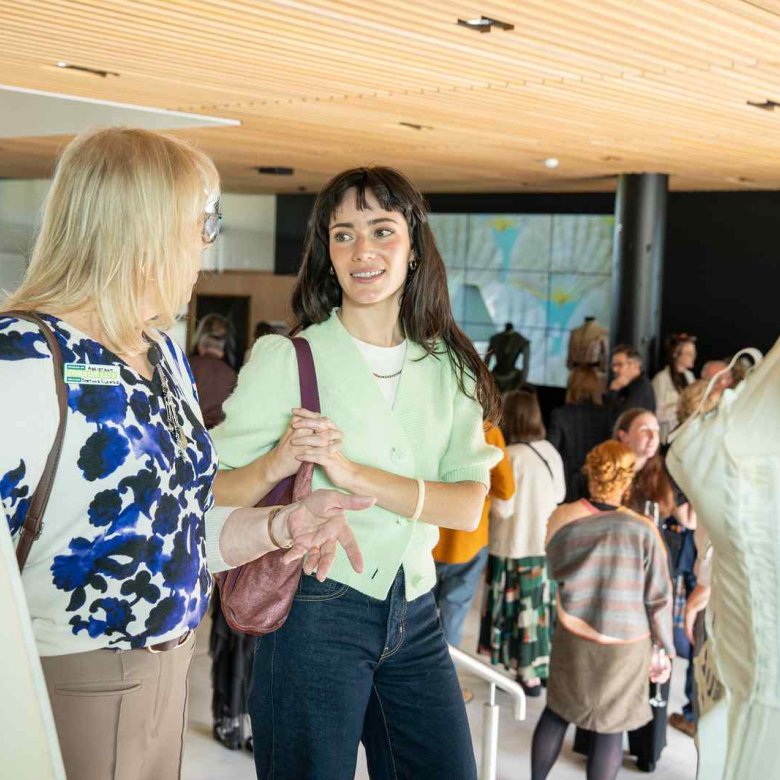
In 2025, tens of thousands of textiles and dress artefacts journeyed to the specially built, museum-quality, climate-controlled chill of the Falmouth University archives.
Delicately embroidered waistcoats, exquisite handmade lace, shawls, shoes, handbags, hats – the entire gamut of historical dress now form Falmouth University Textiles & Dress Collection. But the question remained: how to preserve 18th Century artefacts while making them widely available to a 21st Century audience of researchers, students and historians?
The Devonshire Collection of Period Costume was founded in 1967 by theatre enthusiasts Peter Clapham, Paula Morel and Annette Ingold: a trio who combined their personal collections into one of the largest privately owned dress and textile collections in the UK, displayed for decades in a dedicated museum in Totnes. Until now.
In 2025, the Collection joined a thriving fashion and materials archive at Falmouth University and began a new adventure. The Textile & Dress Collection’s new home isn’t just a repository; it’s a living showcase of exceptional objects and a gateway for exploring how such collections can be accessible and relevant in education and beyond.
Collaborations so far have included 360° digitisation: using exceptional quality 3D scanners to create immensely detailed digital artefacts which have been built into video games and virtual, immersive exhibitions. Items have also been digitally replicated to use or study from afar, such as imaging 300-year-old weaves to make new, archival-inspired wallpapers for the homes of tomorrow.
For teachers and educators interested in the value of archives in education, the Collection has become a major asset, and a powerful tool. Housing thousands of historic garments, textiles, patterns and fashion publications, it provides deep insight into the evolution of dress, materials and techniques.
Together, the facilities and archives create a learning and knowledge exchange environment where making and historical inquiry inform each other, supporting innovative and critically engaged fashion and textile education.
This article was written by Falmouth University, and originally appeared in NSEAD magazine (spring 2026).
You might also like

Research Fellow on artists using technology to reveal its flaws and problems

The MA Fine Art Online team explore 'thoughtful, generous and alive’ research-led teaching

Business course leader publishes book drawing on 20-years of research into local sustainability

Game Development student to present research at conference
