Resident Evil 9 and the return of playable fear: Why horror games matter more than ever
27 February 2026
This article was written by Dr Eoin Murray, BA(Hons) Creative Writing lecturer and organiser of Falmouth University’s upcoming Horror & Gaming Conference this July.
As the days slowly grow longer and the winter gloom begins to loosen its grip, we might be forgiven for thinking the shadows are finally retreating. The evenings brighten, the air shifts, and a sense of seasonal optimism creeps back in.
But just as the light returns, a new shadow of terror is gathering in the gaming world: the return of one of horror’s original icons, Resident Evil. Because no matter how much daylight we gain, some franchises have a way of dragging us straight back into the dark and shining a light on what lurks in our real-world shadows. For that reason, a new Resident Evil isn’t just another sequel — it’s a cultural temperature check.
Each major horror release tells us something about how audiences want to experience fear, and more importantly, what they want that fear to mean. As an avid researcher into horror video games, with two published book chapters on Resident Evil games specifically, the enduring success of the series reminds me of the place horror occupies not only within video games, but as a cultural discussion point.
Horror provides us with a prism through which we can tackle difficult real-world subjects behind the safe ‘surrogacy’ of fictional horrific scenarios. Recent horror films like Sinners delve into racial tension, whereas 2024’s The Black Girl Survives in This One horror anthology sought to empower Black female characters in settings where, traditionally, agency is lacking.
Video games, however, take this a step further. While books and films allow us to witness fear, games require us to act within it. You are in control of a character or scenario, and this makes that surrogate experience feel just a little more real. In Resident Evil Requiem, I won’t be watching Leon Kennedy battle zombies, I’ll be fighting zombies through him and if I fail, so will he. In horror games, fear is not observed — it is enacted.
And when fear is enacted, players become complicit in the choices they make under pressure. That complicity creates a uniquely interactive form of moral engagement — one that other media cannot replicate in quite the same way.
Recent studies have shown horror fans are looking for more narratives that deal with heavier topics, which reflects the general political landscape. We’ve seen other horror games tackle some of these subjects in different ways: Papers, Please explores immigration and policed states, Detention deals with societal martial law and historical trauma, and Observer engages with censorship and surveillance. These are not simply games that scare. They are games that ask players to navigate systems of control, scarcity, paranoia and moral compromise.
Video games now have a player base of 2.7 billion worldwide, 23% of which engage with horror games, so this is not a niche conversation. It represents a vast global audience interacting with themes of contagion, authoritarianism, isolation and collapse, often through mechanics that simulate vulnerability and limited power.
In industry terms, that makes horror one of the most efficient vehicles for experiential storytelling currently available. Where blockbuster action games often empower, horror frequently constrains — and constraint is a powerful design tool.
Whether through folk horror traditions, isolation narratives, or landscape-driven dread, horror has long been tied to place. In that sense, horror games feel especially resonant in moments where questions of identity, community and belonging are being renegotiated. As global uncertainty rises and some look for light relief, others lean into genres built around anxiety.
What makes 2026 particularly significant is not simply that a new Resident Evil is arriving, but that horror as a genre shows no signs of slowing. Big releases continue to command attention, and audiences continue to respond. The commercial goals set for Resident Evil Requiem are ambitious precisely because horror sells.
But beyond sales figures lies horror’s durable ability to evolve alongside the anxieties of its time. From contagion panic and digital surveillance to state violence and cultural erasure, horror games repeatedly demonstrate that interactive fear can carry thematic weight. They create surrogate environments where players can experiment with responses to crisis and discover that failure has consequences, but only within the boundaries of fiction.
That balance between safety and intensity may be horror’s greatest strength. It offers rehearsal space for confronting fears that feel increasingly present in everyday life.
It is precisely this intersection between industry success and cultural resonance that will be explored in depth at Falmouth University’s upcoming Horror & Gaming Conference this July. Running from July 7–9 on the Penryn Campus, the event brings together researchers, developers and creatives examining how horror functions not just as a genre, but as a mode of thinking.
Falmouth, situated within Cornwall’s own gothic landscape and home to the pioneering Games Academy, feels an apt setting for such a discussion. With ongoing research and events like the Dark Economies Conferences and continued academic work on horror gaming, the region has quietly become a hub for exploring the genre across cultural outputs.
If Resident Evil Requiem succeeds commercially and critically, it will reaffirm something the industry already understands: horror is not a side genre. It is a central cultural arena where design innovation, cultural commentary, and commercial ambition intersect.
And in a year that promises one of the biggest horror releases in recent memory, that conversation feels more urgent than ever.
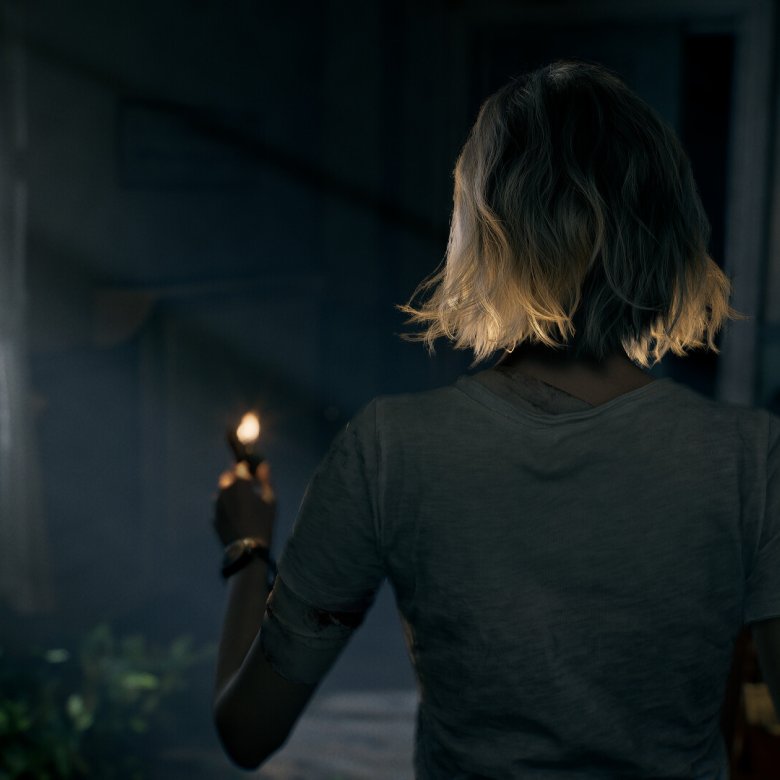
Image credits: Resident Evil Requiem, Capcom
You might also like


Creatives on Creatives: Denzil Forrester MBE and Duncan Cameron

Quality of teaching keeps Falmouth’s Events and Tourism courses among the best in the country

Online Creative Writing lecturer wins Royal Society Trivedi Science Book Prize
