Music lecturer releases two piano quintets with Métier Records
27 February 2026
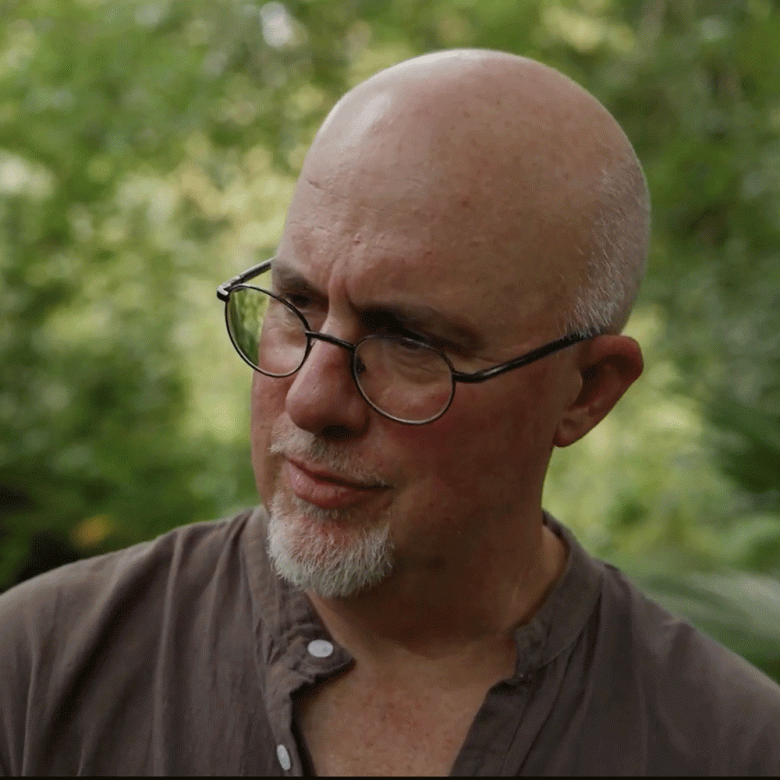
Composer and BA(Hons) Music lecturer, Jim Aitchison, has released two piano quintets with Métier Records, a body of work that has grown from two decades of collaboration with classical pianist, Roderick Chadwick and the Kreutzer Quartet.
Created as part of a musical response to the work of leading visual artists, the quintets have been created as part of a major project with Cornwall’s Tremenheere Sculpture Gardens, with support from Arts Council England, the Vaughan Williams Foundation, the Hinrichsen Foundation, the Royal Academy of Music, and Falmouth University.
We chatted with Jim to learn more about the story he wanted to tell through his piano quintets, how Falmouth’s music students got involved with the project and why collaboration is an important part of the creative process.
Can you tell us more about the making of, and the inspiration behind, your piano quintets?
The two piano quintets emerged from three long-standing strands in my work: my long-term collaboration with Roderick Chadwick and the Kreutzer Quartet; a project spanning more than two decades of engaging musically with visual art and gallery spaces; and a fascination with the piano-and-strings ensemble itself.
The piano quintet grouping (piano, two violins, viola and cello) sits in a lineage that includes Brahms, Franck, Fauré, Ravel, Shostakovich, Enescu, Schnittke, Adès and many more. It is a repertoire often regarded as conservative but is in fact full of expressive and structural volatility. The uneasy combination of exposed string textures with the entirely different mechanics and sonority of the piano creates, for me, a kind of fragile, compromised grandeur.
The first of the two piano quintets, Margarete, was completed recently yet was over a decade in gestation. A reflection on Anselm Kiefer’s 1981 painting of the same name, the work explores the proximity of musical polarities - sacred and corporeal, system and anti-system, authenticity and theatricality - often placing them in uneasy coexistence. Quotation and historical residue are treated not as homage, but as material interrogated as part of the overall process.
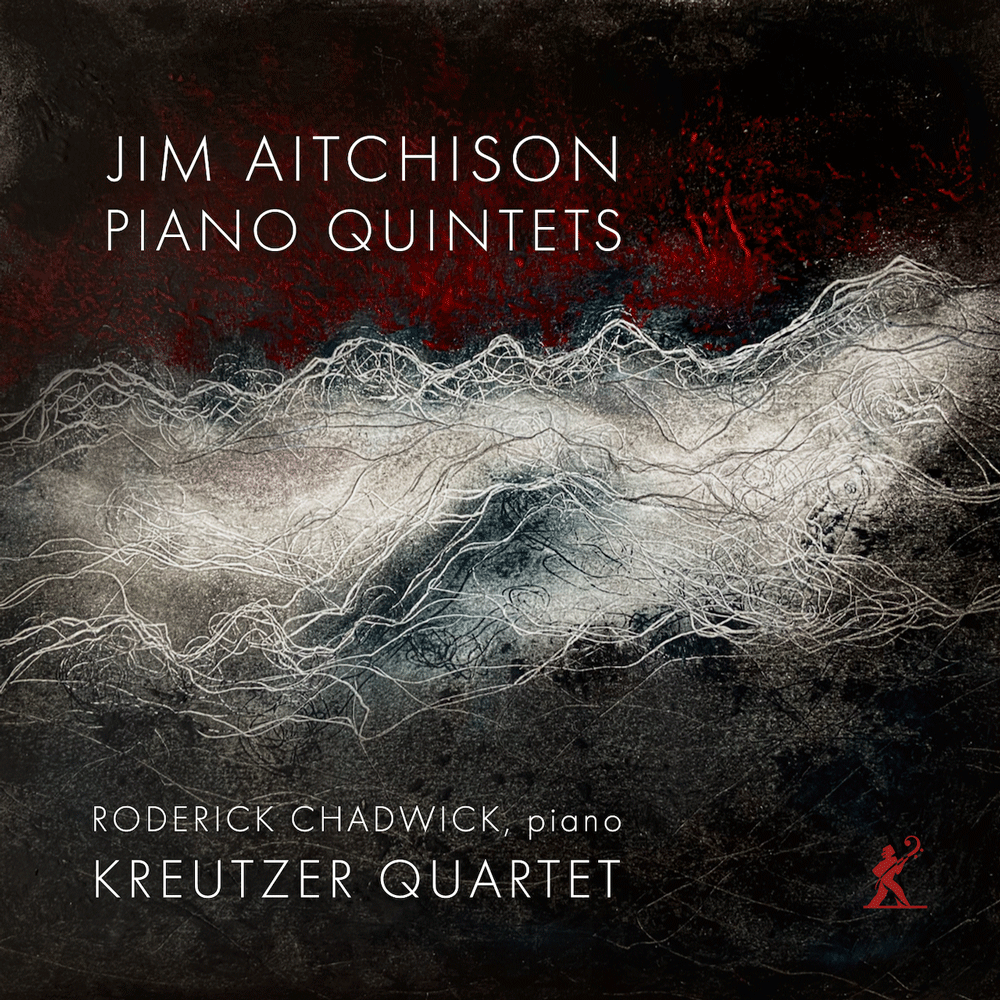
Transience Patterns, the second quintet, was composed as part of a project with the Tremenheere Sculpture Gardens in West Cornwall and is very different in character. If the first quintet is concerned with polarisation, the second focuses on emergence and transformation. It offers a decisive experience of passage from darkness into partial and compromised light, which, alongside the seasonal cycles embodied by the landscape, became a central structural feature of the music.
As part of the Tremenheere project, we asked BA(Hons) Music students at Falmouth, alongside other young people in Cornwall, to compose their own music on the theme of dark to partial light for Roderick Chadwick and the Kreutzer Quartet, both of whom travelled down from the Royal Academy of Music to workshop the students’ pieces on campus. The recording represents the culmination of a long artistic arc, bringing together these strands of collaboration, visual engagement and chamber music research.
Can you tell us more about how Falmouth University supported the project?
Projects of this scale depend on people willing to recognise and advocate for ambitious work.
From its inception, the Tremenheere project combined composition, performance, space and place-responsive practice, research and public engagement. Doug Brown, Falmouth’s Dean of the Faculty of Screen, Technology & Performance and Professor of Digital Games, Tanya Krzywinska, understood and wholeheartedly supported that complexity and gave the project crucial institutional backing at key moments. In practical terms, loan and transport of a piano was critical, and capturing the live performance on film gave us an important document of the event, all generously provided by Falmouth.
Doug’s later support for the studio recording was critically important in allowing the work to move beyond a single live event into a permanent documented form. Kamran Harandy and other Falmouth colleagues were instrumental in navigating the funding complexities that enabled the project to be realised.
I am deeply grateful to those individuals for their belief in the project and for enabling it to reach completion.
As a lecturer for BA(Hons) Music, why do you think students should study the subject at Falmouth?
Students who come to Falmouth have the opportunity to situate their musical practice within a wider artistic and technological ecology that provides support for thinking and creating across art forms. The proximity to other disciplines such as games, film and visual art can encourage them to think beyond narrow genre definitions and to develop a broader sense of what contemporary musical practice might be.
For students who are serious about developing their craft, prepared to work independently and collaboratively, and interested in testing ideas across disciplines, that context can be a positive and rewarding one.
External links
You might also like

Online Creative Writing lecturer wins Royal Society Trivedi Science Book Prize

Professional Writing course leader releases new book with The History Press

Meet the creative behind Falmouth's new Content Creation & Branding course

