Dress historian and fashion lecturer releases new book with Penguin
02 April 2026
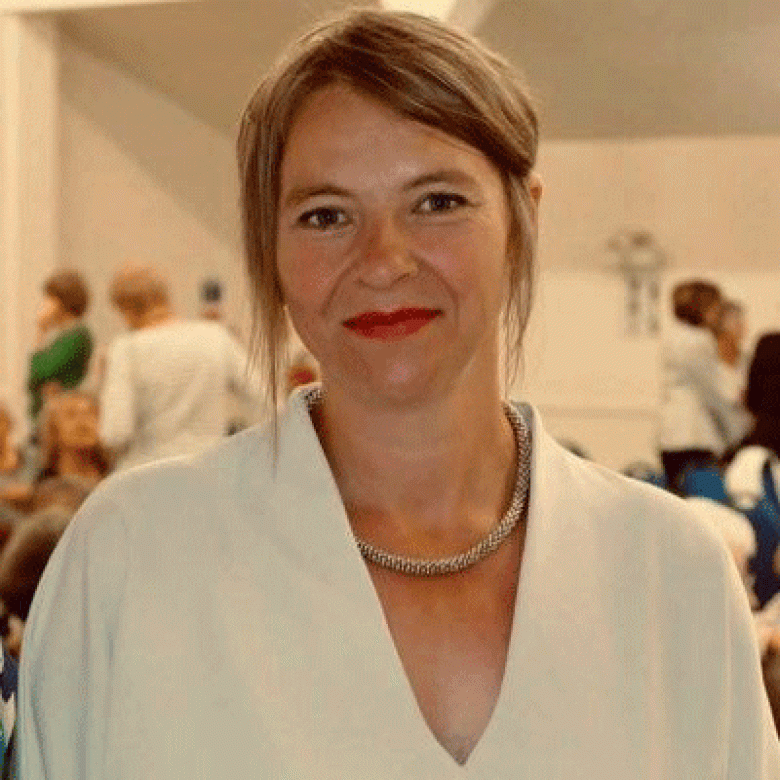
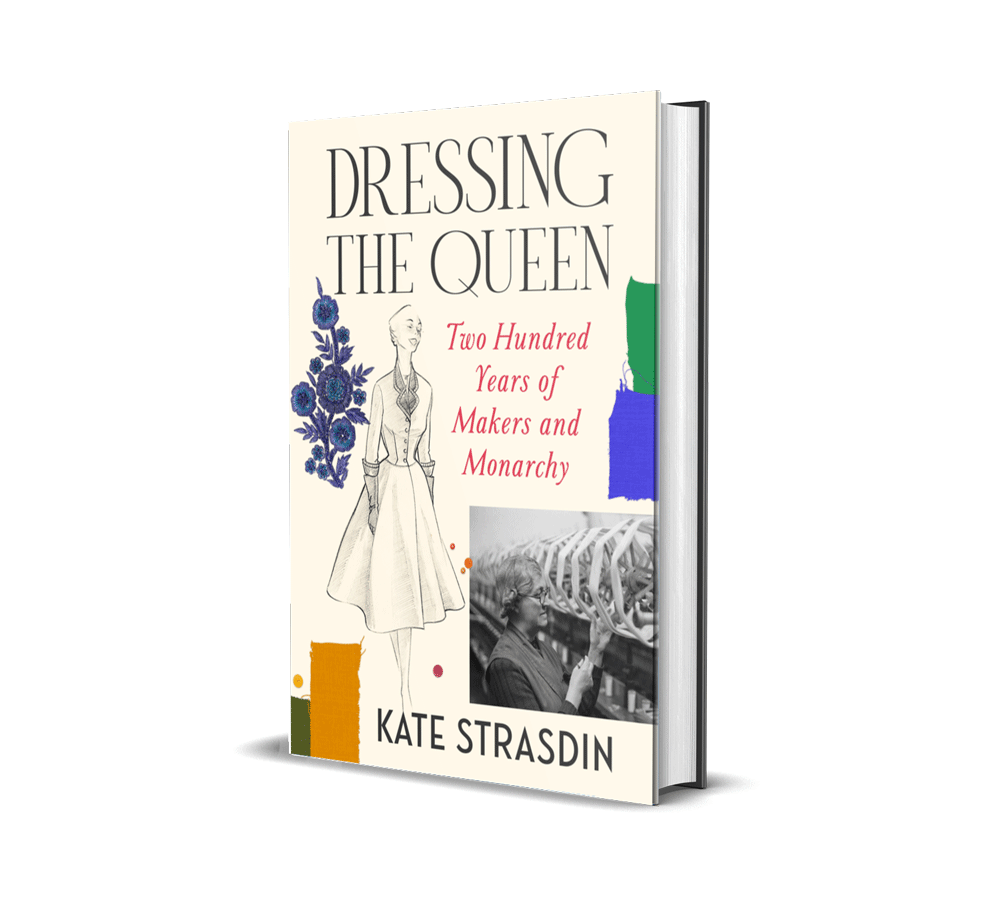
Behind the pages of Dr Kate Strasdin’s latest non-fiction, Dressing the Queen: Two Hundred Years of Makers and Monarchy, lies the hidden story of the people who designed and stitched the clothes of Britain’s queens, from Queen Victoria to the modern Elizabethan age.
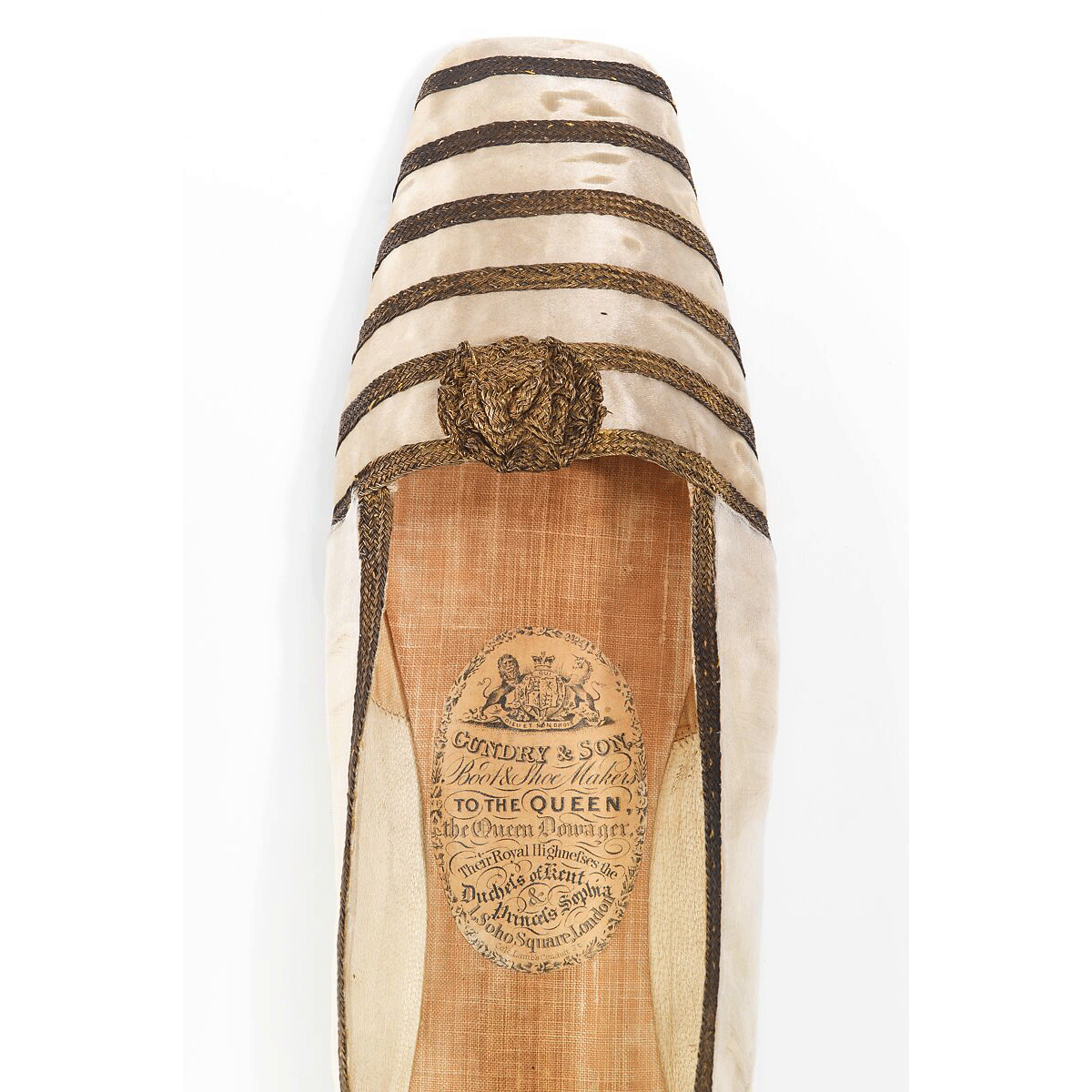
The senior lecturer, who teaches cultural studies on Falmouth’s Fashion & Textiles courses, has delved into the history of the previously unsung women and men behind the ‘Royal Wardrobe’, exploring the stories of those who crafted everything from handmade boots to delicate stockings.
To celebrate its publication, Kate is set to have her book featured within the latest edition of Tatler, a sell-out event at the V&A and an in-conversation event with former editor of ELLE, Lorraine Candy, at Hatchards. The book, published today with Penguin, is also set to have its press view at Buckingham Palace.
Ahead of Kate’s busy tour, we chatted with Falmouth’s fashion historian to learn more about her royal discoveries, what she wanted to uncover within her work and how it all interweaves with her teaching practice at Falmouth University.
What first inspired you to explore the hidden story of the people behind the ‘Royal Wardrobe’?
My doctoral research undertaken more than a decade ago explored the surviving garments of Queen Alexandra and considered what such objects can contribute to the understanding of the person who wore them. However, I became increasingly interested in the makers and how much they often inhabited the shadows of these narratives, with the focus tending towards the fame of the wearer rather than the creator.
There have been many publications that look at royal dress from the perspective of the monarch, so it felt important to spotlight the many different industries that contributed to these royal wardrobes past.
Can you give us a teaser or insight into one of the interesting discoveries you write about in the book?
The book looks at makers over a two-hundred-year period from Queen Victoria to Queen Elizabeth II. Those I found most fascinating were often industries that have disappeared from the landscape of material culture today. I researched the life and career of Ann Barkin, who was the cheapener to Queen Victoria for sixty years. A cheapener was an embroiderer of stockings, a very specific role that coincided with the trend for decorative stockings in the nineteenth century. She became something of a local celebrity for her royal connection, and Queen Victoria even ordered a photograph of Ann which is now in the Royal Collection.
What was important for you to share, uncover or say within this book?
I wanted to showcase the range of artisan practices that formed a part of the royal wardrobe across the generations, from gloves and hats to embroiderers and shoemakers. My aim was to celebrate the skills of tailors and seamstresses but also to recognise the labour of people working in spaces such as the Royal Laundry in Richmond, an establishment that washed royal linen and undergarments for over a century, but which is practically forgotten now. The book is essentially about a largely hidden workforce and the skills they maintained.
Can you tell us more about how your work as a dress historian interweaves with your teaching at Falmouth? Is there any crossover?
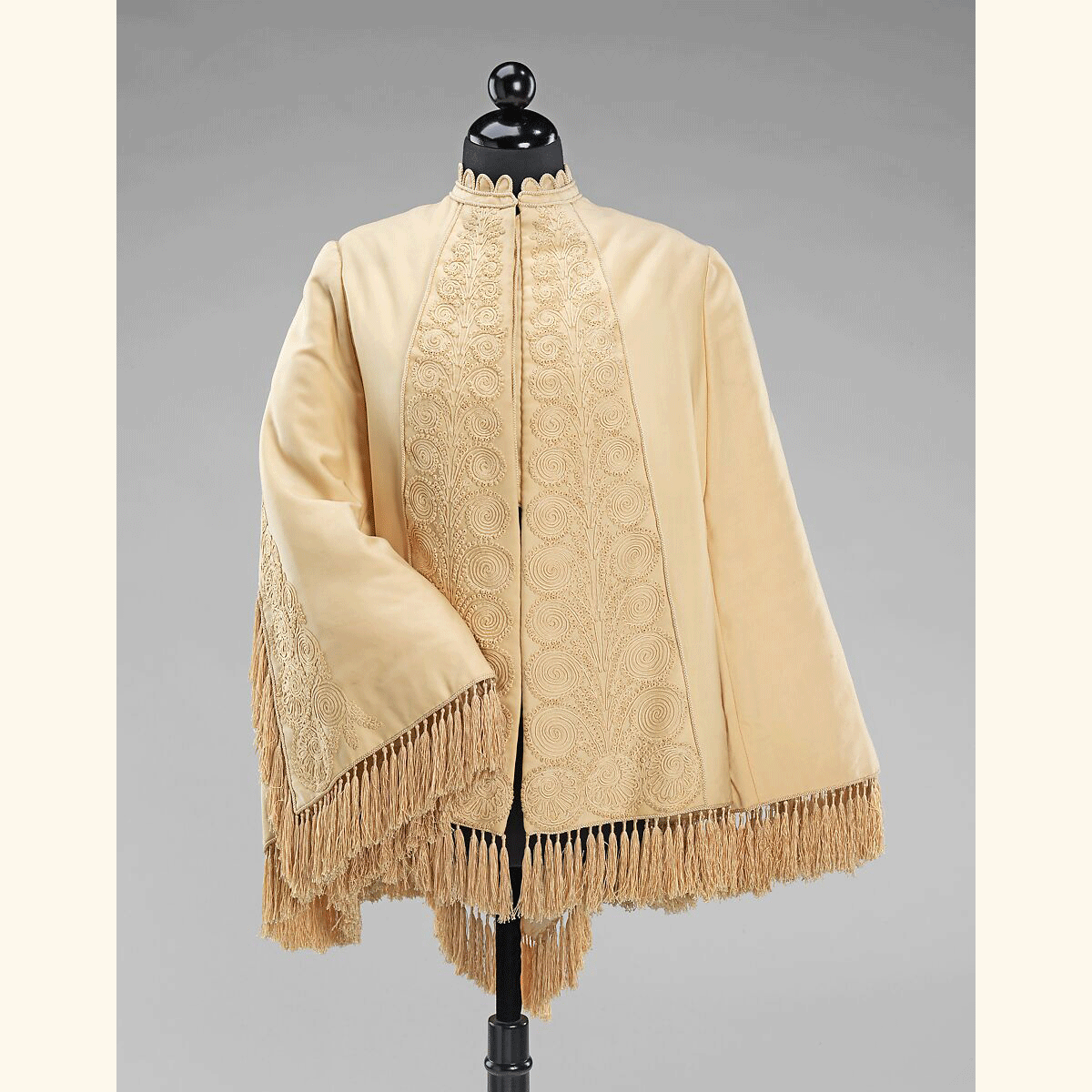
Yes, there is absolutely a crossover. The recent arrival of the Devonshire Collection of Period Costume at Falmouth University has had a direct impact on teaching. We are able to offer an object-based pedagogy in a pretty unique way, allowing first-year students the opportunity to see first-hand a whole host of textile and dress pieces that relate to our historical survey module, bringing history to life each week, decade by decade.
Emphasising the importance of history and cultural practices to students across the Fashion and Textiles Institute helps them to contextualise their own studio work and understand where their ideas might sit within those traditions. I love it!
How did you find the process of writing and were there any challenges you encountered?
Writing commercial trade non-fiction is very different to my work as an academic and so it requires a different kind of writing style. Juggling the two roles, teaching for half of the week and then switching into freelance writing for the other half, can feel quite challenging and it is not always easy to flip the styles of work. However, there is great freedom in being able to write for a broader audience and I love that flexibility.
External links
Purchase your copy of Dressing the Queen: Two Hundred Years of Makers and Monarchy
You might also like

Falmouth’s Film lecturers feature at Cornwall’s first Folk Horror Film Festival


Creatives on Creatives: Denzil Forrester MBE and Duncan Cameron

Quality of teaching keeps Falmouth’s Events and Tourism courses among the best in the country
