From Casting to Comedy: How a Comedy Writing graduate found her funny
07 April 2026
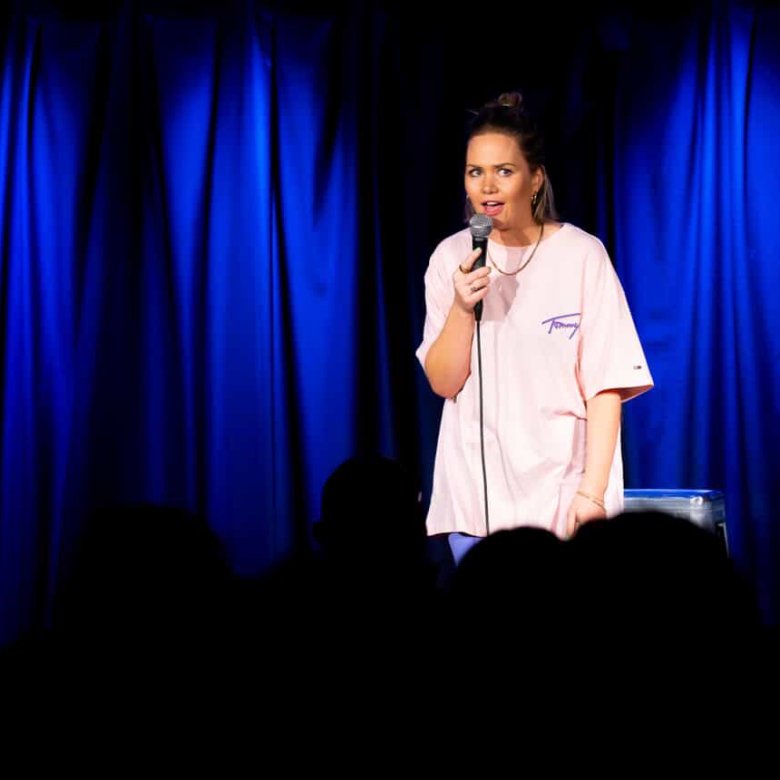
For Falmouth University MA Comedy Writing (Online) graduate Jo Somner, comedy wasn’t always the plan—it was something she describes as an itch she needed to scratch. Now an award-winning writer, performer and producer, Jo is building a multi-faceted career in comedy, proving it’s never too late to pivot and pursue what really excites you.
Before enrolling on Falmouth’s master’s, Jo had spent over 16 years working in television, including more than a decade as a casting producer on unscripted entertainment shows like Late Night Lycett and The Claudia Winkleman Show. Despite being surrounded by comedy, she never fully saw herself as part of it creatively. “I’d always been told I was funny,” she says, “but I hadn’t really written anything beyond WhatsApp.”
That changed unexpectedly. While listening to a podcast about sitcom writing—and somewhere on a drive through France—something clicked. “I just thought, ‘I want to do that.’”
Soon after, Jo enrolled in a short sitcom writing course, before taking the leap and applying for Falmouth’s master’s degree. Around the same time, she returned to freelance work after having her daughter—an experience that prompted a bigger reassessment. “I’d had a baby, I was going back to work, and I thought: I don’t want to keep doing the same thing. I want to actually write the comedy.”
Despite her industry experience, Jo describes herself as “completely new to comedy” when she began the course. In fact, she initially found it difficult to even admit she thought she might be funny. “It feels like one of the most arrogant things you can say— ‘I think I’m funny.’ It’s very vulnerable.”
The course changed that. Through structured teaching, industry insight and hands-on practice, Jo developed both her technical skills and creative confidence. “I learned the fundamentals—the structure, the rules and the rules you can break. Once you understand that, you can focus on the funny.”
She compares the process to baking: master the basics first, then experiment. Crucially, the experience also helped her develop a personal writing practice. “I now know how I write best—what time of day, what music I need, when to stop. It’s almost meditative.” And after graduating with distinction, she gained something even more valuable: “I can officially say I’m funny now. I’ve got a certificate to prove it!”
One of the most impactful aspects of the course was the sense of community. Jo remains in touch with fellow graduates, often collaborating and sharing ideas. “That support network is huge. Other people’s experiences fed into my work, and vice versa.”
She also credits her tutors for their honest, direct feedback and encouragement. “Course Leader Simon Nicholls and Andy Dillon really championed us—but they’d also tell you when something wasn’t working. That balance was so valuable.”
And for Jo, returning to education as an adult was transformative. “I didn’t have that kind of support at school. So, to find it later in life—and actually enjoy learning—was amazing.”
Since graduating, Jo has wasted no time building momentum across multiple areas of comedy. She is a writer and performer with Gobby Girls Productions, whose comedy sketch show transferred from the Edinburgh fringe to multiple runs at the Soho Theatre and are co-headlining with Funny Women at The Comedy Store for the first ever Live Comedy Day. “Life is somewhat chaotic,” she laughs. “But you have to thrive on chaos to do comedy.”
Alongside performing, Jo contributes behind the scenes—editing promotional comedy content, designing materials and workshopping scripts with the team. “It’s incredibly collaborative. Everyone brings something different.”
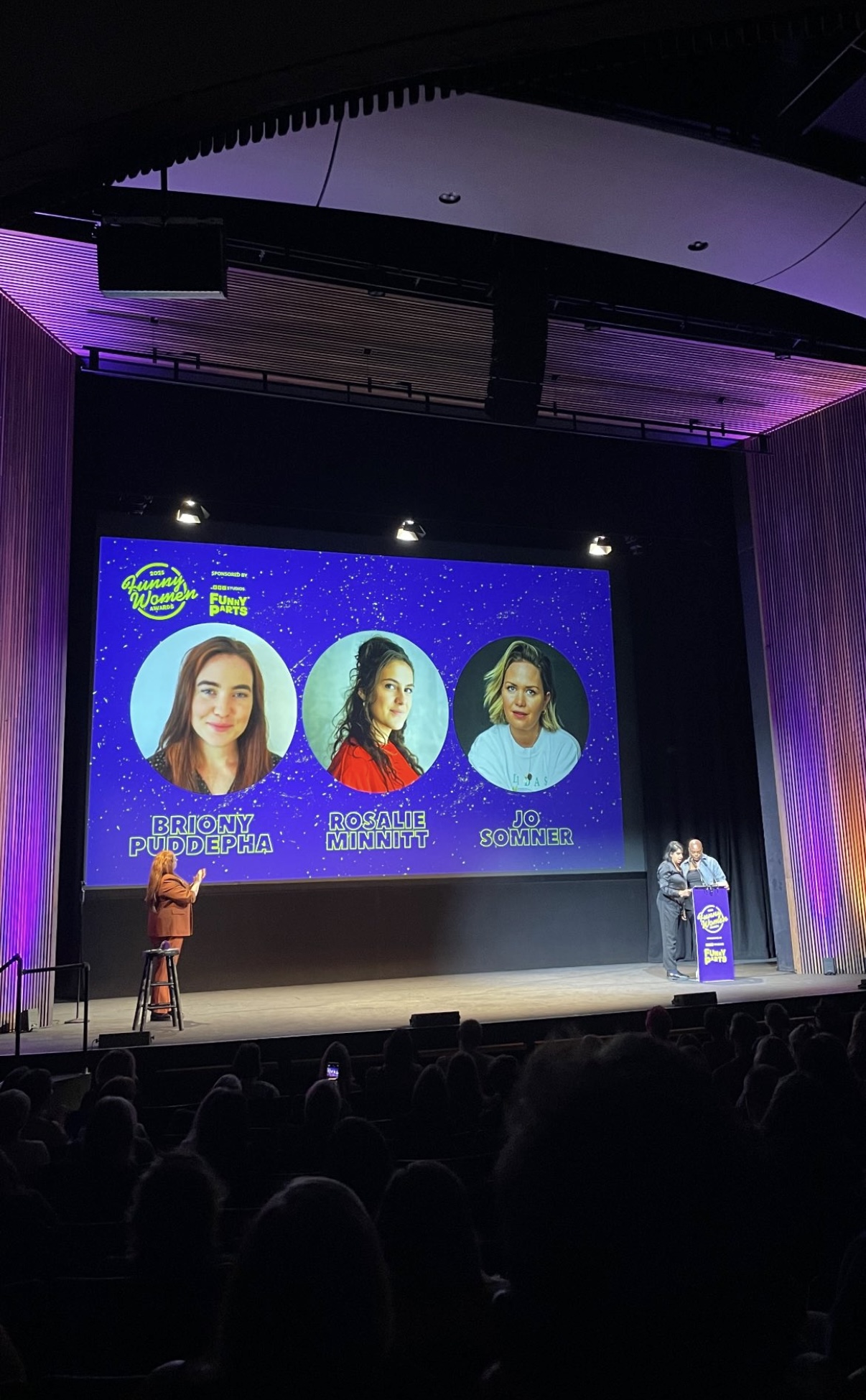
As a stand-up performer, Jo has also reached the final 12 of the Bristol Comedy Competition, appeared on the hit podcast Drunk Women Solving Crimes, and won second place in the Funny Women Awards (Comedy Shorts category) for her film ‘The Trad Wife’.
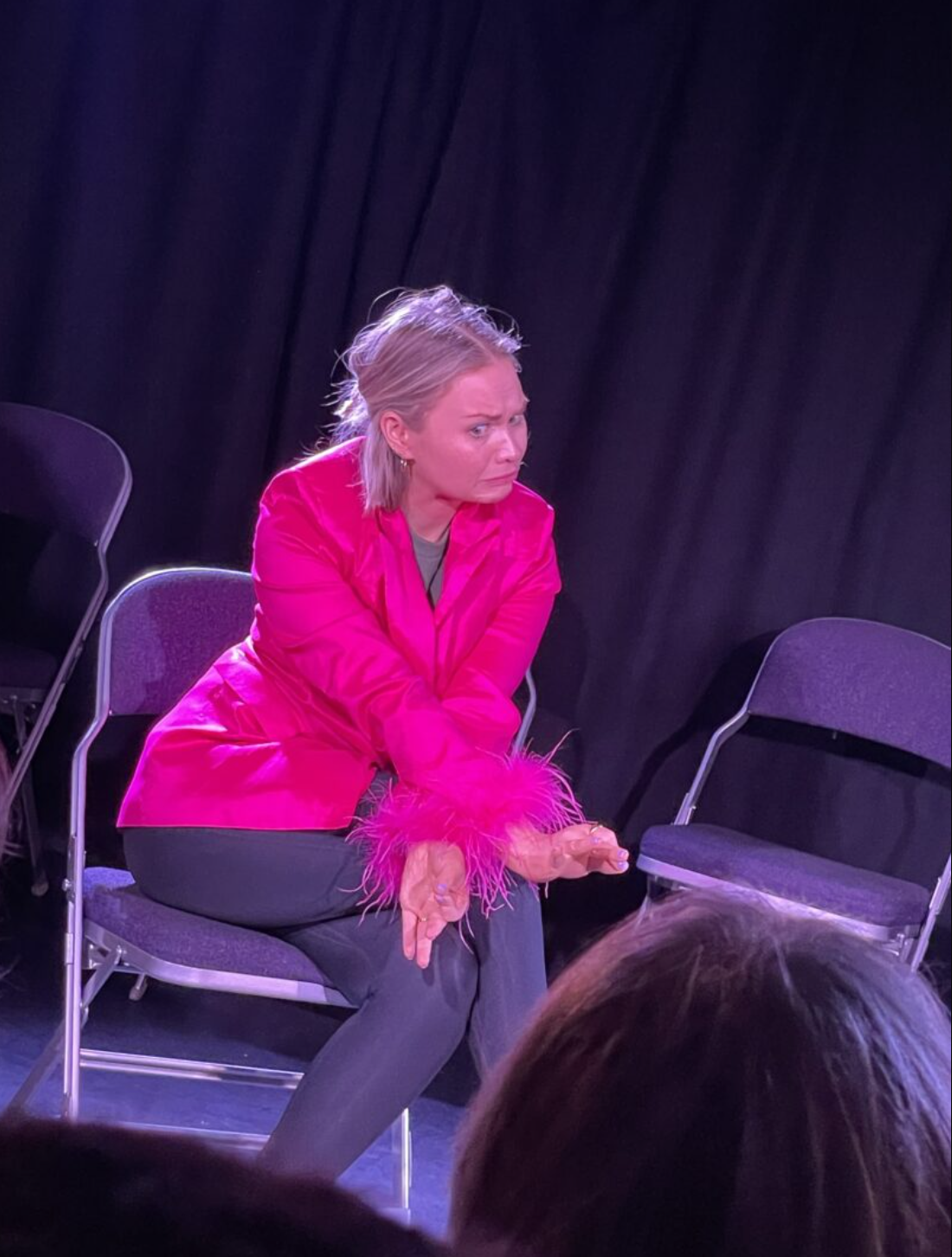
In addition, Jo is part of a mentoring programme with Women in Film & TV, where under the guidance of Kelly McGolpin she is developing new work and exploring opportunities as a writer-performer. “I never thought of myself that way before—but now I realise that’s exactly what I am.”
Like many emerging comedians, Jo is also navigating the world of online content—particularly Instagram—as a way to showcase her work. “It’s basically my CV online,” she explains. “If people don’t know you’re doing things, they can’t ask you to do more things.”
While she acknowledges the pressure to niche down, Jo has resisted pigeonholing herself. “I’m a writer, performer, producer—I do all of those things. I don’t want to limit that.” Instead, she focuses on authenticity and consistency, using her platform to share her work and build visibility.
Looking back, Jo sees her decision to pursue comedy not as a crisis, but as a turning point. “I called it a ‘third-life crisis’—but really, it was just me deciding to go for it.” Her journey is a powerful reminder that creative careers don’t have a fixed timeline—and that sometimes, all it takes is one moment of clarity to change direction. “I thought I could do it,” she says. “And now I know I can.”
You might also like

Meet the Film alumnus producing a Cornish-language short film


Film graduate shortlisted at Young Arrows for shoestring skate campaign

Meet the Drawing graduate nominated for the New Blood Emerging Art Prize
