Creative Events Management graduate on building a career in accessibility
08 May 2026
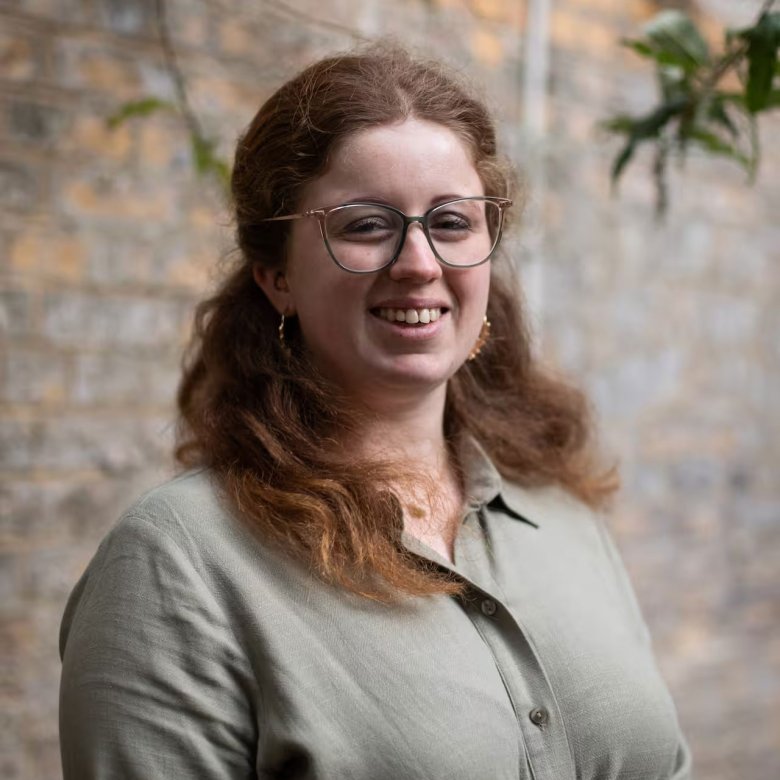
Less than two years after graduating from the BA(Hons) Creative Events Management course, Freya Pretty is already the founder of her own business, co-director of a company and Access Manager across multiple festivals including Glastonbury. As someone who experienced hearing loss from a young age, her work is deeply shaped by lived experience and a commitment to improving accessibility across the events industry.
We caught up with Freya about how her time at Falmouth helped shape the path she is on today, and how her personal journey has influenced the work she now leads.
Looking back, which parts of the course feel most relevant to the work you do now?
One of the biggest things for me was the Event Innovation Project, where I created my own business plan. It gave me the chance to take an idea I already had and really dig into it, flesh it out and give it the space to grow. Looking back, it was the perfect springboard for building my business Access Together.
We also put on a lot of live events throughout the course, but my final one, Voice in Hand, really stands out. It was a d/Deaf awareness training day for businesses in Falmouth, and I just felt completely in my element. I loved every part of it. My team were incredible, and the feeling I got from delivering that event is something that has really stayed with me.
The Accessibility module was another key moment for me. Unsurprisingly, it was where I really started to deepen my understanding of access and begin nurturing what is now a huge passion of mine. It also made me realise just how important accessibility is across every industry. It is not niche; it is essential.
I was really supported by the team at Cornwall Business School, and the annual Dragons’ Den competition. Those early opportunities made a huge difference.
Accessibility was clearly a passion before you graduated. Was there a moment at Falmouth where that interest crystallised into something you knew you wanted to build a career around?
Before university, I was already passionate about Deaf awareness, but I never expected it to become central to my career. I taught basic sign language at my secondary school, but I did not think of it as ‘access’. It was just something I cared about.
I was born hearing into a hearing family. When I was six, I started losing hearing in both ears, and it fluctuated. When I was 11, my right ear went completely overnight. I still have no idea why. For most of my life, I adapted to situations. It became second nature to adjust myself to the world around me, always making sure I was sat where it worked best for me. If I could not hear or if there was too much background noise, I just zoned out. I did not realise there was another option; I just thought that was how it was.
That shifted in my second year while working as a research assistant on a project at Cheltenham Jazz Festival. The Access Manager reached out to ask if I had any access requirements, and I remember pausing and having a real moment of, “Oh… yeah, I actually do.”
It was the first time someone met me halfway like that, instead of the onus being on me to adapt. They reached out first, which made a huge difference. Once I experienced that, everything clicked. It completely reframed how I felt about access.
Around the same time, I was supporting another element of the research project where students from the Deaf Academy attended a live music event. I was asked if I could speak about my experience as a Deaf student and how that had been at university.
Afterwards, one student pulled me aside and said: “Thank you for doing what you’re doing. Don’t stop. Never stop. Deaf doesn’t mean anything when Deaf can do anything.”
That moment has stayed with me because it was not just about capability. I had always known being Deaf did not make me any less able, but society rarely reflects that. It often has a stereotyped way of seeing people from Disabled and Deaf communities, assuming we cannot do what others can, or treating it as a surprise when we do. That is something I wanted to challenge.
It was those two moments when access shifted from being something I experienced to something I knew I wanted to build my work around.
Going from winning a university pitch competition to running a real consultancy business is a big leap. How did those early post-graduation months feel, and what helped you find your footing?
Winning Falmouth’s Dragons’ Den competition was a real turning point. It gave me confidence in my ideas, but more importantly, it showed me that other people believed in what I was building. And so my confidence grew further still.
But the reality after graduating was more complicated than I expected. Not long after finishing university, I became seriously unwell, and it knocked everything off course for about a year. I started experiencing non-epileptic seizures, and it felt like the momentum I had built had suddenly stopped. There were definitely moments where I worried I had missed my chance. What I did not realise at the time was that nothing had actually been lost; it was all just waiting.
During university, I had built relationships, said yes to opportunities and put myself in rooms where I could learn and contribute. Those people did not walk away when I needed to step back and focus on my health, and I am very grateful for that. When I was able to return, those connections were still there. It was my passion and some great people that helped me find my footing again.
Since then, it has been a lot. It has been exciting, but also genuinely hard at times. It was a big leap. Not only did I start my own business, but I also moved to London, somewhere I had never lived before.
Freelancing can be lonely and, at times, quite daunting. Imposter syndrome definitely crept in. The more I spoke to people, colleagues and friends, the more I realised that feeling is not unique. Almost everyone experiences it at some point.
I joined a bubble of freelancers, and we navigated it all together at Lyrix Organix’s ‘Studio Nest’. Their support made a huge difference, and I have so much love for that group.
Now, I feel really lucky that my work brings me such a genuine sense of joy and purpose, even on the challenging days. It sounds a bit cheesy, but it really is worth it. I also work within a community of like-minded people, which is something I value a lot.
Your work has taken you to some incredible places. What has it been like contributing to accessibility at Glastonbury through the Levelling the Field project?
Levelling the Field is something I feel incredibly proud to be part of. It is built on a simple but important truth: society is not designed with disabled people in mind. Because of that, people are often excluded from opportunities they are more than capable of contributing to. Levelling the Field exists to challenge that and create more inclusive pathways into the industry.
The programme brings Disabled and Deaf people into real backstage roles at festivals like Glastonbury and Mighty Hoopla, from production and stage management, to artist liaison. It offers paid opportunities, training and support within environments designed with access in mind. What makes it powerful is that it shifts the focus beyond audience access; it is about representation within the workforce.
My own journey with Levelling the Field reflects that progression. I joined as a trainee in 2024, returned as an Access Consultant in 2025, and now sit as one of its co-directors in 2026. It is also through this work that I am now one of the Access Managers for London’s Brockwell Live festival series.
I have been asked to speak about Levelling the Field a few times, and I still find it hard to fully express just how impactful it is. It is not just something we do, it is something we feel. The trainees who come through the programme become part of a community, and that sense of connection is something we all share. Being part of that journey, and now helping shape it for others, is something I do not take lightly.
You've spoken about having lived experience of disability being central to how you work. How important is that personal perspective in the consultancy you offer?
It is fundamental. There is a phrase often used within the Disabled community: “Nothing about us without us.” That sits at the core of how I work.
If you want to create spaces that are genuinely accessible, you need to involve the people who experience those barriers first-hand. Lived experience brings a level of understanding that cannot be replicated.
I have had moments where I have felt overlooked, misunderstood, or reduced to a tick box. I have been told I cannot do things because I am Deaf. While those experiences can be frustrating, they have shaped how I approach my work. They have given me a strong drive to be part of positive change in a way that feels constructive and sustainable.
For me, this is long-term work. It is not about calling people out, it is about bringing people in. Supporting teams to grow their understanding, build confidence, and embed access in a way that genuinely works.
At the same time, I am very aware that my experience is just one perspective. Disability is not a single story. My approach is always collaborative and person-centred, grounded in listening, in learning, and in making sure access is shaped with intention rather than assumption. For me, lived experience keeps the work honest. It ensures access is not just something that looks good on paper, but something that actually works in practice.
What does a working week look like for you right now, and where would you love to see Access Together in a few years?
No two weeks look the same, and that is something I really value. Most weeks I am working from my home office, with a day or two hot-desking in London. At the moment, I am in a particularly busy period with Levelling the Field and Brockwell Live, so a couple of days each week are dedicated to that work.
The rest of my time is focused on Access Together, including client work, outreach, consultancy, training and developing projects behind the scenes.
Recently, I spent three days in Bristol as the Access Consultant for Youth Music’s Industry Connect conference, working on site. Not long from now, I will be delivering access training at a London university. Then festival season begins, and I will be on the ground there.
The mix of strategy, delivery and being in the space really suits me. It is never a typical nine-to-five. Sometimes it is ten to six. Sometimes I start late and work later. Sometimes I work weekends and then take time off midweek. That flexibility is one of the perks of being your own boss.
Looking ahead, I would love to grow Access Together into a small, collaborative team because accessibility is not one perspective.
I bring my experience as a Deaf person and someone who experiences seizures, alongside professional knowledge. Others bring equally valuable insight, whether that is from being a wheelchair user, having vision loss, living with chronic fatigue or other lived experiences. The way we all experience the world is different, and that should be reflected in the work.
My long-term vision is to build something that brings those perspectives together. Access Together, in the truest sense, so we can pool our experiences and work towards a more accessible world.
One last note. If you could do me a favour, and if it feels comfortable, cross your fingers on one or both hands. That is the sign for “hope” in British Sign Language. I really hope awareness surrounding accessibility continues to grow.
External links
Glastonbury Festival & Accessibility: Levelling The Field (2024 documentary)

You might also like

Games Programming graduates sign BELTFED publishing deal

Meet the Film alumnus producing a Cornish-language short film


Film graduate shortlisted at Young Arrows for shoestring skate campaign
