Indie Game Development graduates announce debut horror game
04 September 2026
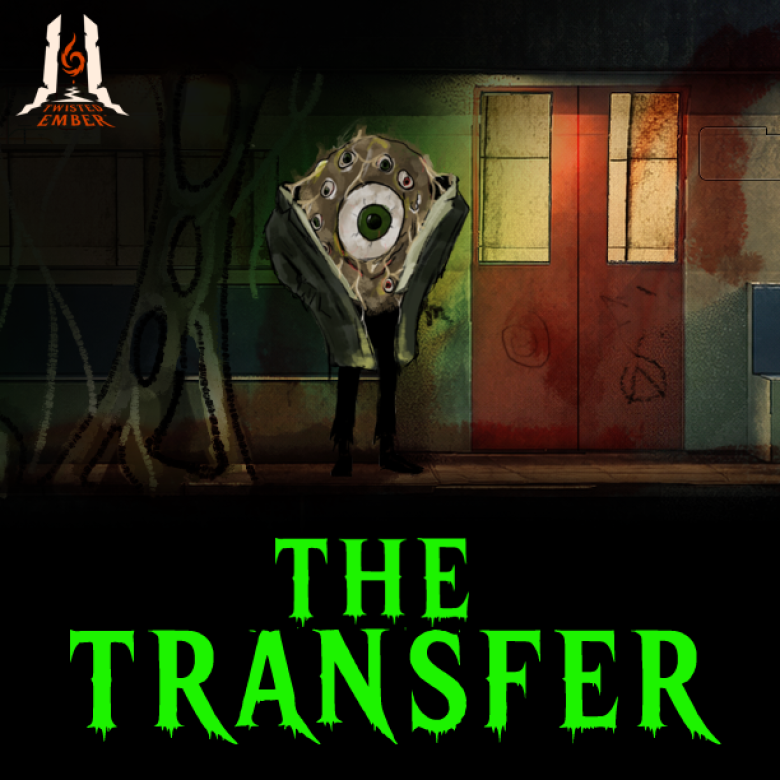
Laura Sanders and Tim Marquis-Fjeld met on the MA Indie Game Development (Online), where mentor Matty McGrory helped push their ideas from student prototypes into something with commercial viability. Now working full time as Twisted Ember, they've just announced a point-and-click horror game based around a carriage on the Tube.
We caught up with Laura and Tim to talk about how their partnership formed, what elements and ideas from the course made it into the game and what's coming next for the studio.
You met on the online course and went on to co-found a business together. How did that partnership form, and when did you realise you wanted to build something of your own?
Laura: From the very first webinar, we immediately hit it off. We had similar interests and passions. In our first module, we worked together on a small ideation project. It was from that point forwards that we knew we could work well together. In our second year, we were working on our final project. We decided that once we finished the master's, we wanted to start an indie studio together. Not only did we work well together, but we became good friends and played video games and board games outside of the master's. We meet up face to face regularly at expos, and I even had the pleasure of going to Tim's wedding in Norway
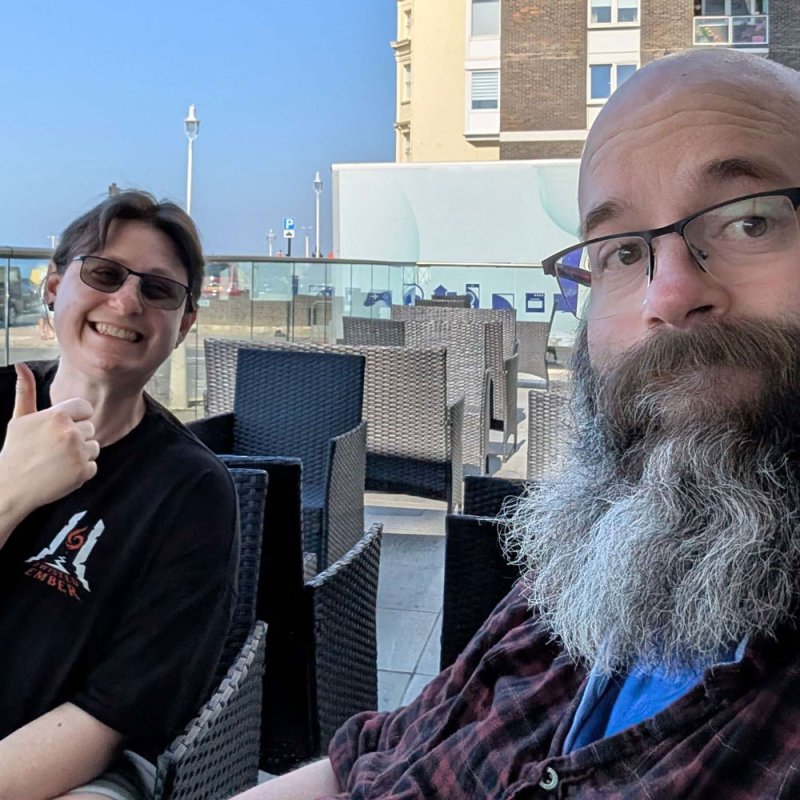
Tim: Very early on, we connected through the Falmouth Discord I had set up. It was a place to connect with each other, and we just clicked. We had similar interests in games and both came from working within education, with very familiar expectations and wants from the course. Within the first module, we were already bouncing ideas off each other. Throughout the whole master's, we continued to interact, discuss and engage with each of our projects, to the point that we were always in the same team if the module allowed it, and we created our final project as a team. Added bonus: our sense of humour aligned, albeit a chaotic one!
We had always joked about forming a studio together within the first two modules. But seeing how well we had worked together, especially under pressure and with deadlines looming, we were able to instinctively realise when one of us was starting to burn out, and when to step up to ease the pressure on the project. The course, tutors and projects really nurtured the want to collaborate together. Matty McGrory has been pivotal in our growth. His leadership on the course and mentorship really pushed us to believe in ourselves. So, in late 2025, we decided to take the plunge and form our studio together. (I'm sure Matty regrets it now.)
The Transfer started life as prototypes and ideas during your time at Falmouth. How much of what you learned on the course fed directly into the game you have now released?
Laura: It was through many iterations and prototypes after the master's that we came up with The Transfer. The skills we learned and developed as indies from the course were invaluable. Matty again has been a huge supporter, and his knowledge and experience have helped us immensely on the course and beyond.
Tim: I would say everything has, in one way or another, fed into our game. We had toyed with a point-and-click adventure game during our second module, created an oh-so-basic prototype, and we felt it had legs. But due to scope, and especially what the brief wanted, we decided to pivot to a different idea.
Note that the teaser video below contains adult themes and may not be suitable for all audiences.
The course and tutors had taught us to always iterate on our ideas. We learned to focus on the market, genres and, most importantly, who our target players were. That's just a fraction of what we learned, but it allowed us to bring the project back and work on a GDD (game design document), evolving the idea from what it used to be into the more polished game we are working on now.
The master's taught us to keep our expectations firmly planted within reality. Of course, it is going to be awesome, but now, having gained experience through the course in pitching, budgeting and future-proofing our development, we feel we have really been taught the tools we need to succeed.
Setting a Lovecraftian horror story on the London Underground is such a specific, vivid idea. Where did that concept come from, and how did it evolve as you developed it?
Laura: We love horror and completely off-the-wall ideas. Some of the games we have played have inspired us, or stopped me from sleeping at night. We wanted a game that would stick with the player long after they finished it. Developing the original idea took a year of prototyping and ideating. Over time, we landed on the point-and-click genre, matched with our love of Lovecraftian-style games. Something just clicked for us.
Tim: A little-known fact about us both is that we also have backgrounds in practical special effects and monster making. We both really love horror. We've played countless games together, both digital and board games, and it's been a blast, if a nerve-racking time! The very first concept for what we called "The Ferry" was an endless, first-person train-driving game, where you never left the driver's seat and had to perform mundane tasks while slowly losing your grip on reality, before something else began to sneak in. So the hint of Cthulhu (a fictional cosmic entity created by writer H. P. Lovecraft) was there, but it hadn't taken a firm hold ... yet.
The idea was there, but the prototype felt off, so we had originally canned it. On a Hail Mary, we decided to try it with our point-and-click prototype, and the two came together. It felt like a perfect match. Salt and vinegar, gin and tonic, Lovecraftian and the London Underground: a perfect combo in our eyes. The ideas began to roll, and soon enough we had lore in place. The puzzles and narrative clicked into place.
The art style originated from one of the modules led by Sally Blake, who really encouraged me to explore the style. It became the core theme for the entire project. Looking back, it's a little scary how much the course has influenced us!
Between you, you've brought decades of experience in game education and game development into this project. How did that background shape the way you approached making your first commercial title, compared to the work you did before?
Laura: We are advocates of practising what you preach. Between us, we have over 32 years of experience in game education and the serious games industry. By working in education, we understand the process of planning and meeting deadlines. I have been teaching game development from college to university level. What I have learned in my indie game development journey has been put back into education. Mentoring has helped us through the master's and now our indie game studio. I want to do the same for the new generation of students.
Tim: It is very easy to get caught within the academic bubble of papers, research and presentations that get recognition within that bubble, but less so outside of it. Our experience within education, teaching, multiple projects running at the same time and deadlines that are ever shifting has forced us to evolve. It all screams indie game development. Small teams, non-existent budgets and very complex content. Fewer projects at once, perhaps, but we have taken that same approach to dealing with our game mechanics and production pipeline. The big difference is that what we make is seen on a global platform, not a bubble. It's exhilarating knowing that we can say that we practise what we preach.
Now that The Transfer is out, what's next for Twisted Ember? Is there a second project already forming, or are you taking a moment to catch your breath first?
Laura: We are always coming up with ideas and prototyping. We have had ten or more game ideas stored away in archives. Some may become games in the future; others will just remain ideas. The Transfer is just the beginning of our indie development journey. There are games we are excited about developing next, so keep an eye out for future news.
Tim: Well, we still have a while to go before The Transfer is fully released. We have bugs to fix, extra content to finish and don't get me started on localisation. But I'd be lying if I said we hadn't been working on a couple of side projects and ideas throughout the process. Many of the alumni we met through the course are now close friends. We have a great project idea with Jess Bradshaw (a fellow super-talented alumna) that we came up with on yet another module of the course. We're champing at the bit to jump into it, and maybe one or two more. Who knows?
This is our first game, and it surely won't be our last. Success, in our eyes, isn't just one game, nor the second or third. It's about continuing to create fun experiences that shape our studio into something great, with a catalogue of games, each made with a passion for just being fun.
External links
https://store.steampowered.com/app/4908740/The_Transfer/
You might also like

Meet the Film alumnus producing a Cornish-language short film


Film graduate shortlisted at Young Arrows for shoestring skate campaign

Meet the Drawing graduate nominated for the New Blood Emerging Art Prize
