Graphic Design graduate on using design for positive change
10 September 2026
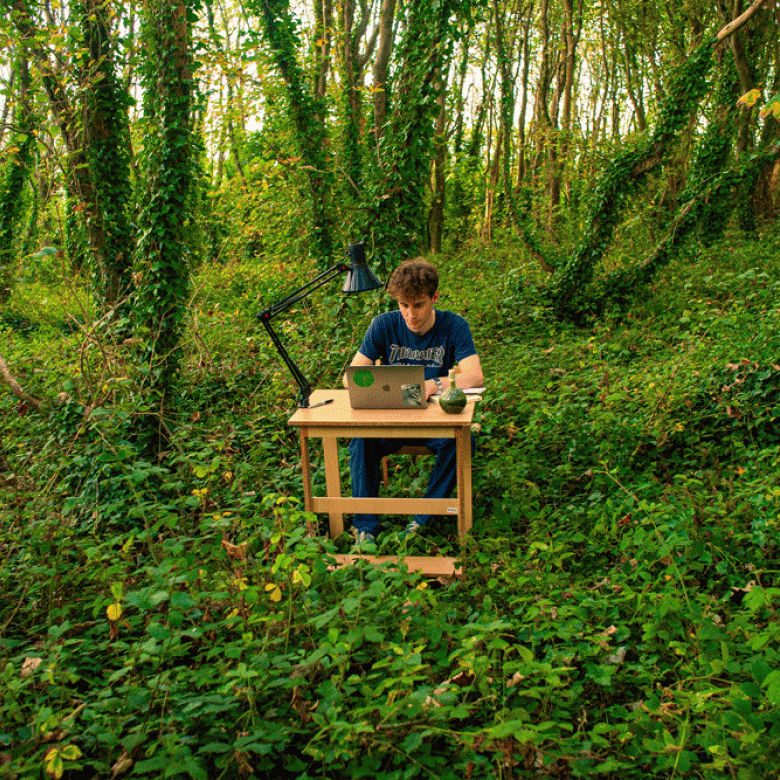
From working on a live brief for marine conservation charity, Surfers Against Sewage (SAS), a project that has since been released across the charity’s social channels and shown in schools nationwide, to creating a speculative rebrand of The Dartmoor National Park Authority as part of his course, BA(Hons) Graphic Design graduate Charlie Scott is committed to using his creative and design skills to drive positive change.
We caught up with Charlie to learn more about how Falmouth’s coastal location influenced his passion for climate communication, how Falmouth’s employability team supported his continued work with SAS and the importance of making positive change through creativity.
What did you enjoy most about studying BA(Hons) Graphic Design at Falmouth?
So much! Firstly, I really enjoyed the freedom we had over our work, especially towards the end of the degree. We were supported to use the skills we learned to explore whatever areas and topics we liked through design; it felt like there were no limits to what we could do and we were constantly challenged to push the boundaries of what graphic design could be. It was really enjoyable to work on themes I’m passionate about, such as the outdoors and sustainability.
I also loved the studio atmosphere; we had a large studio space on Falmouth campus which was a really inspiring place to work. There was a strong creative community, and it was always a good laugh too. We also held Christmas and summer parties through the ‘Studio Society’ at The Cornish Bank, which were always a blast after a busy term of deadlines. The people really made it such an enjoyable place to study. I had a great bunch of creatives in my year group, and the lecturers were all amazing.
Can you tell us about the projects you worked on, and your live brief with Surfers Against Sewage?
I became really interested in communicating the climate crisis in my third year, and lots of my projects were themed around that. My dissertation is titled ‘critical communications’ and is a comparative analysis of positive and negative framing of the climate crisis in visual communication.
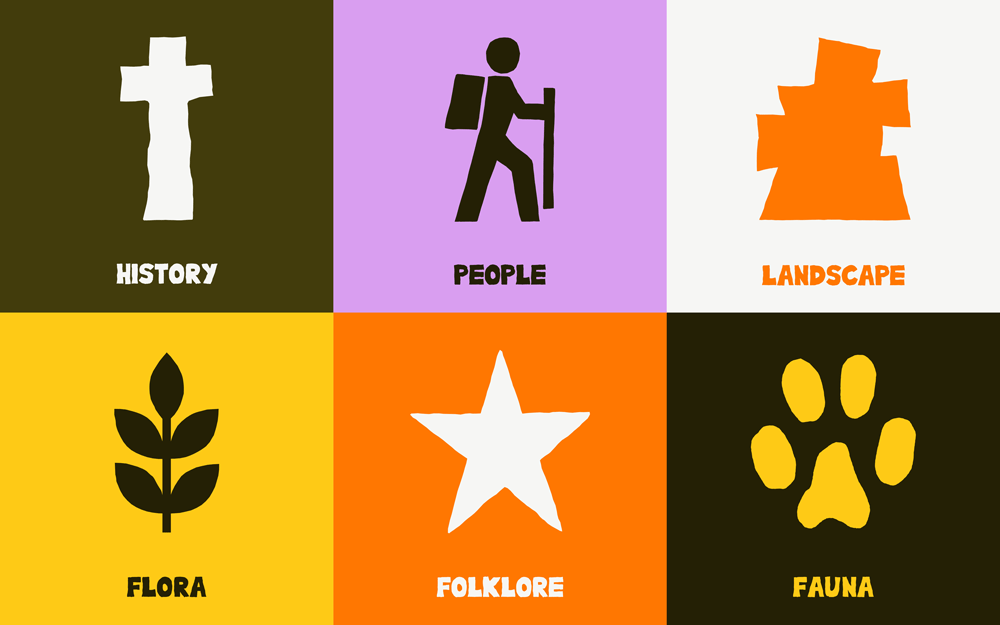
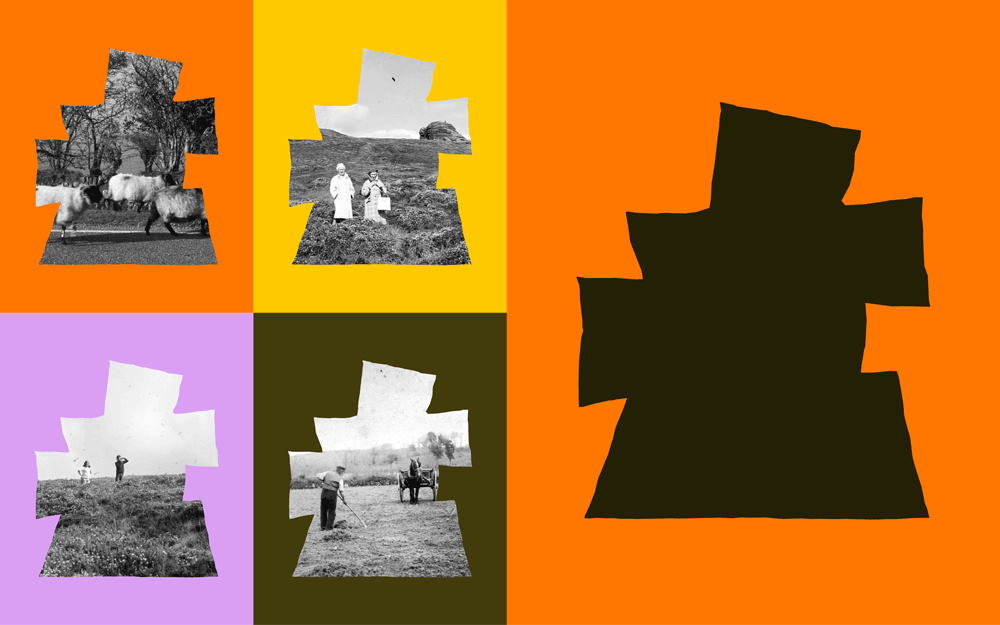
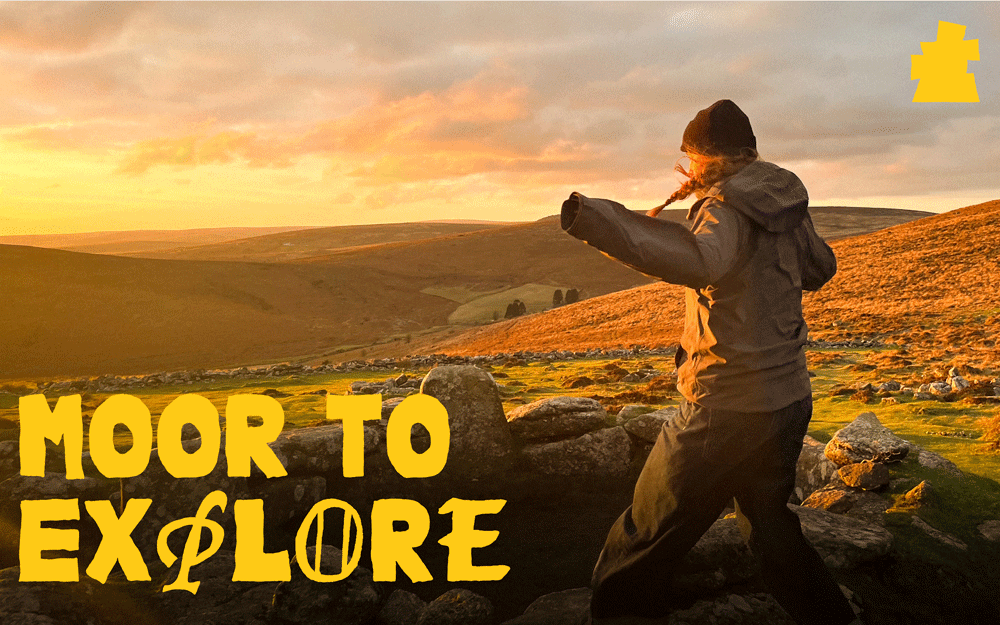
A big project for me was my speculative rebrand of The Dartmoor National Park Authority (not affiliated with Dartmoor National Park), where I created a new brand identity that aimed to ignite pride, care and connection to the moor.
At the beginning of this year, we had the opportunity to participate in a live brief with ocean charity SAS as part of the course. We were challenged to pitch a music video concept for a song created by local singer Martha Tilston, about our connection to the ocean and our duty to keep it clean. My creative partner Jem Turner and I created a video that was selected to be released across SAS’s channels and shown in schools nationwide. The employability team at Falmouth then supported us to continue our work with SAS on another supporting project, with a one week paid micro internship.
As someone who’s passionate about the ocean, and admires what SAS do, it was a fantastic opportunity to work with such an amazing organisation. It was also a great experience working on a live brief with a real client. It was good practice of working to a brief, attending meetings and working to deadlines. We also presented in front of their whole team at the SAS HQ in St Agnes.
What do you hope to say and do through your design work?
Where I can, I like to use design to drive positive change. Good design can highlight issues and challenge us to see things differently, and that’s something I’m always trying to get better at through my work. My work at Falmouth has centred a lot around sustainability and the climate crisis, and moving forward I’d love to continue to investigate how design can help fight these issues.
Did Falmouth’s coastal setting or strong sense of community inspire your environmental work in any way?
I grew up in a small village in Devon, and because of that I’m happiest when outdoors and in nature. I knew when I went to university that a big city wouldn’t be right for me.
At Falmouth, I absolutely loved being so close to the sea. Swimming at the weekends or after university classes was so special, and something I’ll definitely miss. It was also great to get out on the Cornish coast through running, cycling and camping. As a town, it felt just right for me size-wise. There was plenty to do, and I really enjoyed the pubs and live music scene too!
It was definitely an environment that inspired my work. Living in such a beautiful place, and surrounded by nature, made it hard for me to not feel a sense of care for these spaces. My work in third year was themed around my connection to nature, sustainability and climate communication.
The general creative community was really inspiring for my work too. I lived with BA(Hons) Film and BA(Hons) Interior Architecture students, and it was really motivating to be surrounded by people doing other cool creative things.
What are the key skills you feel like you’ve taken away from your time as a student here?
I’ve gained valuable skills in all areas of the design process; from discovery and research skills to the technical skills to deliver the final outcomes.
I also grew in confidence during my time at Falmouth. I was quite reserved when I came to university and had little confidence in myself or my work. Falmouth’s supportive environment, and the skills I’ve learned along the way, have made me feel more confident in myself as I move towards the next thing.
Why do you think pursuing creativity as a career is important?
I’ve honestly just always loved all things creative. I’ve always been into photography, skateboarding and designing, and I’m my happiest when I’m exercising my creativity. When looking for a future career, I wanted to do something I actually enjoyed.
Creative degrees in general are so important. It sounds cliche but I believe creativity makes the world a better place: it entertains, informs, communicates, and challenges.
Creative degrees are important for students in schools too, they show that there’s another pathway to more traditional routes like STEM, which just aren’t for everyone.
External links
See what Charlie’s up to on Instagram
Read Creative Review’s Gradwatch 2026 feature on Charlie
Credit: Dartmoor National Park Authority Speculative Rebrand, 2026 (not associated with Dartmoor National Park Authority).
You might also like

Creative Advertising alumnus on working across more than 100 brands in New York

Drawing alumna on working as assistant curator for renowned UK exhibition

Games Programming graduates sign BELTFED publishing deal

