BAFTA-winning Marine Photography lecturer on working with Sir David Attenborough
30 June 2026
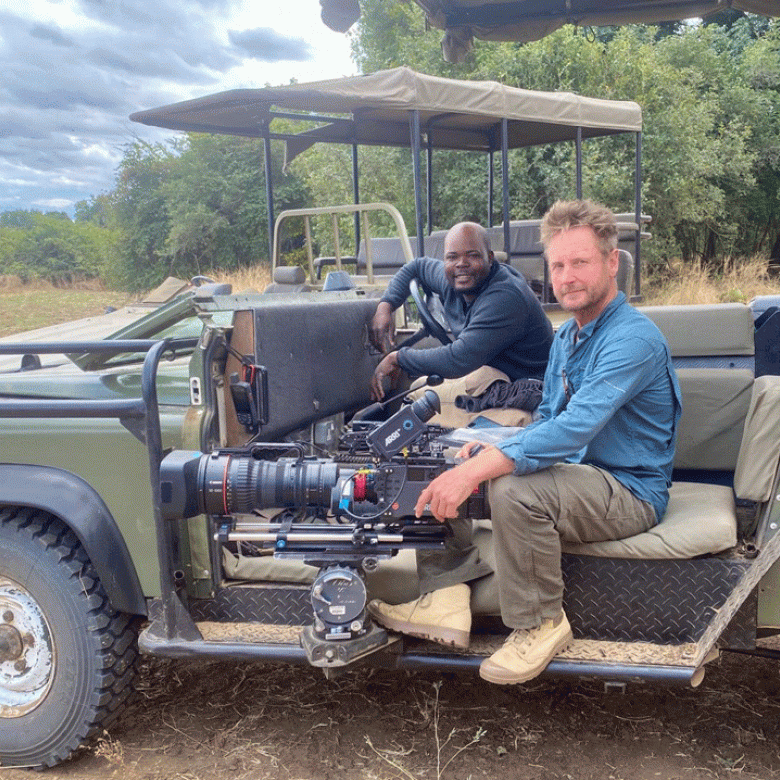
From working on various BBC landmark series such as Planet Earth and Frozen Planet to being part of the production team behind Netflix’s Our Great National Parks series, BA(Hons) Marine & Natural History Photography lecturer Ted Giffords brings a host of experience in the cinematography and natural history industry with him to his role at Falmouth.
As one of the Institute of Photography’s newest lecturers, we caught up with Ted to learn more about the fascinating story behind his entry into cinematography, being awarded a BAFTA for his work and the advice he would give to students looking to make their mark through documentary.
You’ve worked as Cinematographer in a number of documentaries with Sir David Attenborough, most recently 2025’s mini-series, Kingdom. Can you tell us about your experience of working on these shows and with David?
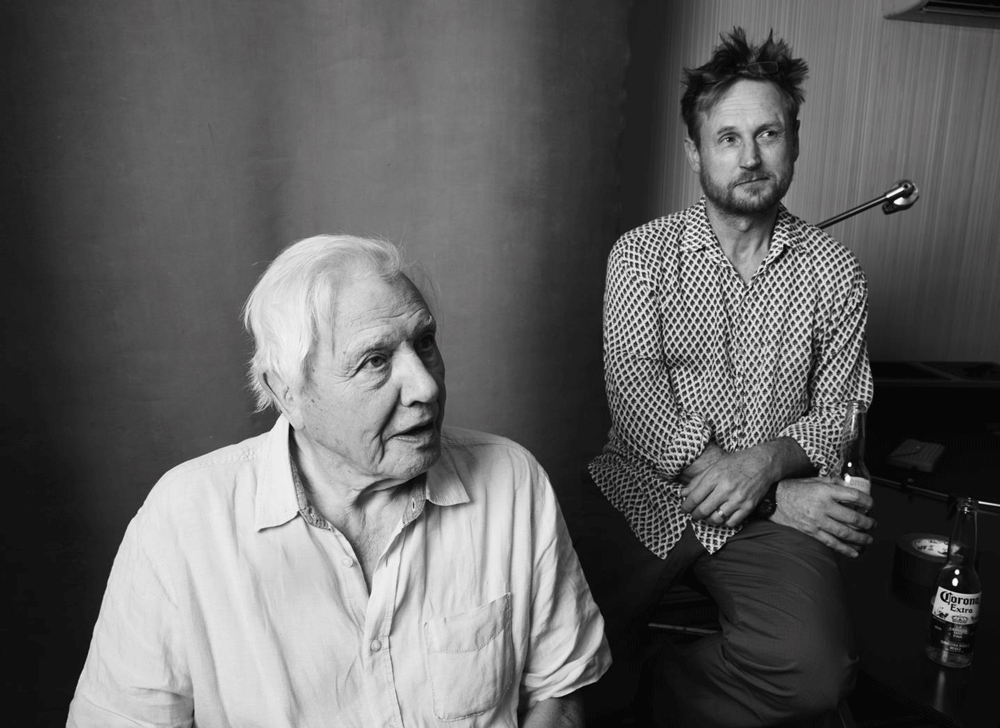
I’ve had the privilege of working on many series presented by David Attenborough, starting as far back as the original Planet Earth. In fact, he was the catalyst who propelled me to change my career from working in Fleet Street. Whilst on assignment for the Financial Times in the early 90s, I had the opportunity to ask for his advice as I was taking his portrait. I had harboured a childhood dream to work in the natural world – a dream inspired by the work of Jacques Cousteau – but at the time I had a degree in BA(Hons) Fine Art and lacked some of the scientific grounding I’d need to pivot. It was David who advised me I had no choice but to return to university and study biological sciences.
I then quit my Fleet Street job with immediate effect and studied Aquatic Biology at Kings College, London. The rest, as they say, is history. I reminded David of this meeting many years later whilst filming him for the opening scenes of Blue Planet II (for which I was lucky enough to be awarded a BAFTA for Cinematography). He seemed somewhat embarrassed that his advice had been so abrupt and unequivocal, but I can genuinely say his words changed my life. It has given me nearly 30 years of adventure and wonder.
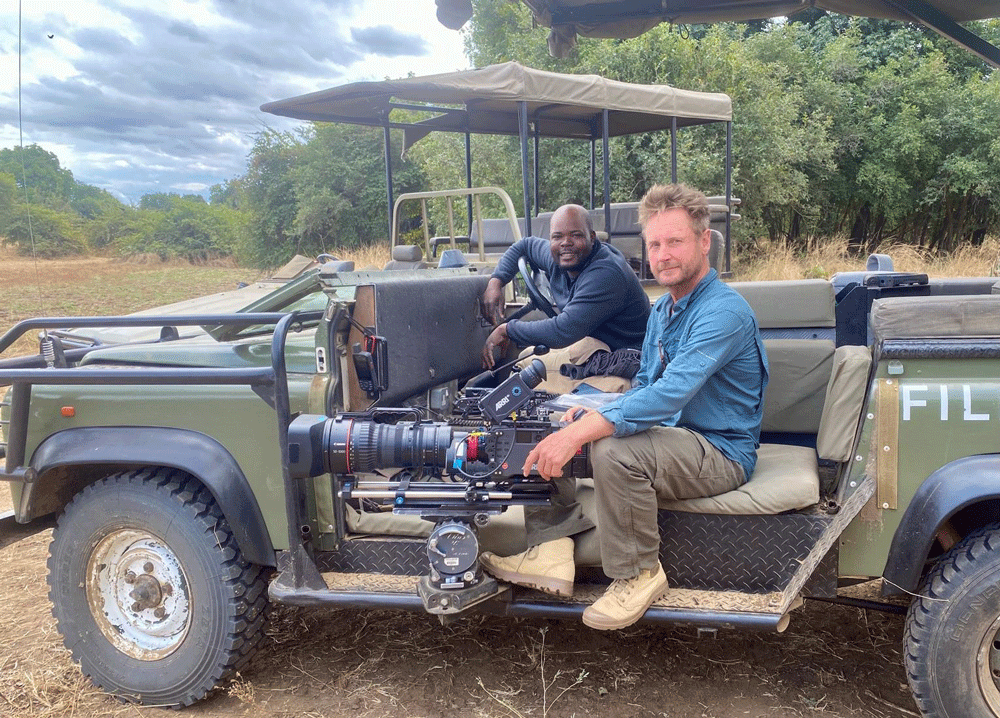
Over the years I have worked on all the BBC landmark series, including Planet Earth, Frozen Planet, The Blue Planet, Seven Worlds One Planet, Dynasties, Kingdom and many more. I was lucky enough to live in New Zealand and Brazil for many other mini landmarks. I have also worked with Barack Obama on the Netflix series Our Great National Parks, and a number of other series and films for Disney and Netflix.
Are there any standout moments from your time working on these projects that you would like to share with us?
This is a very difficult question to answer, since every location that I have had the privilege to visit offers a life-changing opportunity. I have been beguiled by the scale and expanse of the Antarctic but found extraordinary joy whilst getting close to creatures all over the world.
If I were to identify a single experience that moved me most it would perhaps be filming the capuchin monkeys in Northeast Brazil for the BBC series, Wild Brazil. To this day, I have never experienced such intelligent and compelling behaviour in a wild animal that exemplifies the evolution of culture. Some of the problem-solving and learning patterns I observed were not dissimilar to those exhibited by young human beings.
In what ways are you looking forward to bringing your experience of working on some of the BBC’s biggest wildlife documentaries into your teaching practice at Falmouth?
The best thing I feel I’m able to bring to students at Falmouth University is a breadth of knowledge across the industry. Unlike many in the industry, I have been able to work across multiple parts of the production process. I have worked as a Cinematographer, Researcher, Assistant Producer and Producer. I have also spent time working in programme development.
Outside of filming, I started a camera engineering company called TShed Ltd in 2008, which has been instrumental in the development of a number of tools now used widely across the industry today.
In terms of teaching, my principal focus is to help students learn how to develop a story. Storytelling is a fundamental tool in human cultural evolution and instructs the way we learn and evolve as a society. I feel that understanding the role of story in the development of human culture is perhaps more important than ever, as we face a period of rapid change and uncertainty due to environmental change, political upheaval and the arrival of new tools such as AI.
What advice would you give to students looking to work in wildlife documentaries following their time at Falmouth?
My advice to students at Falmouth is to question what they think and be prepared to experiment. The broadcast industry is in a period of great uncertainty, but change offers opportunity. Society has experienced similar uncertainty before and come through it. The advent of the printing press and even photography itself have forced paradigm shifts in our thinking.
The best thing about the university experience is the opportunity to develop critical thinking. This means identifying who you are, what you want to say and who you want to speak to. The best camera in the world will only be as good as the focus of the mind that uses it.
You might also like

Online Creative Writing lecturer wins Royal Society Trivedi Science Book Prize

Professional Writing course leader releases new book with The History Press

Meet the creative behind Falmouth's new Content Creation & Branding course

