Positively Dispensable and Present Abundance
Slow practice, ecological uncertainty and performing otherwise
This Research & Knowledge Exchange Doctoral Project brief summarises our priority areas of research interest under the heading of: Positively Dispensable and Present Abundance: Slow practice, ecological uncertainty and performing otherwise
We welcome all research degree applications aligned with and in response to this brief.
Project brief details
How do performance practices enable people to inhabit ecological crisis differently, not by offering solutions, but by rehearsing ways of living that cultivate alternative temporalities, relationships and futures?
We are living through a time in which ecological crisis is no longer anticipated as a future event but experienced as a present condition. Dominant responses oscillate between acceleration towards technological salvation and paralysis born of futures that already feel foreclosed. This doctoral project asks whether performance might offer another response: not by representing ecological crisis, but by cultivating different ways of inhabiting it.
Performance is not only something we make, but a way of organising and exploring life together. This project asks how slow, ensemble-based and participatory practices might cultivate alternative temporalities, forms of care, and collective capacities that resist the logics of urgency, extraction and endless productivity. Rather than seeking escape from these systems, the project explores how such practices remain within them while rehearsing other possibilities for living together in uncertainty, and through cycles of recovery, restoration and repair.
Drawing on ideas of present abundance that challenge politically manufactured scarcity, the project asks what becomes possible when performance begins not from lack, urgency or perpetually deferred futures, but from the abundance already present in relationships, attention, place, collective practice, and in some cases, even resources.
Ecological grief is understood as one of the conditions through which communities now live. This project is founded on theories of deep adaptation and asks how performance can create spaces where grief, uncertainty, joy, repair and imagination coexist without reducing these experiences to either therapy, spectacle or narratives of redemption.
This research project will take place in close dialogue with Tangled Feet, a theatre ensemble and Arts Council England National Portfolio Organisation who since 2022 have been exploring a sustained collective practice in response to ecological grief and deep adaptation. Working with a cohort of artists across disciplines, including theatre, visual art, music and participatory making, they have been asking what it means to practice slowly, to grieve collectively, to make without predetermined outcomes, and to open their process to communities in ways that blur the boundary between maker and participant. Their work offers a sustained experiment in how performance itself might become a practice of ecological adaptation.
Tangled Feet’s practice raises questions that are urgent: about time, about care, and about what it means to be in the artistic directors’ own words, ‘positively dispensable’. This idea asks how an ensemble might cultivate resilience through interdependence rather than indispensability, enabling absence, illness, rest and change without the collective becoming fragile. It asks how a long-term practice can sustain itself – in the face of financial constraint, funding demands, and climate emergency – when the nervous systems of the people making the work are already under strain.
Tangled Feet have one foot in Cornwall, with one of the artistic directors living here, and this research might take the same approach, with one foot in the Company’s work and the other exploring Cornwall’s social and ecological relations performatively, paying particular attention to arts practices trying to find an otherwise in difficult, uncertain times, fraught with intersecting crises and emotional paralysis. In Cornwall, ecological uncertainty is lived materially through coastal erosion, storms, fragile infrastructures, food system vulnerability, and questions of rural resilience. However, the questions this project raises extend well beyond Cornwall, speaking to communities negotiating ecological uncertainty and its intersecting crises nationally and internationally.
Indicative research questions:
- How can performance cultivate different ways of inhabiting ecological uncertainty?
- What temporalities emerge from slow, ensemble-based and participatory arts practices, and what forms of relation do they make possible?
- How are ecological grief, care, repair, joy and imagination negotiated within sustained collective artistic practice?
- What does positive dispensability reveal about resilience, interdependence and collective responsibility in ensemble work?
- How might these practices contribute to wider understandings of performance as a mode of ecological adaptation and prefigurative social practice in rural coastal contexts?
Methodologically, this project is expected to foreground practice-based and practice-led research in close relation with Tangled Feet's ongoing work, including ethnographic observation, collaborative and creative practices of documentation, and reflective analysis of process over time. The research may draw on scholarship in ecology and performance; theories of temporality, care and ecological grief as well as deep adaptation; participatory and ensemble performance practices; posthumanist and entanglement theory; future studies and prefigurative politics; and critical theories of contemporary capitalism. The doctoral researcher will be expected to develop methodological approaches that are themselves attentive to slowness, approaches that do not extract or consume the practice they are studying but remain in genuine relation with it. The researcher may like to explore their own arts practice in relation to the questions posed in this doctoral brief and the work of Tangled Feet across the timeline of the project.
The project has potential connections with other rural coastal communities in the West of England as it forms part of the Celtic Crescent doctoral programme, and with practitioners working in comparable territories globally, offering scope for comparative and transnational dimensions.
Strategic alignment
Projects deriving from this brief are expected to sit within the Research & Knowledge Exchange strategy and the following Department.
| Centre | Centre for Pedagogy Futures and Centre for Heritage, Culture & Society |
|---|---|
| Department | Academy of Music & Theatre Arts |
All successful research degree project proposals must emphasise a clear alignment between the project idea and our Research & Knowledge Exchange strategy.
Project brief lead
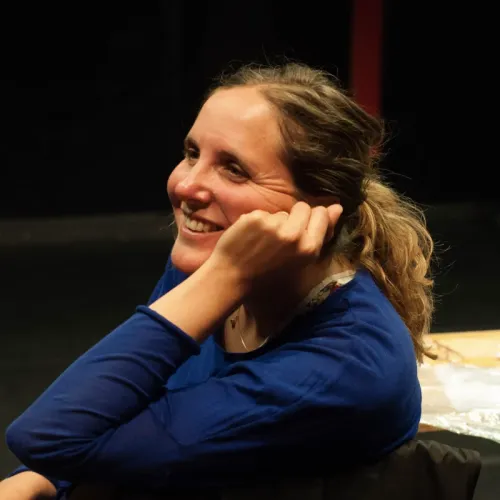
Project supervisor: Dr Sarah Levinsky
I am a theatre, dance, and digital performance maker, as well as researcher, consultant arts strategist/fundraiser, and lecturer (teaching across BA Theatre and Performance, BA Dance and Choreography, BA Acting and BA Technical Theatre Arts). I believe strongly in the power of co-creation to develop people’s sense of their own agency, and this underlies my work across all its varied manifestations.
Read moreHow to apply

Enquiries
Project brief & project proposal enquiries
To discuss this project brief, ideas or project proposal responding to this brief, please contact: Dr Sarah Levinsky
Application enquiries
For all other application related enquires please contact the Research & Development team.
T: 01326 255831
Additional resources

Fund your Research Degree
See the options available to help you fund your research degree.

Research & Knowledge Exchange
By stepping beyond disciplinary lines, harnessing creativity and working with communities, we delive...

Doctoral Project Briefs
We invite MPhil and PhD project proposals that respond to a doctoral project brief.