Online Fine Art student wins International Amateur Photographer of the Year
27 March 2026
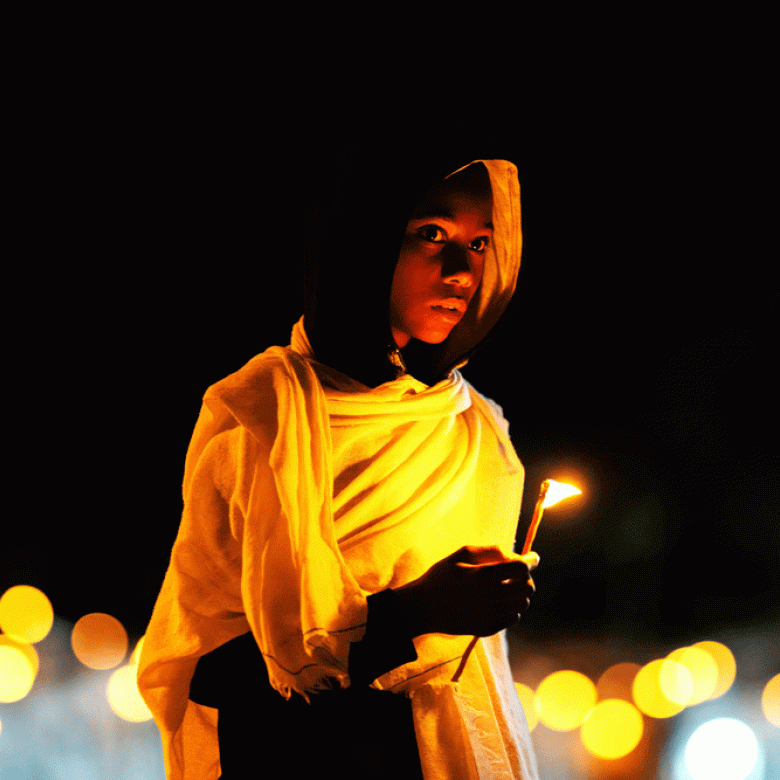
Between travelling the world and exploring diverse cultures and natural wonders, working as a creative director for a jewellery retailer and studying on Falmouth’s MA Fine Art (Online) course, Bircan Harper also found the time to take part in a yearlong photography competition, where she has now won the top prize and been named International Amateur Photographer of the Year 2025.
We chatted with Bircan to learn more about how the wildlife she encountered on her travels and the skills she gained as an online master’s student at Falmouth inspired her to take part in the competition that she would go on to win.
What does it mean to you to be awarded International Amateur Photographer of the Year 2025?
I am deeply honoured to have been named overall winner of the competition, particularly because it’s a demanding yearlong contest that attracts thousands of entries from photographers all around the world. Success in this competition requires not only strong individual images but also consistency across multiple genres and challenging shooting conditions throughout the year.
The experience highlighted the importance of persistence and concentration in a year-long competition; my result was shaped not by a single image, but by gradually recognising the value of consistency and long-term commitment.
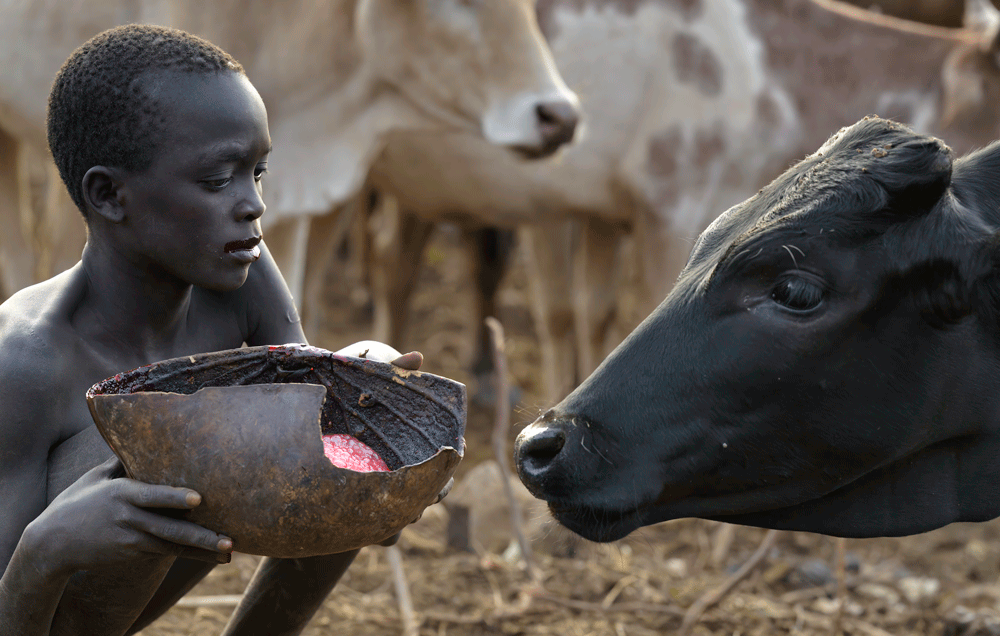
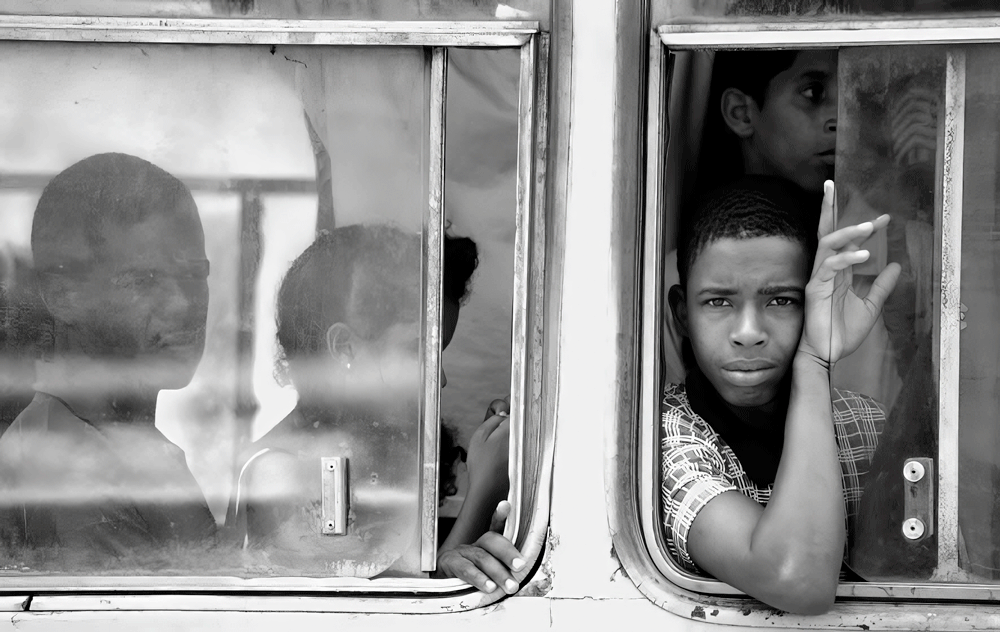
Can you talk us through your winning work?
The award was not based on a single photograph but on a body of work created throughout the year across multiple competition rounds. The Amateur Photographer of the Year competition is a year-long process so success depends on producing consistent images in different genres and conditions. My photographs were made during expeditions to locations such as Kenya, Ethiopia, Antarctica, Botswana, Cuba and Borneo.
Can you tell us more about what inspires your photography?
For me, photography is closely connected to lived experiences. Much of this work was created during expeditions to remote environments and cultural landscapes, where patience, adaptability and awareness are essential. Through my images, I aim to share not only what I witnessed, but how it felt to be present in those moments; whether observing wildlife in extreme weather, encountering unfamiliar traditions or responding to the atmosphere of a place.
Much of my work focuses on wildlife behaviour, cultural encounters and the emotional qualities of a place. I’m inspired by the diversity of the natural world, and the opportunity photography gives me to connect with different ways of life.
It’s important to me that these photographs communicate a sense of connection: between people and nature, memory and landscape and personal experience and a wider global audience.
How are you finding your time studying MA Fine Art (Online)?
Studying as part of Falmouth’s MA Fine Art (Online) community has been a very enriching experience. It has encouraged me to reflect more critically on my practice and to think about photography within a wider artistic and conceptual context. One of the most valuable aspects of the course has been the emphasis on process and research, rather than simply focusing on the outcome.
The course has also helped me to develop confidence in articulating my ideas, experimenting with materials and considering how my work can evolve across different media.
Has your time studying a fine art course helped you with your photography in any way?
Although my course is not specifically focused on photography, it has had a strong influence on how I approach image making. My study has encouraged me to explore themes such as memory, perception and collaboration, all of which informs how I work in the field and how I edit and present my photographs.
There is also crossover in terms of material experimentation, for example: integrating photographic processes with ceramic forms in my studio practice. This broader fine art perspective has helped me see photography as part of an ongoing artistic investigation rather than as a purely documentary activity.
How have you found fitting your studies around your work as a creative director?
Balancing professional responsibilities with postgraduate study requires careful organisation and flexibility. The online structure of the MA has made it possible to integrate study with both my work and field expeditions. While it can be demanding, I find that these different roles support each other creatively, allowing me to bring practical experience into my academic research and vice versa.
You might also like

Film & TV student on BAFTA scholarship and living with bipolar

Creative Advertising student sees her healthy eating campaign displayed at local academy

Army veteran on returning to education in his 40s to study software engineering

Prosthetic Effects graduand wins global award for World of Warcraft creations
