Marine Photography alumna documents endangered devil rays for BBC Wildlife Magazine
14 July 2026
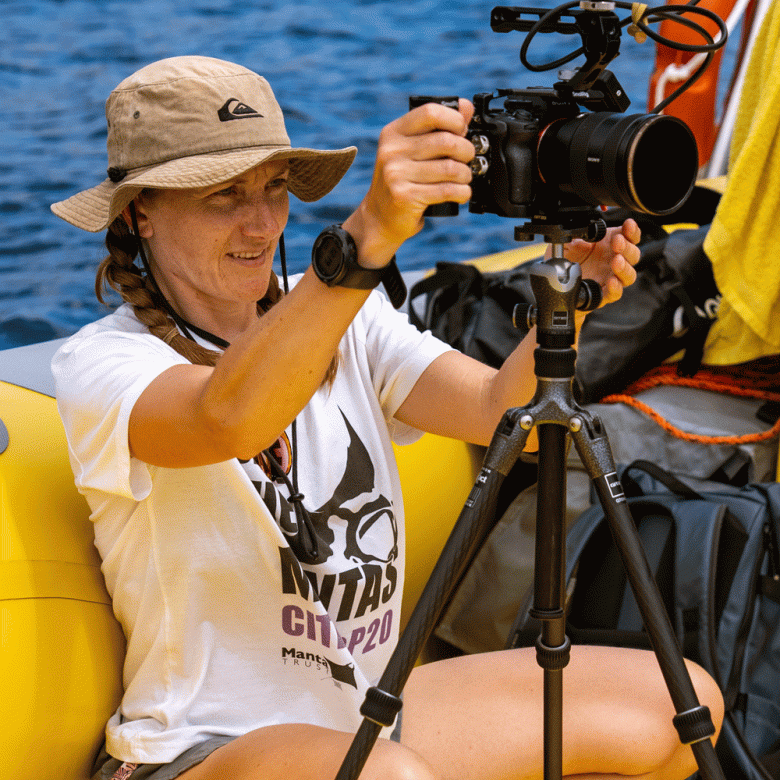
From creating an eight-page cover feature for BBC Wildlife Magazine to producing a short film and speaking at one of the world’s biggest marine conferences, BA(Hons) Marine & Natural History Photography alumna Jasmine Corbett has made an impressive career out of documenting critically endangered marine species, such as the sicklefin devil ray and more.
Working as a media and communications consultant for UK-based conservation charity, Manta Trust, has given Jasmine the opportunity to follow a manta ray research expedition and creatively capture it through her visually striking magazine feature and documentary, Where Devils Return.
We caught up with Jasmine to learn more about her inspiring career and how Falmouth gave her the technical foundation and creative framework needed for the work she produces today.
How did your collaboration with BBC Wildlife Magazine first come about?
The story was captured at Ambrósio Seamount, off Santa Maria Island in the Azores. It’s one of the only known seasonal aggregation sites for the critically endangered sicklefin devil ray. It's an incredibly unique and scientifically significant location, where researchers are beginning to uncover why these animals return and what role the site plays in their life cycle.
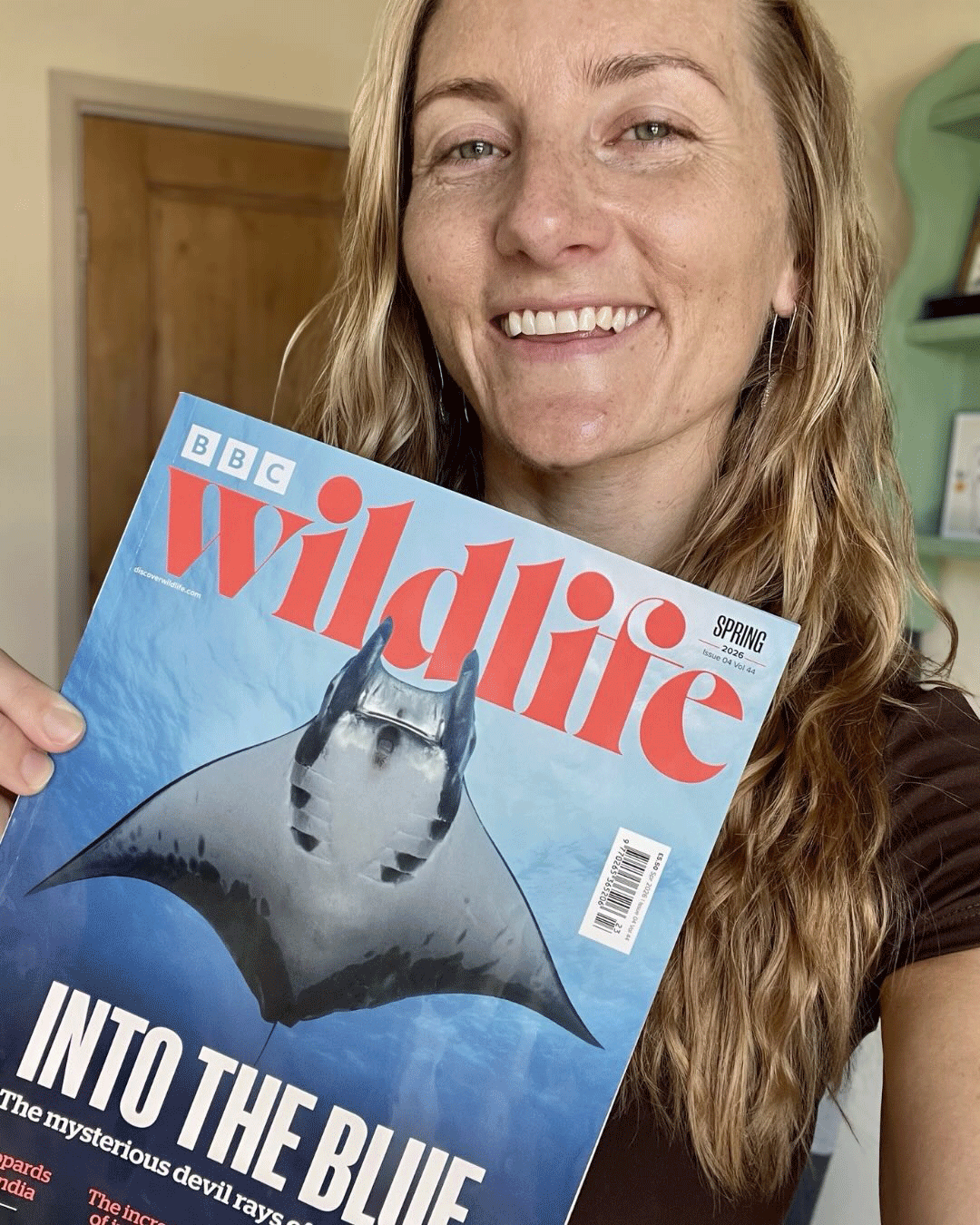
I approached BBC Wildlife Magazine with the idea of writing a feature about the research taking place there, and they offered me the cover story and an eight-page spread, which was honestly such an honour and quite unexpected! It was an amazing opportunity to shine a spotlight on the research and tell the story in depth.
What did you want to capture within your feature?
It was important for me to balance scientific research with human narrative, because I truly believe people are at the heart of successful conservation. I focused not only on the ecology of the species, but also on the people working to study and protect them, particularly marine biologist Ana Filipa Sobral and the local collaborators involved in long-term monitoring.
Alongside the BBC Wildlife Magazine feature, I developed a wider integrated storytelling campaign combining photography, filmmaking, editorial work and events to translate scientific research into an accessible conservation story.
Visually and editorially, I wanted to immerse readers in the underwater world while also highlighting broader themes: how perceptions of devil rays are shifting, the pressures they face from fishing and tourism and what it means to protect a relationship between people and the ocean — not just a species in isolation.
Can you talk us through your documentary process for Where Devils Return?
The film follows marine biologist Ana Filipa Sobral and the team at Manta Catalog Azores as they investigate why sicklefin devil rays return to Ambrósio Seamount.
As part of the documentary, we interviewed people from across the local community, including boat captains and fishermen, to understand how intertwined these rays are with people's lives. It was important for me to show not only the scientific process, but also the human relationships with these animals. What I found was that people on the island were incredibly passionate about the rays, with each person having their own unique perspective and reasons to respect and admire them.
Rather than presenting the species in isolation, the film explores how scientific discovery, local culture and changing perceptions of sharks and rays intersect. It also highlights the increasing pressures from fishing and unregulated tourism, and what those pressures mean for a species already in decline.
Ultimately, Where Devils Return asks a broader question: how do we move from simply studying wildlife to actively reshaping our relationship with it in a way that supports long-term coexistence?
What has the response to the film been?
Since its release, the film has been screened around the world and has been a finalist at multiple film festivals including the Kas International Film Festival, where the film was screened in an open-air amphitheatre overlooking the Turkish coastline in front of hundreds of people. It was a very special setting and a beautiful event.
The response has been incredibly positive and has sparked lots of meaningful conversations. Very few people around the world understand this species, the threats it faces, or why it's so important, so visual storytelling can be an incredibly powerful tool for raising awareness, building empathy and inspiring conservation action.
You recently visited Sri Lanka to speak at one of the world's largest international marine conferences. Can you tell us more about this experience?
Sharks International is the largest global conference dedicated to sharks, rays and chimaeras, bringing together around 800 participants from more than 80 countries to share research and set future conservation priorities.
It's a special event for anyone working in this field, and at this year's conference in Sri Lanka I was invited to open the science communications afternoon hosted by the Save Our Seas Foundation. My talk focused on how conservationists can create more effective and accessible communication strategies for complex scientific topics.
I introduced a simple five-step framework for developing impact-driven media campaigns aimed at helping scientists and conservationists translate their work for broader audiences. The goal was to demonstrate that communication isn't an optional extra, but a core part of effective conservation. For a long time, science communication has been seen as lower priority, but I think people are finally recognising just how essential it is for engagement, fundraising and behavioural change.
How have the skills you gained from your time at Falmouth supported the work you do now?
My time at Falmouth gave me the technical foundation and creative framework that defines my work today.
Studying BA(Hons) Marine & Natural History Photography meant I had access to an incredible range of professional camera and underwater equipment over several years. It's difficult to get into underwater photography and filmmaking without having time to experiment with different equipment, refine your diving skills and develop your own style. That experience was invaluable; it gave me the confidence to work in challenging marine environments and move straight into underwater production after graduating.
A key emphasis of the course was making science visually compelling and emotionally engaging. Every time I take a photograph or collect footage, I ask myself: ‘What is the purpose of this image? How can I tell the full story? How can it be used to create impact?’ That way of thinking sits at the centre of everything I do as a conservation photographer and filmmaker, and it's something that was really ingrained in me during my time at Falmouth.
Living and studying in a coastal environment also played a huge role. Alongside my degree, I completed my Divemaster course in Falmouth, gaining valuable experience diving in varied and challenging conditions. That not only strengthened my abilities as a diver but also meant I was ready to work both in the dive industry and in underwater production immediately after university.
What advice would you give to aspiring marine photographers?
Focus on building a diverse skill set from the very beginning. In my own work, I move between filmmaking, photography, writing, media strategy and digital communications, and that versatility has come from both my university experience and continued self-teaching.
Make the most of every opportunity available - whether that’s workshops, additional courses, or collaborative projects - because these experiences often become the foundation of a multidisciplinary career and can open unexpected doors later on.
Another important mindset shift is learning to embrace rejection early on. A mentor once encouraged me to aim for 99 rejections a year, and it completely changed how I approach applications, funding and new opportunities. Rather than seeing rejection as failure, it becomes part of the process that keeps you moving forward and taking chances.
And finally, be kind to yourself! It’s a demanding field, and progress isn’t always linear, but taking time to reflect on why you love what you do is what sustains long-term motivation, creativity and resilience.
External links
You might also like

Creative Advertising alumnus on working across more than 100 brands in New York

Drawing alumna on working as assistant curator for renowned UK exhibition

Games Programming graduates sign BELTFED publishing deal

