Falmouth academic leads new programme to unlock the safe and responsible use of AI for UK independent filmmakers
18 November 2026
Studios and broadcasters are building AI into how they make work. Independent filmmakers often can't because the tools cost money, the learning curve is steep and the legal and ethical questions are unclear.
A new initiative led by Falmouth University aims to address that gap, building skills and capacity across the sector, with practical learnings and evidence published to ensure that new technologies are accessible within ethical and inclusive frameworks.
Lab to Slate is open for applications for eight independent filmmakers from across the UK to join Falmouth staff in a two-year programme to develop an existing feature film project using emerging AI tools, with mentoring, training and legal guidance along the way, supported by the BFI Innovation Challenge fund.
The programme, one of two funded by the BFI in 2026 through their ‘In Our Hands’ Challenge, will give participants the time, access and support to find out what these tools can and can't do for their own project, on their own terms. They will keep full creative control and ownership of their work throughout.
Participants will work alongside Falmouth staff as co-researchers helping to test, question and shape how these tools might serve independent filmmaking, within a live environment.
Lab to Slate is funded by the BFI National Lottery Innovation Challenge Fund. It is led by Dr Kingsley Marshall at Falmouth University's Screen Technologies centre, with delivery partners including Screen Cornwall, Charisma.ai and CinePro Lab.
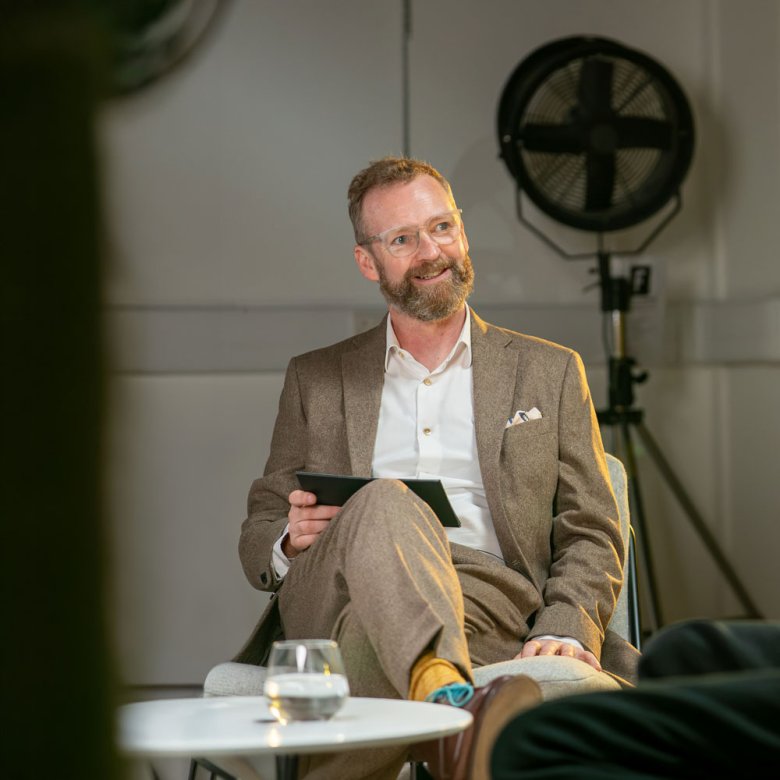
Dr Kingsley Marshall, Head of Falmouth University’s School of Film & Television said: “Independent filmmakers have been expected to form a view on AI technologies without the licences, legal advice or time and space to test them on their own work.
“As an independently-minded film and television school situated away from major production centres, Falmouth is uniquely placed to generate insight and advocate for fellow independent film makers at a time of great change in the industry.
“Thanks to BFI National Lottery funding, Lab to Slate creates that space by pairing filmmakers from across the UK with experienced mentors, working as co-researchers on existing projects, ensuring the learning happens within real productions. The case studies will be published in a free, open-access AI Production Playbook, which will say what doesn’t work as well as what does, giving the wider independent film sector evidence it can trust from its peers.”
Paid, supported and primarily remote
Participants will be paid for their time, supported one-to-one, and given access to tools and training at no cost to them. Each will receive a bursary of £2,500 a year, along with a travel bursary to attend at least one major industry event.
Every filmmaker will have a named mentor from Falmouth's School of Film & Television, a film practitioner who will stay with them for the whole programme. Specialist technical mentoring will come from Charisma.ai, and everyone starts with the ScreenSkills-approved CinePro Lab "AI Production Skills" online course. Workshops will cover IP, rights and business affairs, with guidance on the environmental impact of the tools being used.
The programme is primarily delivered remotely to fit around freelance work, caring responsibilities and access needs. Participants will keep a reflective record of what they tried, what worked and what didn't, including the barriers they encountered. Honest accounts of failure are as valuable as success. What they learn will inform public case studies and an open-access AI Production Playbook for the sector.
The call is being handled by Screen Cornwall, and is looking for participants who are curious, sceptical or both. No experience of AI tools is needed. The programme is open to UK-based independent creatives with a scripted or documentary project in development, working at micro or low budget, or moving from shorts to features. Writers, directors, producers and other creative roles are all welcome, at any career stage.
To ensure we capture a wide range of insight and experience we are also reserving spaces for groups under-represented in the screen industries, and at least three-quarters to creatives based outside London and the South East. Places are reserved in each of the four nations.
Applications close midday on Monday 7 December. Find details of the full call here.
You might also like

Falmouth Comedy Writers earn nominations at the Audio Production Awards 2026

Creatives on Creatives: Edward Rowe and Dr Kingsley Marshall

Mark Jenkin earns three nominations at the British Independent Film Awards

