Dr Marshall Moore
Course Leader and Senior Lecturer
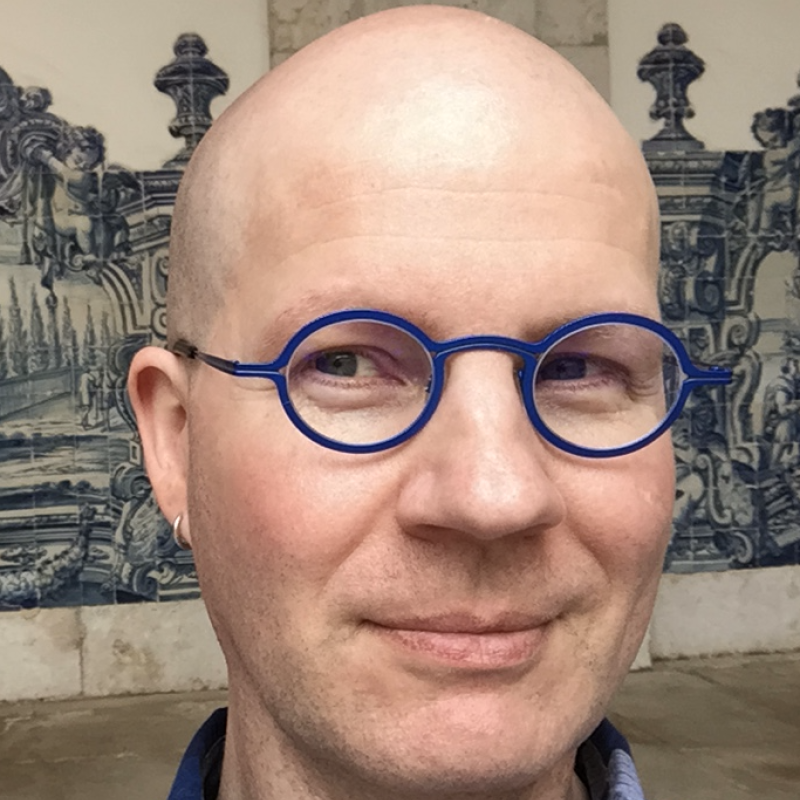
Dr. Marshall Moore hails from North Carolina and relocated to the UK in 2020 after living and working in Asia since 2005. He spent three years in Seoul first, followed by twelve years in Hong Kong. He holds an MA in applied linguistics from the University of New England (Australia) and a PhD in creative writing from Aberystwyth University in Wales.
Marshall is the author and editor of over a dozen books, including novels, collections of short fiction and essays, and a memoir. His short-form work has appeared in journals and literary magazines worldwide, including The Southern Review, X-R-A-Y, Pithead Chapel, trampset, BULL, Your Impossible Voice, Susurrus, Litro, The Barcelona Review, and many others. As of 2026, two new novels and a new essay collection are forthcoming. In addition, Marshall has a decade and a half of experience in the publishing industry, having founded and run a small press which also served as an e-book distribution platform and book consultancy. He is also the co-editor of four academic volumes on various aspects of creative writing pedagogy and practice.
Qualifications
Qualifications
| Year | Qualification | Awarding body |
|---|---|---|
| 2017 | PhD | Aberystwyth University |
| 2010 | MA | University of New England |
| 1992 | BA | East Carolina University |
Research Interests
Research interests and expertise
Marshall’s research interests include the following:
The publishing industry, and how publishing is taught as a subject in academia. Publishing is peculiar in that it operates very slowly, on long timelines, yet it is subject to fast-changing social norms and trends. How do writing programs keep up? How do authors keep up?
Trauma and creative writing. Much of Marshall’s recent work concerns the aftermath of trauma and what recovery looks like. To what extent is writing therapeutic, or should it be regarded that way at all? How does that manifest in the classroom, particularly in the context of teaching creative nonfiction and memoir?
The mythology and lore surrounding the practice of creative writing. A great deal of well-intended misinformation is endlessly recycled in the writing world, from books to articles to blogs, and this received wisdom needs to be challenged to tease out what works and what doesn’t.
Neurodiversity and creative writing. Coded autism is a near-ubiquitous trope in fiction, film, and TV, but how accurate are these representations? What are the intersections of neurodivergence, creative practice, and knowledge production? How do neurodivergent strengths and limitations affect creative writing?
The gaps in creative writing scholarship. Much of this field’s research has been focused on questions of pedagogy: can creative writing really be taught, and what exactly are we teaching? It then moved on to interrogations of the workshop and matters of social justice and inclusion. There is a breadth in the emerging research landscape in the discipline, but there is also still plenty of uncharted territory.
Horror and dark fiction. Marshall grew up on a diet of ‘80s horror (Stephen King, Peter Straub, Anne Rice, Clive Barker, Dean Koontz), and look how well he turned out.
PhD proposals dealing with these topics and requests for viva examination or other forms of external examining are very welcome.
Teaching
Areas of teaching
- Creative Writing
- Publishing
- Literature
- English grammar and composition
Professional Engagement
Engagement with professional associations and societies
Member: AWP, NAWE


