Revisioning the Mire: ‘Improving’ the valuations of wetland ecosystems
This Research & Knowledge Exchange Doctoral Project brief summarises our priority areas of research interest under the heading of: Revisioning the Mire: ‘improving’ the valuations of wetland ecosystems.
We welcome all research degree applications aligned with and in response to this brief.
Project brief details
Culturally and socially, wetland habitats (which include peat bogs and moors, marshes, fenlands, swamps, lagoons and saltmarshes) have long been regarded badly; as ‘wastelands’ at best in need of being ‘reclaimed’ or ‘improved’ for agriculture and at worst, associated with disease, poverty and ignorance. Wetlands are often depicted negatively and exist within the popular imaginations as places for malevolent and nefarious activities.
They have been subject to immense landscaping by humans and perhaps more than other kinds of ecosystems, reveal modernity’s excessive desire to manipulate and control the natural environment. Wetlands have a particular significance in relation to the Anthropocene and the climate emergency: As well as sites of great biodiversity, wetlands are hugely important for carbon sequestration. In a local context, peatlands store more CO2 than any other kinds of habitat in the UK but globally, peatlands are in such poor conditions that they are net producers of CO2 (UK Centre for Ecology & Hydrology).
Revisioning the Mire invites applications for projects that wish to explore research questions surrounding:
- The role that representations of wetlands have played in shaping their cultural valuation.
- How cultural and social representations of wetlands have contributed to the climate emergency.
- How photography and lens-based media might be used to transform cultural valuations of wetland ecosystems.
- How lens-based media, with which cultures of extraction are deeply enmeshed, can be used to benefit wetland ecosystems.
Despite the damaging environmental effects of its extraction, peat continues to mined in many areas including the British Isles, but degradation and destruction of wetland ecosystems occurs across the globe. We welcome practice-based projects that examine wetlands in any region and in all conditions (e.g. in good health, denuded, post-industrial or undergoing regeneration, rewilding etc.).
Proposals that challenge received boundaries of lens-based media, new media and blended realities, and connect with other disciplines and fields of research and institutions are especially welcomed.
Strategic alignment
Projects deriving from this brief are expected to sit within the Research & Knowledge Exchange strategy and the following department.
| Department | Institute of Photography |
|---|
All successful research degree project proposals must emphasise a clear alignment between the project idea and our Research & Knowledge Exchange strategy.
Project brief lead
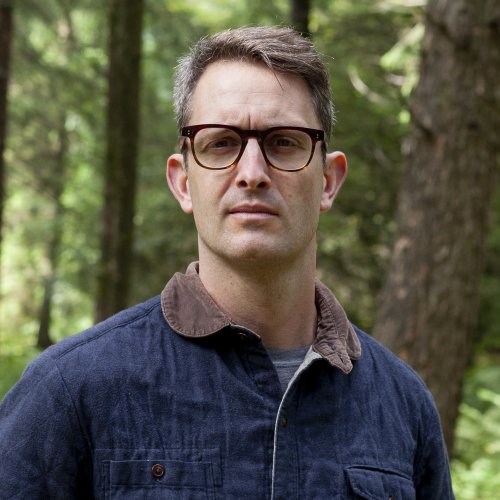
Project Brief Supervisor: Jesse Alexander
Jesse Alexander is a photographer, educator and writer on photography based in Somerset, England. Whilst studying photography at the Surrey Institute of Art & Design (Farnham) he began working as a freelance photographer. Cutting his teeth on editorial assignments, TV stills work, PR and events, studio assisting and product photography, and developing a commercial specialism in interiors, architecture and photography of the built environment.
Find out moreHow to apply

Enquiries
Project brief & project proposal enquiries
To discuss this project brief, ideas or project proposal responding to this brief, please contact: Jesse Alexander.
Application enquiries
For all other application related enquires please contact the Research & Development team.
T: 01326 255831
Additional resources

Fund your Research Degree
See the options available to help you fund your research degree.

Research & Knowledge Exchange
By stepping beyond disciplinary lines, harnessing creativity and working with communities, we delive...

Doctoral Project Briefs
We invite MPhil and PhD project proposals that respond to a doctoral project brief.