Online Interior Design graduate wins final year project competition
30 January 2026

BA(Hons) Interior Design (Online) graduate Bri Riley-Moore drew on her professional background in wellbeing to shape her final year project, The Stour Centre. The project, which explores how interior design can support wellbeing through sustainable and biophilic principles, went on to win the final year project competition, marking a turning point in Bri’s move from study into professional practice. She has now set up her own interior design studio, Surface & Soul, creating thoughtful, meaningful spaces for small businesses.
We caught up with Bri to talk about how drawing on her professional background shaped the direction of her project, how studying Interior Design online supported her transition into design practice, and how that final year work directly led to a role with sustainability-led consultancy Design Conformity.
What inspired your final year project, and what were you hoping to explore or solve through the concept?
Before starting my degree, I worked in financial wellbeing and ran several online workshops around the pillars of wellbeing, so it was an area I already had strong foundations in. I knew I wanted to explore how a space could genuinely improve all seven core principles of wellbeing, while also expanding my knowledge of sustainable practice - something our tutors had consistently and passionately discussed during earlier modules.
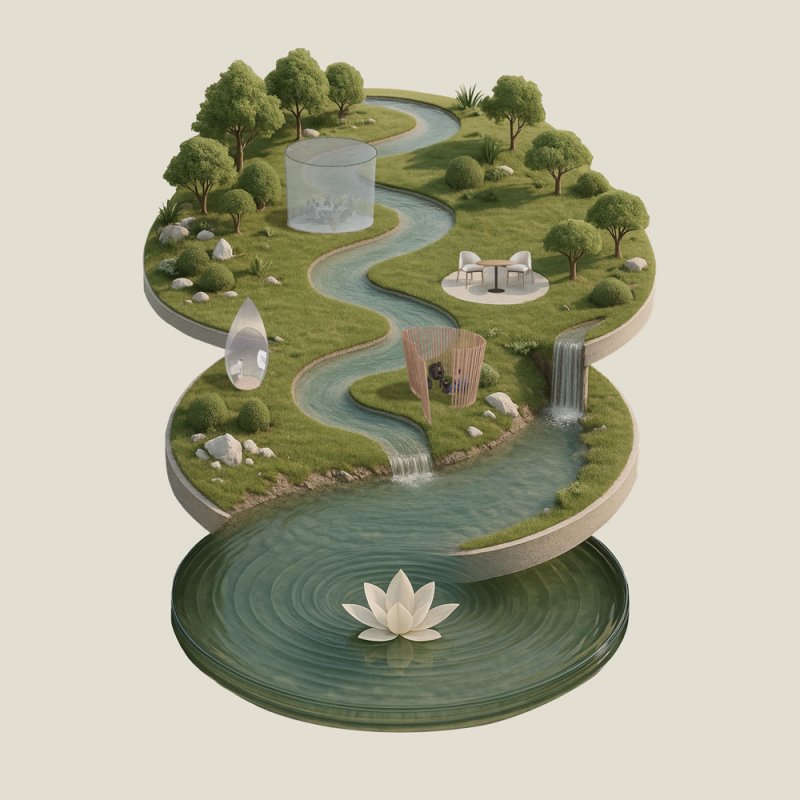
My final project, The Stour Centre, grew from my fascination with the idea that design can influence how we feel physically, mentally and spiritually. From that initial spark, I began to explore biophilic design and the real, measurable impact natural environments can have on our overall wellbeing. The deeper my research went, the more the project expanded in both its design and its offer.
Having two modules to fully immerse myself in the concept meant I could go much deeper into the research and give my ideas time to develop. The project opened doors I never expected, connecting me with local leaders, designers and community members. It has also given me real leverage as I step into freelance work.
More on this project can be found here.
Has the project changed how you think about commercial interior design or the types of briefs you want to take on?
Absolutely. Through this project I discovered that designing for experience and wellbeing is something I am genuinely passionate about. Since graduating, I have worked across a range of sectors, but at the heart of every project is the same question: how does this space make people feel? I strive for inclusivity and aim to create environments where everyone feels valued and considered.
Getting to know the client has become a crucial part of my design process. Building that relationship helps me understand what they are really looking for and how I can tailor my skills to achieve the best outcome. It also helps me build a clearer picture of the end user, their needs, behaviours and expectations, which is always central to my approach.
How did you find Falmouth’s online Interior Design course?
It was definitely a rollercoaster. Studying from home is wonderful in many ways, but it should not be underestimated. Having studied at a conventional university before, I can confidently say that working largely on your own is far more challenging than being immersed in a physical learning environment. You do miss the spontaneous conversations that spark ideas and the hands-on experience a classroom offers. However, the skills it develops, such as self-management, discipline and motivation, are highly valued and have been invaluable while working for myself.
I was lucky enough to work part time during the degree with a very supportive company that allowed me to adjust my working days when deadlines approached, which I was incredibly grateful for. Having structure to my week, alongside regular check-ins, helped me stay accountable. The course’s flexibility was invaluable. Being able to pause a lecture to take notes or check in with tutors during a lunch break was something I did not have during my first time at university. It also really supported me as a student who was diagnosed with ADHD halfway through the course. Learning online gave me the freedom to explore different environments and routines, especially when life inevitably became busy.
You’re starting paid freelance work with Design Conformity in December. What does the role involve day to day, and how are you feeling about stepping into that space?
I have now been with Design Conformity for a few weeks and I am really enjoying it. They are a great company and strong advocates for sustainability in design, and I feel very lucky to be part of their team. I secured the role with Falmouth’s support as they judged our final year competition, which I won. They contacted me after graduation to say they were impressed by my project and wanted to offer me a position. It has been one of the most unexpected and rewarding outcomes of the degree.
At the moment, I am certifying products for their environmental impact from several of their key suppliers, which has been fascinating. I am also supporting some digital design and marketing work, as that is part of my background. Over time, the plan is for me to train as a consultant and eventually become a Design Conformity agent, which I am very excited about.
You already have freelance projects underway through your studio Surface & Soul. What kind of clients or briefs have you been taking on so far?
So far, all my work has been local, which has allowed me to build meaningful connections within my community. I recently completed a project with a retail client who wanted an ethereal yet modern café and shop for her new business, which was a real joy to work on. I also have several smaller projects in progress with a wellbeing practitioner, so my focus continues to be on creating spaces that support connection, calm and community.
I have also enjoyed writing for local magazines about interior trends and sustainable businesses. It has been rewarding to explore this side of design and add another strand to my practice. The writing modules on the course really helped me develop my voice and research skills, and I am grateful for that experience.
External links
Website: www.surfaceandsoul.co.uk
Instagram: @surfaceandsouluk
LinkedIn: https://www.linkedin.com/in/bri-r-b99b29137/

You might also like

Film graduate shortlisted at Young Arrows for shoestring skate campaign

Meet the Drawing graduate nominated for the New Blood Emerging Art Prize

Acting alumna on forging a creative practice that's entirely your own

Product Design graduate on being shortlisted for award and having her work discussed with Queen Camilla
