Film & Television alumni win at the Wildscreen Panda Awards
23 January 2026
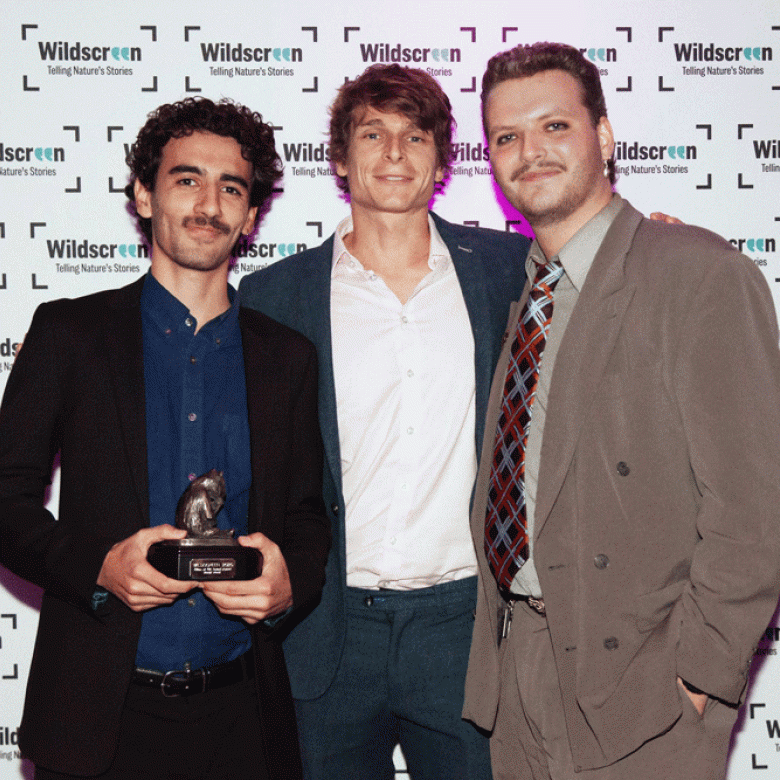
“Winning at the Wildscreen Panda Awards was honestly a dream come true,” says Adam Radage, a graduate of MA Film & Television, who recently took the film he made following his master’s degree with fellow Falmouth student Dan McKay and NFTS sound designer Tom Bosher onto the festival circuit.
Entitled Rock Pool, the short film is a compelling study into the unique display of nature revealed at low tide, drawing its audience through the circadian cycles that turn the worlds beneath our feet. Running for just 17 minutes, the film invites the viewer to appreciate the miniscule and experience a quiet sense of awe. Now, the film has won at the globally acclaimed Panda Awards, often hailed as the ‘Green Oscars’ of the international wildlife film and TV industry.
“Wildscreen has always been a festival I’ve held in the highest regard,” Adam continued. “It’s one of those events you look to while growing up, imagining what it might be like to one day stand among the names that have inspired you.
“For our first film to be recognised in such a significant way was a deeply validating moment, one that has energised us while moving into our next chapter as filmmakers.”
Since graduating from the master’s, the collaborators have set up their own production company, Soup Audiovisual, which is how they came to release Rock Pool. “Soup is all about bringing together experimental audiovisual practice and scientific observation of the natural world” Dan shared. “We do this through meditative and mind-altering works accompanied by immersive soundscapes composed by our collaborator and fellow founder, Tom Bosher.”
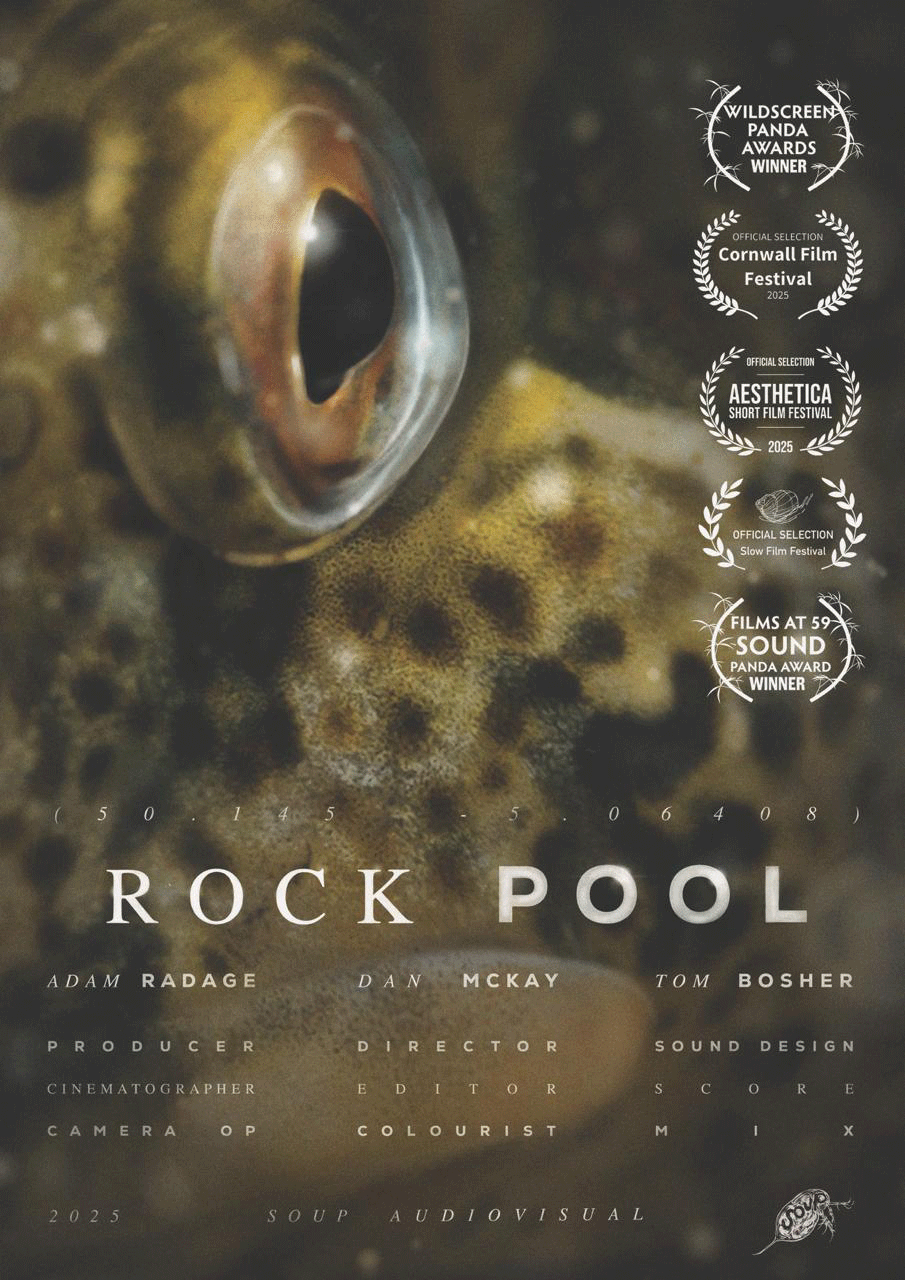
Rock Pool in more detail
The concept of Rock Pool came easily to Dan and Adam, with the two of them having separately grown up as naturalists and rock pools as habitats playing integral roles in their childhood. The pair took this mutual interest, and the natural inspiration around them thanks to Falmouth’s coastal location, to create the film.
On the thought process behind the film, Adam added: “The myriad of creatures range from the nostalgic childhood characters such as crabs and shannies to novel players of the microscopic and outright bizarre. The presence of this minute, unseen realm of animals, in addition to the rocky landscape of rock pools, allowed us to explore and play with scale, making the small seem colossal.
“This is what made the initial idea and process so unbelievably exciting, as it allowed for creative malleability in both the visuals and soundscape, and a unique display of a ‘hidden realm’ which is literally on our doorstep.”
For Dan, Falmouth as a location offered the perfect grounds for creativity: “Falmouth was a perfect point of inspiration for my work; I was keen to be in an environment buzzing with fertile opportunities for creative collaboration and the means to work in both analogue and digital formats.”
Falmouth’s location wasn’t the only thing that made it an inspiring place to study, but its range of study options and diverse approach to learning film industry techniques have helped the pair to find success with their first film.
Adam shared: “As a more logically minded person, it was exciting to realise how I could utilise my past knowledge as a science student to form new, creative outcomes. On the course, I learnt a lot about teamwork and how understandably there are many moving parts, logistics and safety involved in film production. While camera operation and cinematography are my passions, I also took on the producer role for all the films I worked on, and this introduced me to the scale of planning, organisation and communication that are necessary.”
When asked what they hope to do next, Adam shared: “We’re already immersed in our next project, which will take us deeper into the world of freshwater habitats; how water is held in the landscape, how it travels, transforms and shapes the places it passes through. This time, we really want to push ourselves creatively, experimenting further with visual storytelling techniques and potentially exploring ways of depicting water at a molecular level.”
You might also like

Games Programming graduates sign BELTFED publishing deal

Meet the Film alumnus producing a Cornish-language short film


Film graduate shortlisted at Young Arrows for shoestring skate campaign
