How an MA Photography project sparked change in emergency planning
05 February 2026
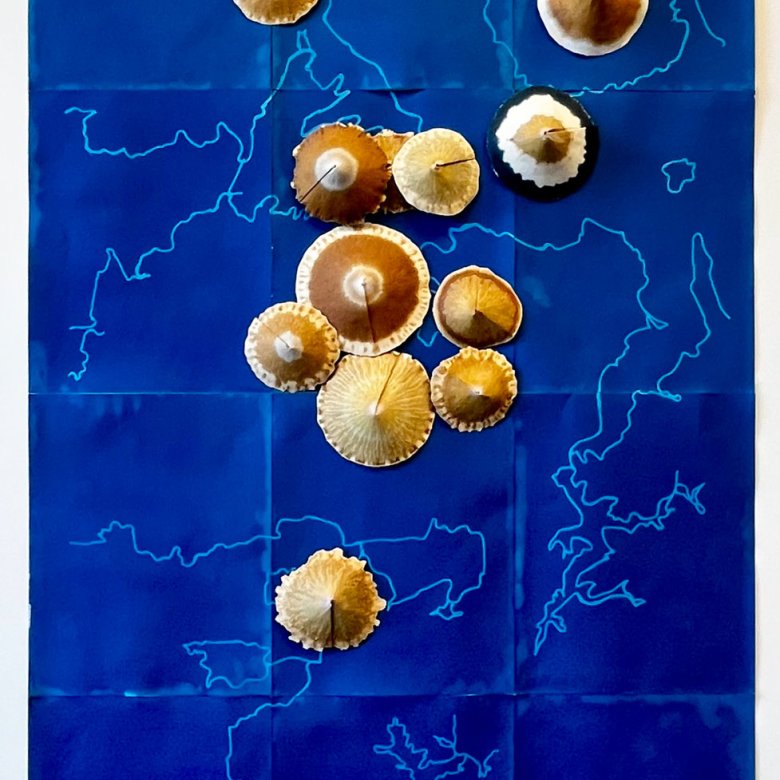
'Volcanic Field Map' by Linda Jarrett.
For MA Photography (Online) graduate Linda Jarrett, photography has never simply been about recording what is seen. Her work reflects a research-led practice that asks viewers to look beneath the surface, sometimes quite literally.
Her Final Major Project, Not If But When, explored Auckland’s largely unspoken volcanic risk and culminated in a public exhibition that went on to influence local emergency planning conversations.
Photography has been part of Linda’s life since her teenage years, but for many decades her work centred on travel and family. As her practice evolved, she became increasingly interested in photography that critically engaged with environmental and social issues. After completing Falmouth’s BA(Hons) Photography (Top-Up) online, joining the MA Photography (Online) felt like a natural progression.
The MA reaffirmed my approach to photography – validating my methods, visual language, and research driven practice.
“The quality of the teaching, the supportive academic environment, and the flexibility of online study suited my lifestyle perfectly,” she tells us. “Although postgraduate study had always been on my agenda, my experience at Falmouth — combined with the University’s strong reputation — made the decision an easy one.”
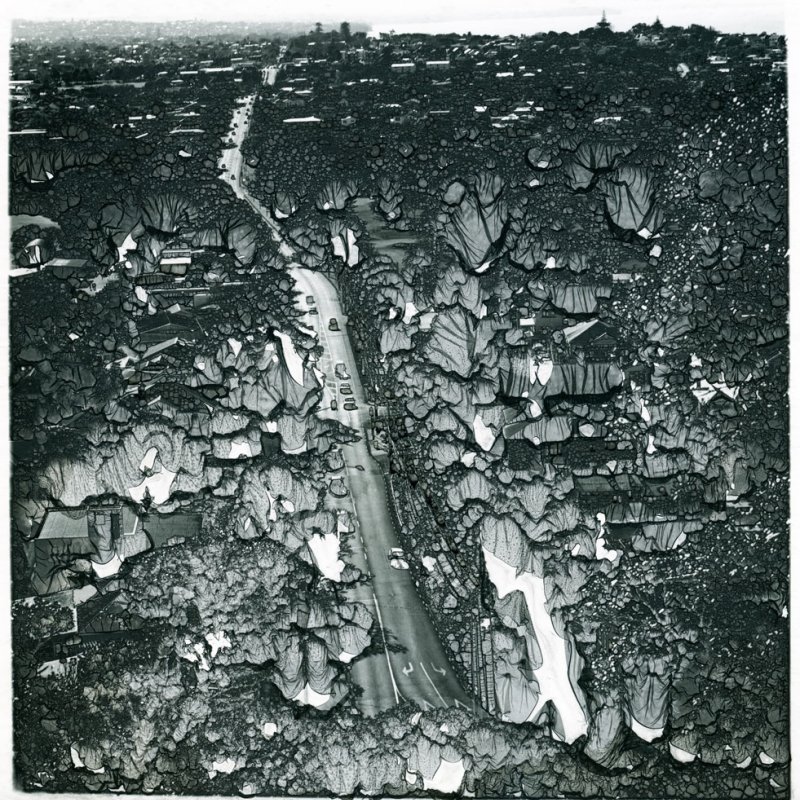
'NIBW Lake Road' by Linda Jarrett.
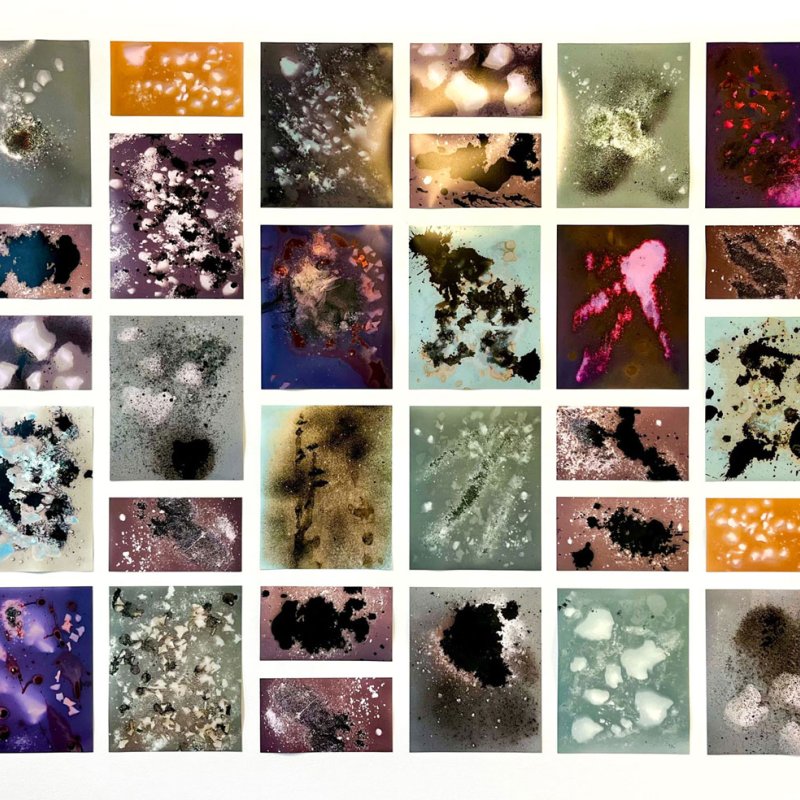
'Lumen Print Wall' by Linda Jarrett.
Throughout both her undergraduate and postgraduate studies, Linda’s work engaged with environmental destruction, often examining human-driven processes such as sand mining and concrete production through analogue and alternative photographic processes. However, for her Final Major Project, she turned her attention to destruction caused by natural phenomena.
Reflecting on this decision, Linda says: “Living in New Zealand, I am constantly aware of the country’s exposure to earthquakes, tsunami, flooding, cyclones, and landslides – yet volcanic risk is rarely discussed. Auckland is built on a volcanic field of 53 cones: dormant but not extinct, part of a geologically young and active system. Another eruption is inevitable, and its effects would be nationally significant.”
This reality formed the foundation of Not If But When. Through conversations with Auckland residents, she discovered that many people had given little thought to what lies beneath their feet. The work became a call for awareness, prompting discussion and questions around preparedness.
To see this project extend beyond the gallery was incredibly rewarding.
From exhibition to emergency planning
While Not If But When was conceived as an artistic project, its reach extended far beyond the gallery. The installation invited visitors to consider how they might respond to a volcanic eruption, particularly in a community located on a peninsular with limited evacuation routes.
Alongside the exhibition, Linda organised a panel discussion bringing together a volcanologist, an archaeologist and an emergency planner to debate Auckland’s volcanic risk. During preparations, she discovered that existing emergency strategies focused heavily on flooding and tsunamis, with little attention given to volcanic eruptions.
She recalls: “Remarkably, by the end of the discussion the emergency planner announced that volcanic scenarios would be added to their next planning agenda.”
For Linda, seeing her research-led creative work contribute to real-world decision-making was both humbling and deeply affirming. “When I make work, I always hope it might shift even one person’s thinking,” she says. “To see this project extend beyond the gallery was incredibly rewarding.”
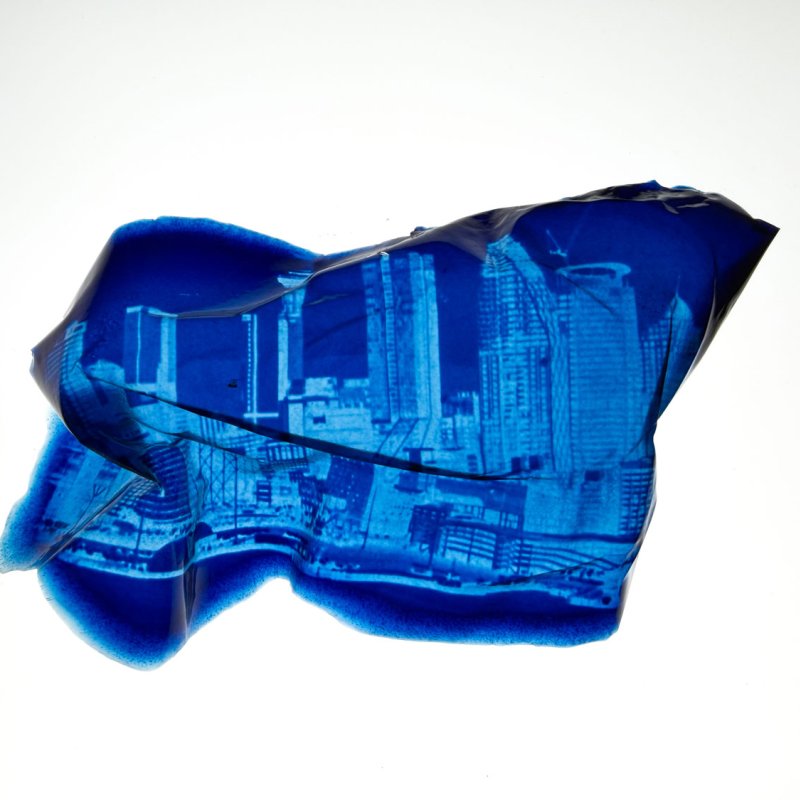
'BCP9' by Linda Jarrett.
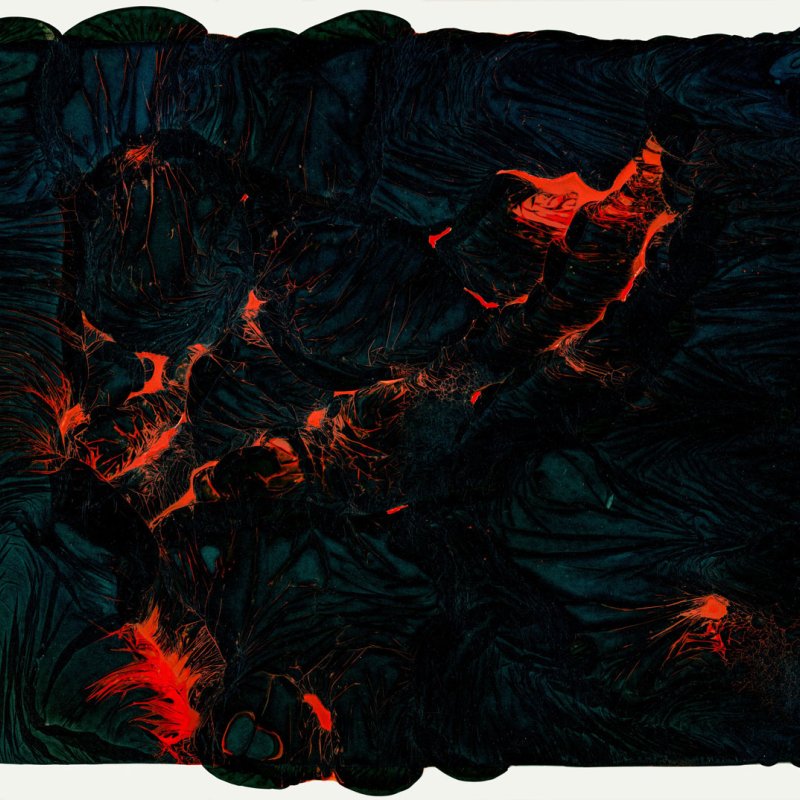
'Magma2' by Linda Jarrett.
Studying across time zones
Based in New Zealand, the ability to study 100% remotely proved especially important. When asked what it was like to study from such a different time zone, Linda replies: “Webinars sometimes took place early in the morning for me, while seminars could run late into the evening. Although I couldn’t attend every session live, recordings ensured I was still able to engage fully with the materials. The experience made me feel part of a truly international cohort, and the flexibility of the programme allowed me to adapt my schedule while staying closely connected to the course.”
Linda adds: “Despite the physical distance, I always felt part of an engaged and supportive academic community.”
Looking ahead
The momentum generated by Not If But When has already opened new doors, with Linda currently planning to deliver workshops in alternative photographic processes, and a long-term goal to establish a community workspace and ultimately pursue a PhD.
Reflecting on what she gained from the course, she says: “The MA reaffirmed my approach to photography – validating my methods, visual language, and research driven practice – while strengthening my ambition to pursue further academic study.”
External links
Explore more of Linda's work on her website and Instagram
Lead image: 'Volcanic Field Map' by Linda Jarrett

You might also like

Games Programming graduates sign BELTFED publishing deal

Meet the Film alumnus producing a Cornish-language short film


Film graduate shortlisted at Young Arrows for shoestring skate campaign
