Melanie Cox
About the researcher
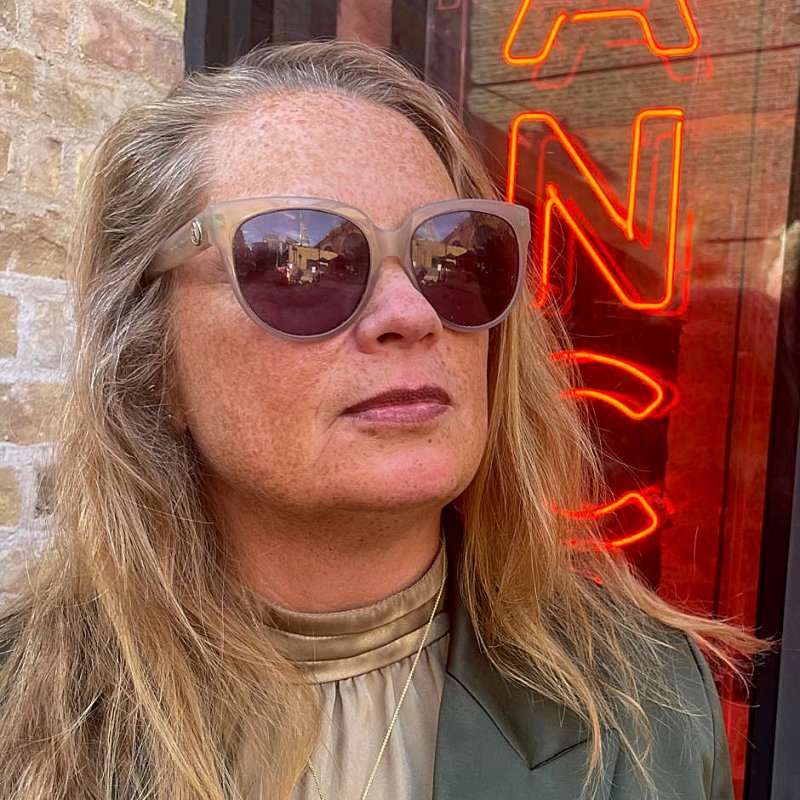
Melanie is a PhD researcher at Falmouth University and a member of a national network with the University of Bristol, dedicated to recovering and preserving the work of Channel 4’s Independent Film and Video Department (IFVD, 1982–1995). Her research examines the department as a complex network of subaltern counterpublics that fostered radical, politically engaged, and transnational filmmaking, creating space for marginalised voices. The project also explores how archives can help to correct historical narratives and engage with the social relations that the department helped to create.
She has a strong background in research and education, beginning her career as a researcher for TV and virtual travel before becoming an experienced course leader for both film and media studies within Further Education. She holds an MRes with Distinction from the University of Portsmouth, where she studied Cuban cinema during the Grey Years (1971–1975), focusing on how filmmakers resisted censorship during a period of extreme orthodoxy.
Research interests
- Independent and radical film and television
- Public service broadcasting
- Film and television archives
- Digital archiving and archival recovery
- Subaltern counterpublics
- Transnational filmmaking and cultural dialogue
- Cultural memory and historical narratives
- Latin American and Cuban cinema
- The intersections of film, representation, and social, political and cultural contexts
PhD abstract
Thesis title
Broadcasting Counterpublics: Channel 4’s Independent Film and Video Department, 1982–1995
Abstract
This PhD evaluates the Independent Film and Video Department (IFVD), 1982–1995, as a radical intervention in British public service broadcasting. It argues that the IFVD constituted a complex stratification of counterpublic infrastructures. Through its systems of commissioning, circulation and distribution, the department differentially structured visibility, access and agency, enabling marginalised voices to emerge. It did not simply represent counterpublics, but produced the infrastructural conditions through which counterpublic discourse could forge forms of transnational dialogue.
The research further argues that an archive currently under development through a collaborative research network operates as a secondary counterpublic infrastructure. The archive restores and consolidates the counterpublic circuitry of the department, which had lain dormant through critical neglect and the obsolescence of both broadcast television as we knew it and VHS as a format. In this sense, the archive does more than preserve moving image: it provides a means of recovering the social relations that the IFVD helped to create.
Qualifications
- 1995 BA(Hons) Media With Cultural Studies Nottingham Trent University
- 2020 MRes Media Industries (Distinction), University of Portsmouth
- 2013 Cert Ed University of Portsmouth
Area of expertise
Melanie is an experienced lecturer and course leader in film and media, with teaching expertise across film history, theory, culture and politics. She has designed and delivered modules including:
- Power, Poverty and Conflict
- British Social Realism
- Pedro Almodóvar and Spanish Cinema
- Comparative Film
- Feminism and Film
- Psychoanalysis and Surrealism
- Queer Studies
- Film, Politics and Representation
- Research skills