Listening to Kernow’s Trees | Celtic Crescent funded PhD

The deadline for applying to 'Listening to Kernow's Trees' has now passed, we are therefore no longer taking applications.
Arboreal Economies, Ecologies and Sonic Commons
How listening to trees and woodlands in Cornwall/Kernow can reconfigure relationships between humans and trees as vital, co-constitutive relations within Cornish ecologies and economies.
This Research & Knowledge Exchange Doctoral Project brief summarises our priority areas of research interest under the heading of: Listening to Kernow’s Trees: Arboreal Economies, Ecologies and Sonic Commons
We welcome all research degree applications aligned with and in response to this brief.
Falmouth University is offering a four-year, fully funded PhD studentship commencing in October 2026. The studentship is part of the Celtic Crescent Doctoral Fund Award, one of ten Doctoral Focal Awards funded by ARHC across the UK.
Explore the full application criteria on the Celtic Crescent website.
Project brief details
Listening to Kernow’s Trees: Arboreal Economies, Ecologies and Sonic Commons explores how listening to trees and woodlands in Cornwall/Kernow can reconfigure relationships between humans and trees as vital, co-constitutive relations within Cornish ecologies and economies. The project is rooted in a rural/coastal creative microcluster shaped by linguistic, social, cultural and geographic marginalisation, and asks how sound and listening to trees and woodland can help surface what is often unheard, overlooked, or treated as ‘background’: other-than-human vegetal life, minority-language knowledge, obscured archives, culturally marginalised identities, intangible cultural heritage.
In this PhD, ‘listening’ is understood as an expanded practice, not limited to what is audible to the human ear. You will investigate how trees and woodlands (including fragments of Cornwall’s Atlantic rainforest ecologies) are represented, named, imagined and sounded through Cornish (Kernewek) and English texts, songs, place-names, sound works and contemporary sonic practices. You will also explore how sonically generated ‘arboreal imaginaries’ shape and are shaped by local arboreal economies (e.g., tourism, forestry, eco-culture, conservation) and emerging ideas of a ‘sonic commons’: shared rights, responsibilities and access to sound and listening in place.
Indicative research questions include:
- How are trees and woodlands represented, named and gendered in Cornish and English songs, stories, place-names and sound works, and how does this shape contemporary understandings of landscape and Celtic-Cornish identity?
- How can expanded listening practices (including attention to archival silences, technically mediated and other-than-human soundings) support an ethics and practice of the ‘sonic commons’ in Cornwall?
- In what ways do creative works that ‘listen to Kernow’s trees’ participate in, critique or reimagine local arboreal economies (tourism, branding, conservation, creative production)?
- How might bilingual, place-based sonic practice strengthen long-term, equitable participation in Cornwall’s creative microcluster and regional environmental policy – particularly for marginalised and minority communities?
- How can we create ethical, non-violent technologies and practices for engaging woodland ecologies (e.g., developing field recording approaches/equipment)?
Methodologically, the PhD is expected to foreground practice-led research (field recording, compositions, immersive media, sound installations/performances, participatory soundwalks) in combination with: relevant theoretical frameworks (e.g., sound studies, cultural studies, ecomusicology, critical plant studies, ecofeminism, heritage studies); bilingual archival and linguistic research (songs, manuscripts, maps, folklore collections); ethnography and co-creation (interviews, workshops, collaborative projects); and arts–ecology collaboration with ecologists/land managers/organisations. There is also scope for action research with local SMEs, venues, festivals and GLAM partners to prototype woodland-related sonic experiences (e.g., audio trails, events, digital works) as a way to investigate and practically shape and support infrastructures for woodland ecology and a ‘sonic commons’ in Cornwall.
Placement (indicative options)
The project is suited to a placement at the intersection of sound arts/music, ecology, heritage, regional economy and language. Specific placements will be tailored with the successful candidate, with indicative possibilities including:
- Ecology/woodland stewardship partner (e.g., Atlantic rainforest / woodland site organisations): sound-based public engagement, participatory listening events, audio trails, and/or ethical field recording/microphone development, building skills in arts-ecology collaboration and environmental communication (with existing foundations through work connected to links with woodland and conservation partners).
- Creative SME/venue/festival/studio in Cornwall’s music and sound ecology: co-producing woodland-related sonic commons projects, releases, events and/or production support, developing curatorial, production and project-management expertise and insight into the local creative microcluster economy.
- GLAM/archive/language organisation looking at tree-related archival work across song, folklore and sound collections; bilingual interpretation and public-facing outputs; skills in, archival research and community-facing resource development.
Students will be based in Cornwall/Kernow (Falmouth University – Falmouth/Penryn area), and will be part of a connected cohort of Celtic Crescent researchers sharing training and experiences. You will take part in at least one residential Crucible Lab bringing the entire cohort together in one of our Celtic nations. It is not possible to study remotely.
Strategic alignment
Projects deriving from this brief are expected to sit within the Research & Knowledge Exchange strategy and the following department.
| Department | Centre for Blended Realities |
|---|
All successful research degree project proposals must emphasise a clear alignment between the project idea and our Research & Knowledge Exchange strategy.
Project brief lead
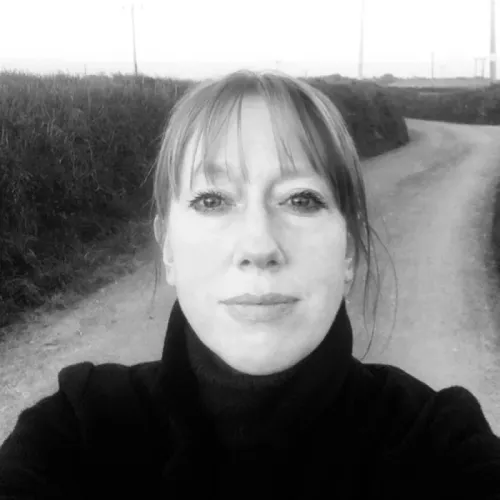
Project brief lead: Dr D Ferrett
Dr D Ferrett is Associate Professor of Music, Sound and Culture and the Research Lead for the Academy of Music and Theatre Arts (AMATA). She is a theorist publishing in sound and music studies, and a vocalist with a musical background based in improv, post-punk, noise pop and blues music. D currently leads the BA (Hons) Popular Music and the BA (Hons) Music degrees as well as teaches across the undergraduate programmes with a modular focus on music, culture, reality-virtuality and futurist philosophy.
Read moreHow to apply

Enquiries
Project brief & project proposal enquiries
To discuss this project brief, ideas or project proposal responding to this brief, please contact: Dr D Ferrett.
Application enquiries
If you have any queries about this doctoral brief, please contact:
Deadline for applications: midnight on Friday 10 April 2026.