Sustainable Product Design graduate on being shortlisted for the Engage2Innovate awards
21 September 2026
This article refers to our BA(Hons) Sustainable Product Design course, which will be renamed to BA(Hons) Product Design for all new students from September 2027.
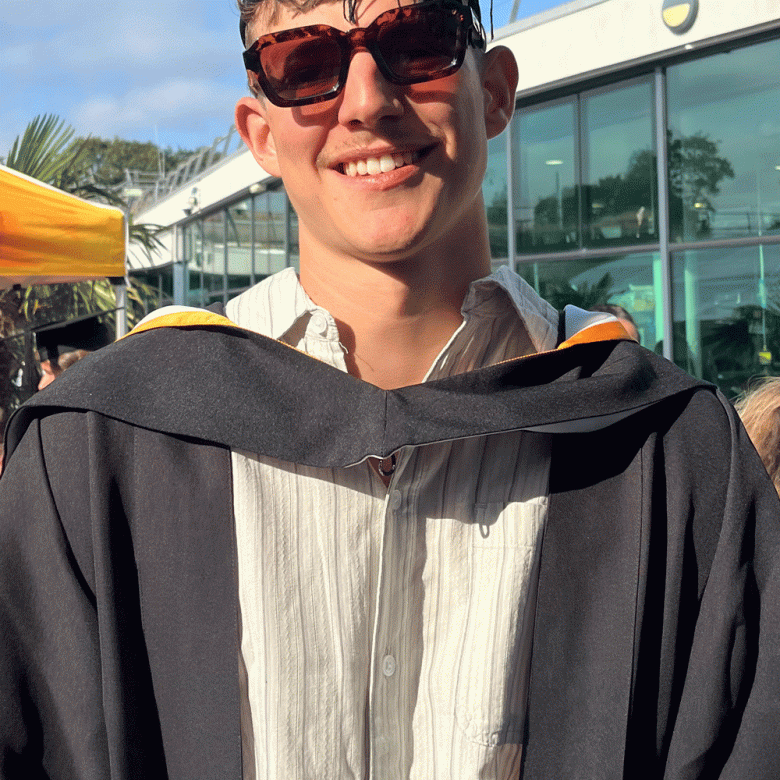
BA(Hons) Product Design graduate Olly Brown has been shortlisted for the Engage2Innovate awards, a design competition that encourages students to submit work that offers a novel, creative solution to tackle radicalisation within communities.
Ahead of preparing to present his work to a panel of judges in Brussels, we chatted with Olly to learn more about the ways he’s combined human connection with sustainable product design, how Falmouth’s strong sense of community influenced his work and how he feels about presenting the design he crafted at Falmouth to the competition’s judging panel.
You’ve been shortlisted for the Engage2Innovate awards, congratulations! Can you tell us about your final major project ‘Us’, which you submitted?
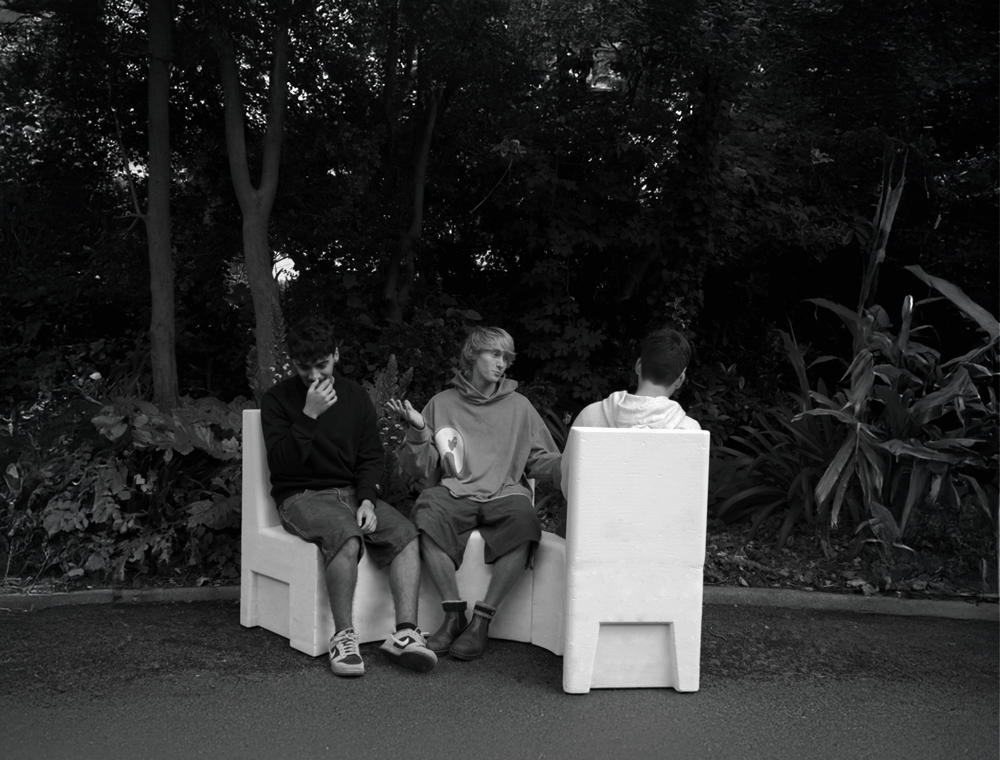
‘Us’ is sustainably crafted public seating centred on bringing communities together to reduce isolation and radicalisation, while also increasing local pride. It consists of individual chairs, each inspired by the classic scrollback dining chairs everyone owned while I was growing up. They feature sweeping curves that seamlessly connect them in around four or five different orientations, allowing for personal one-to-one conversation with groups of three or more to create conversational coves and semicircles.
The project was inspired by my upbringing in Wolverhampton; for all its woes it really felt like us versus the world while growing up. But as the social and political landscape changed, tensions seemed to rise and people stopped connecting with strangers in real life half as much. This chair is all about those moments of human connection we have with each other, encouraging interactions with neighbours and people within the community, something that’s been found to reduce antisocial behaviour and hate crime.
The chairs themselves are made of miscanthus-crete, rendered in oyster shell concrete to reduce its environmental impact. The miscanthus-crete is made from the regenerative crop miscanthus and absorbs carbon during its lifetime; reducing emissions during transport. The oyster shell render was developed using byproducts from local restaurants, and was the idea of Falmouth’s material technician, Mark Squire. I experimented with the material alongside my peers and found it to not only be strong and protective, but self-healing. This meant it recrystallized and fixed cracks and scratches when it encountered water, extending my product’s lifespan and reducing the need for maintenance. It’s really cool stuff!
How did your time at Falmouth help to influence the project you created?
Falmouth really influenced the project. The strong sense of community within Cornwall has gone hand in hand with that I remembered of Wolverhampton. This really inspired me and reminded me of the power of human connection, no matter how simple.
My time at Falmouth was everything I wanted; there's no other university like it in the country. I really enjoyed the course and threw myself in, but the star of the show for me was the scenery. It was like having all the usual stresses of being a student at university but also being surrounded by Cornwall’s natural beauty. It both inspired and motivated me so much.
The course also helped me achieve exactly what I wanted to. When I joined, I felt like my work was just design for design's sake, but I knew the world didn't work like that anymore. I wanted to base my work on sustainability and human-centred design. Having all my briefs targeted around solving a problem and helping people has really made me a more thoughtful, and quite frankly more useful, designer.
For this project itself, I've always been passionate about urban living because of my hometown. In that way, I focused this project on one of The United Nations Sustainable Development Goals: Goal 11, Sustainable Cities and Communities. The project’s goal, along with the innovative materials I researched and developed to create the chair with the help of my technicians and lecturers, show the benefits and specialities of studying Falmouth’s BA(Hons) Sustainable Product Design course.
How do you feel about being flown to Brussels to present in front of industry experts, and can you tell us more about what you’ll be doing?
I’m going to Brussels this month which is really exciting — I've never had anything like this happen before. They're putting me up for a couple of nights, and on the second day I’ll present to a team of judges along with the five other finalists. I’ll then be part of a networking session while the judges deliberate.
I’ve produced a large roll-up poster on my project which I’ll be stationed by, which is where people can ask me about the project. There's then a 'symposium' in which we'll have an open conversation about how design can reduce radicalisation. After this they’ll announce the winner and the whole event will end before a dinner with judges, experts and the other finalists to conclude the day. It’s really exciting stuff and a bit of a treat with it all being covered by them!
What are your aspirations following your time at Falmouth and what do you hope to do next?
I'm currently looking at getting into design professionally, joining a design agency and working my way up. I'm excited to offer my knowledge of sustainable practices and learn from others, just absorbing as much knowledge as possible and designing until my hands fall off!
You might also like

Film graduate shortlisted at Young Arrows for shoestring skate campaign

Meet the Drawing graduate nominated for the New Blood Emerging Art Prize

Acting alumna on forging a creative practice that's entirely your own

Product Design graduate on being shortlisted for award and having her work discussed with Queen Camilla
