Online Photography alumna sees her biographical work exhibited in Brighton
12 August 2026
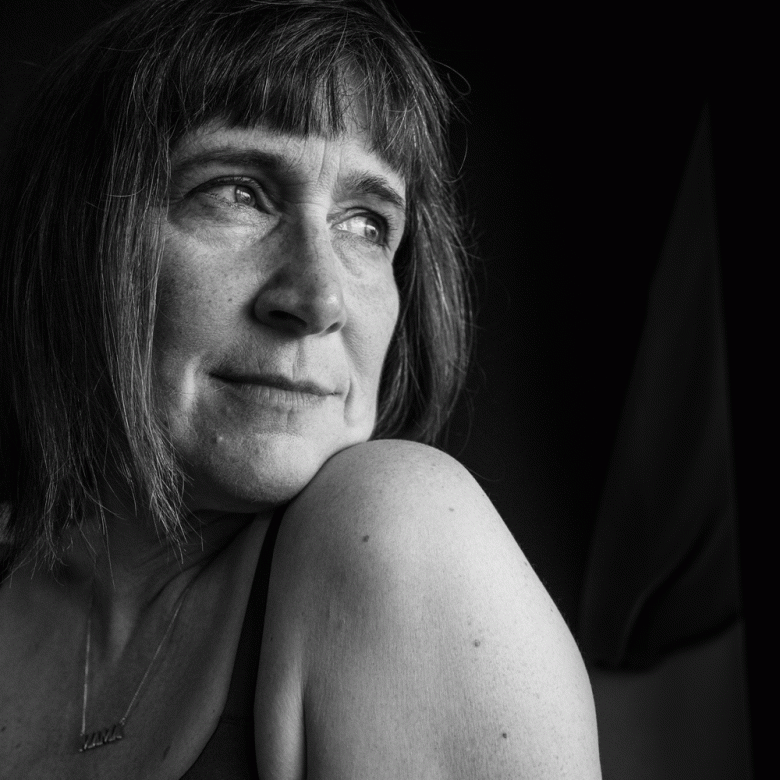
For visual artist, commercial photographer and MA Photography (Online) alumna Emma Collins, the work she created at Falmouth has developed into an insightful body of photography currently on display at the In Between Gallery, Brighton.
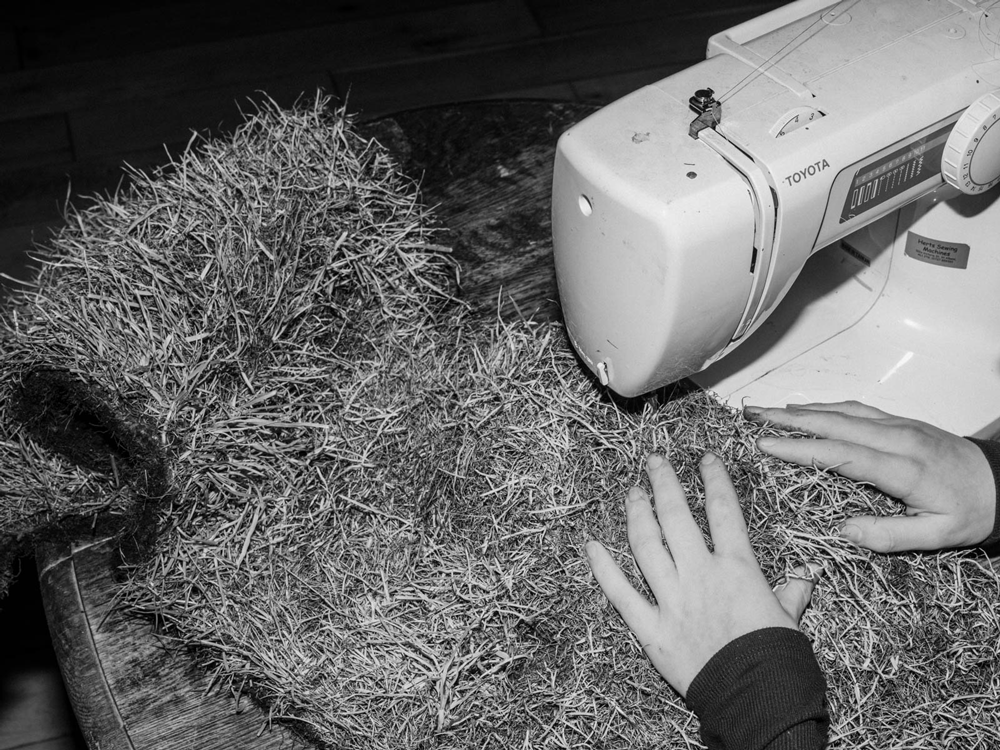
Drawing on Sigmund Freud’s theory of the uncanny, Emma’s work explores the idea of when familiar spaces, such as the family home, suddenly become unfamiliar and ordinary moments shift into something unsettling. Through a biographical lens, Emma captures domestic home life without the warmth typically associated with it, creating a unique collection of artistry.
We chatted with Emma to learn more about how her work has evolved, how her studies shaped her practice and why she wholeheartedly recommends Falmouth’s online course to anyone considering whether they can balance study with family, work and everything in between.
Tell us about the story behind your photography now featured at the In Between Gallery.
The photography on show grew from the work I did on my master’s, and centres on a body of images originally called The Snail and the Mannequin, now titled Little Madnesses. The starting point goes back much further than the MA though, to an early experience of rejection that left me with a lasting feeling of not quite belonging. For most of my life that translated into a quiet, ongoing effort to fit in and find a place I felt secure.
In making the project, I realised that effort had a cost. The very act of trying to belong somewhere had, over time, started to feel limiting rather than freeing. It became a self-imposed smallness. This realisation arrived at a very particular moment for me, going through menopause and watching my children begin to leave home, while finding myself reevaluating a life built deliberately around fitting in.
From there, the work moved from being about a childhood wound to where that wound led me decades later. I had instinctively brought it into the present tense, away from the original story and into what it feels like to live inside a life you've worked so hard to belong in, while slowly suffocating within it. The domestic staging, the small disorientations, the sense of something being slightly out of place; it all comes from trying to picture that feeling from the inside.
Once I understood that shift, the original title stopped fitting. I renamed it Little Madnesses. This felt closer to the small, private and almost absurd moments of unravelling that happen quietly inside an ordinary life.
This evolution has taught me that a project can behave almost like a living thing. You think you know what you're making, but the longer you sit with it and keep thinking, the more it grows and changes shape under you, sometimes into something you didn't expect to find at all.
Can you tell us more about the theoretical inspiration behind this body of work?
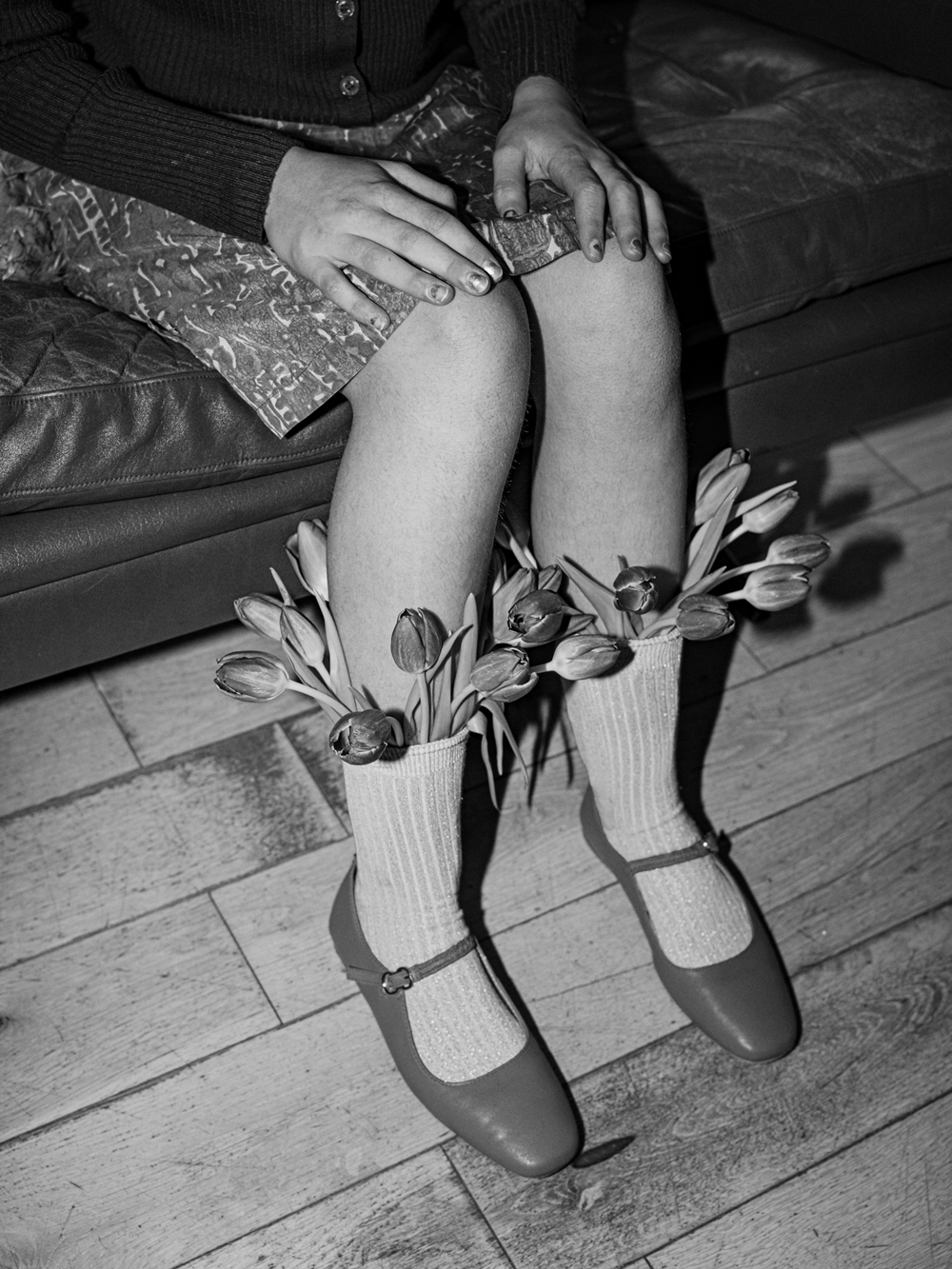
My work draws on the idea of the uncanny as it felt like the natural language for this project. Freud connects the uncanny to the involuntary return of the same thing, past the point where it should have exhausted its meaning, and that's precisely what decades of domestic life are: the same rooms, the same gestures, the same choreography. It’s all repeated on a loop until the mind can't keep filing it as neutral. There's a real ‘Groundhog Day’ quality to it, that long drawn-out sameness, and it's exactly that accumulation, not any single dramatic moment, that tips the familiar into something stranger.
This is why the images resist drama; a dramatic moment would resolve the uncanny into an event, something with a beginning and an end. The quietness isn't a stylistic choice but rather structurally necessary; it's what accumulation looks like from the inside.
Visually, I leaned into the feeling of edginess and discomfort with harsh, direct flash and high-contrast black and white. This strips away any softness or warmth and gives the images an almost gothic quality. That rawness felt essential; it's less about horror or spectacle and more about that persistent, low-level wrongness that sits under ordinary life. It’s easy to overlook, but impossible to fully shake once you notice it. The flash, and the black and white, were my way of making that wrongness visible.
I have been reading feminist literature, in particular Iris Marion Young's essay House and Home, and her concept of inhibited intentionality—the idea that domestic roles can quietly constrain a person's sense of agency within their own space. I have also read Judith Butler's essay on performativity, which has been useful for thinking about the body and identity within the home, and how much of what we call belonging is a performance we sustain.
How did you find your time studying MA Photography (Online) at Falmouth and how do you feel it has prepared you for your future aspirations/career?
I loved every minute of it! I came to the course as a working photographer, but with no real grounding in critical or theoretical practice. I left with a whole new way of thinking about my own work.
Despite being online, the course never felt like a lesser version of studying: it had real critical rigour, the tutors pushed me and the community of peers I built will stay with me well beyond graduation. More than anything, it opened my eyes to a different world entirely, and to career paths I hadn't previously considered, such as higher education teaching, arts management, curatorial work and writing. I went in expecting to become a better photographer and came out with a much bigger sense of what's possible.
What drew you towards studying with Falmouth?
When choosing where to study, it was important to me that it was a flexible online course; I have three kids and I also taught photography GCSE and A Level part-time, while running my own photography business simultaneously. Because of that, it wouldn’t have been possible to do a course that needed me to relocate or restructure my life. I also wanted a course that would let me properly develop a critical, research-led practice, and Falmouth’s reputation for photography specifically was a big draw.
Can you tell us a bit more about the exhibition itself at the In Between Gallery?
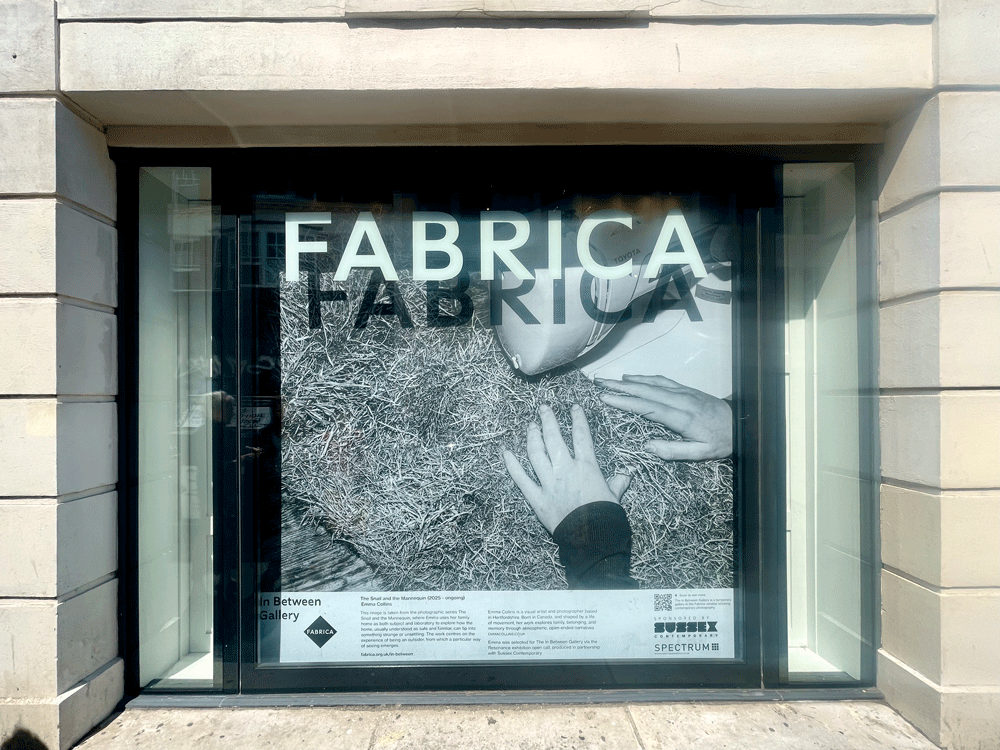
The show came about after three pieces from Little Madnesses were selected for Resonance, a group exhibition with Fabrica and Sussex Contemporary. Fabrica saw the work there and awarded it the In Between Photography Prize, which included a solo takeover of their In Between Gallery on Brighton’s Duke Street for the summer. Alongside that, I did a week-long Instagram takeover of the Fabrica gallery account, giving followers a behind-the-scenes look at the work and the ideas driving it.
I'm still pinching myself that my work has started to find an audience. It started from something quite private, a way to understand myself, and it's strange and wonderful to have it now hanging in a public gallery in Brighton.
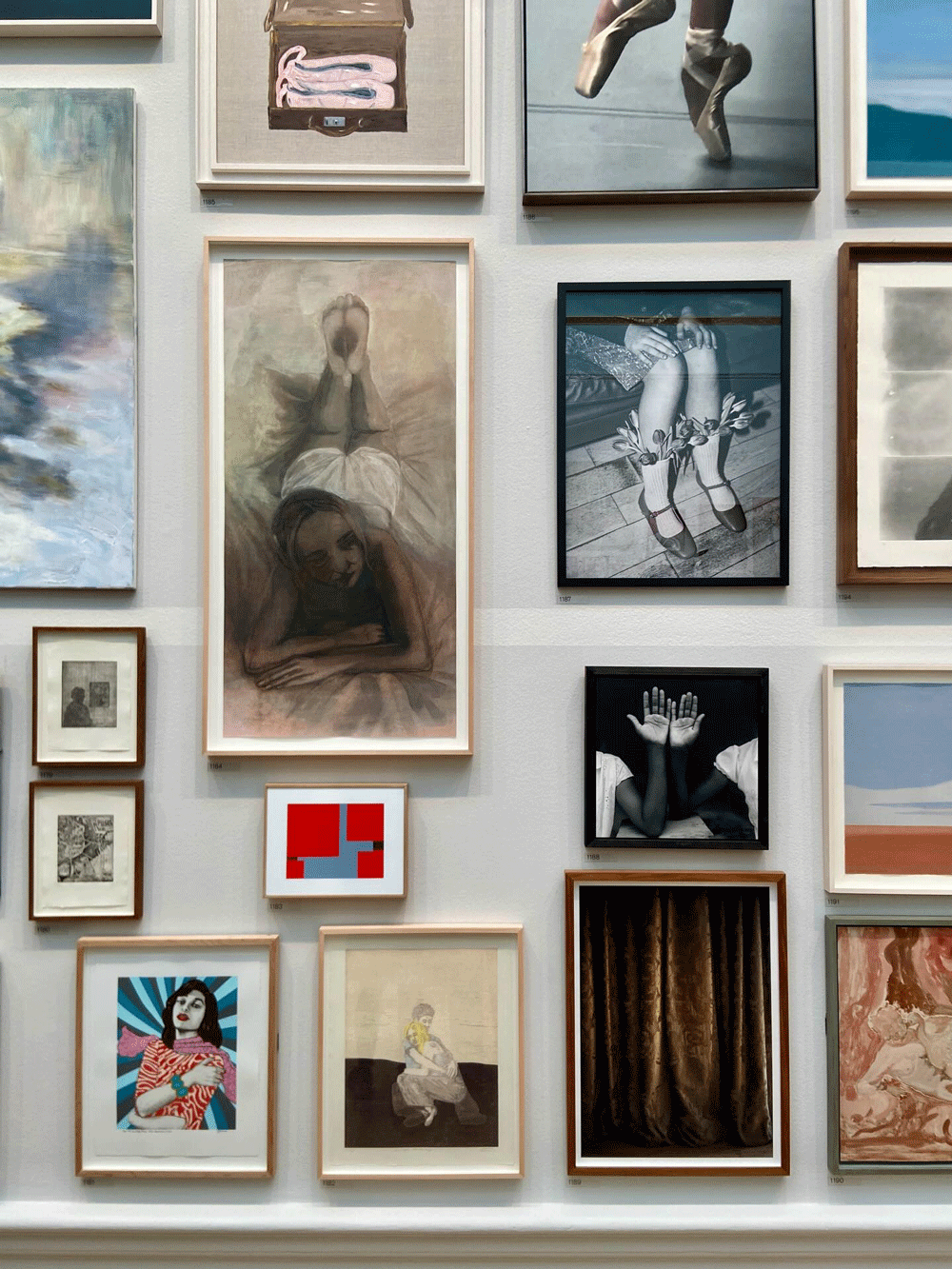
I have another piece from the same series in the Royal Academy Summer Exhibition this year. The root of the work goes back decades, but I don't know if I would have made it without my MA at Falmouth, which gave my work a form and a reason to exist.
If anyone reading this is weighing up whether to do a course like this alongside a full life, kids, work and everything else: it is possible and it's totally worth it.
See Emma’s work at In Between Gallery, Brighton until 30 September 2026.
You might also like

Meet the Film alumnus producing a Cornish-language short film


Film graduate shortlisted at Young Arrows for shoestring skate campaign

Meet the Drawing graduate nominated for the New Blood Emerging Art Prize
