Falmouth University awarded £1.4m to power the future of creative design and manufacturing
18 November 2025
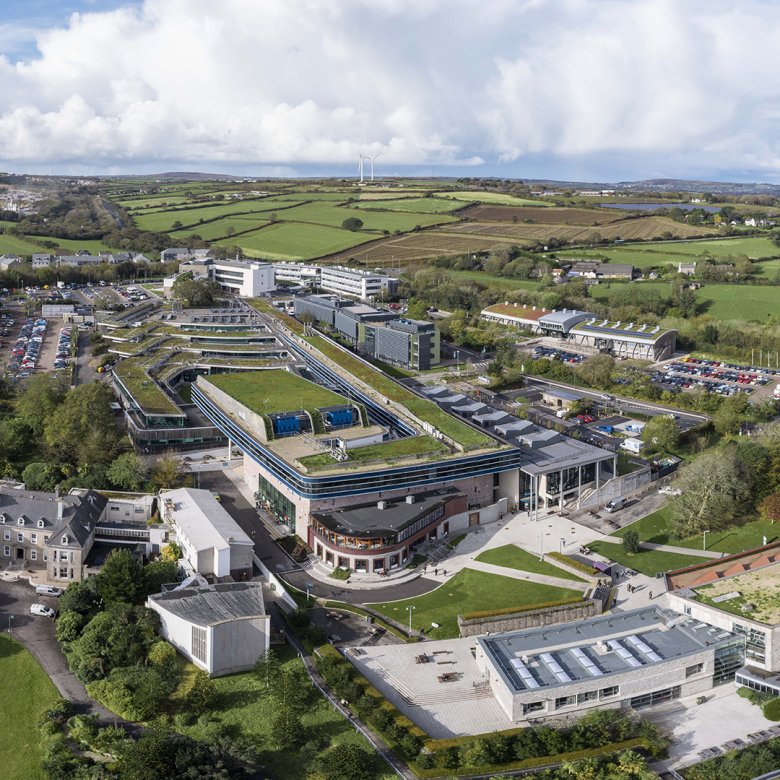
New state of the art design and advanced manufacturing facilities for students at Falmouth University will help drive the development of high-skilled industries in Cornwall thanks to £1.4 million funding from the Office for Students.
The investment will create a suite of cutting-edge facilities, expanding and future proofing the range of industry-standard equipment already available to students. The equipment will include high powered production-grade 3D scanners and printers capable of working with nylon, resin and metal as well as immersive VR/AR tools, all of which is increasingly being used across a diverse range of industries such as marine engineering, healthcare and construction.
The project is supported by a further £375,000 investment from the University, bringing the total value of the new facilities to £1.775 million. The enhanced facilities will be on the Penryn Campus and create an environment that enables collaboration, innovation and real-world application. Learning in such an environment ensures students can develop the skills, experience and confidence needed to contribute across sectors straight after graduation and help shape the industries of tomorrow.
The new hub will support teaching on courses including Spatial Design, Design Innovation, Robotics, Creative Computing, Sustainable Product Design, Interior Architecture, Prosthetics and Fashion. It is expected to be operational in early 2026 and fully available to students from the start of the 2026/27 academic year.
Professor Emma Hunt, Vice-Chancellor and Chief Executive of Falmouth University, said:
This funding allows us to invest in what makes Falmouth distinctive; our creativity, innovation and community, ensuring our students continue to receive a high-quality and future-facing education. The state-of-the-art facilities mean Falmouth students are equipped with the knowledge and skills needed to become a key part of the high-skilled workforce that businesses here in Cornwall, and across the rest of the country require.
The new equipment will include:
- High-specification digital design suites equipped for complex 3D modelling, simulation and visualisation.
- VR/AR headsets for immersive and collaborative learning, allowing students to prototype and test designs virtually, reducing material use and encouraging creative exploration.
- Advanced additive manufacturing equipment essential for creating prototypes to engineering standards, including production-grade 3D printers capable of working with nylon, resin and metal.
- LiDAR drones and handheld 3D scanners to support spatial data capture, environmental design and digital twin technologies increasingly used across industries such as marine engineering, healthcare and construction.
The equipment will be complemented by new teaching and technical spaces, tailored for accessibility, safety and sustainability. The spaces will promote interdisciplinary collaboration, mirroring the kinds of innovative professional design and production environments found in industry.
Drummond Masterton, Head of Architecture & Design, who will lead the project, said:
For more than 20 years we have been using industry standard equipment like this to teach and research the fusion between creative thinking and technical skills that will drive across many industries. This is an exciting moment for Falmouth and for Cornwall and the new facilities will enable our students to be at the heart of that transformation.
Every element of the new facilities is being developed with accessibility and inclusivity in mind. Spaces are being designed to ensure that all students can participate fully in learning activities, while the new digital technologies will enable alternative ways to engage with complex processes and environments.
The investment in new facilities also comes at a crucial time for the development of Cornwall’s economy as design and advanced manufacturing are among its fastest-growing sectors. They support more than 16,000 jobs and contribute 9% of local GVA. Yet both face a significant skills shortage in the technological and creative capabilities needed to future-proof the region’s economy.
The Cornwall Manufacturers Group and South West Manufacturers Network both endorsed the University’s bid, highlighting the importance of developing expertise in areas such as 3D modelling, additive manufacturing, simulation and digital twin technologies.
You might also like

Future Creatives Collective and Creative Competition return for 2027

Falmouth University announces appointment of next Vice-Chancellor and Chief Executive

Falmouth University honours four champions of Cornish and cultural identity with 2026 Honorary Awards

Falmouth University ranked top five in the south west
