Photography lecturer creates short film with sustainable perfume brand Ffern
06 January 2026
‘Sold out for six years in a row’ is the tagline for the organic, seasonal perfume Ffern, a brand that prides itself on its natural ingredients, celebration of seasonal fragrances and small-batch approach. Part of Ffern’s success has been through the storytelling it delivers in its marketing that captures people’s intrigue – such as the autumnal instalment celebrating the work of Falmouth Photography lecturer, William Arnold.
The BA(Hons) Marine & Natural History Photography lecturer shared his project, Some Interesting Apples (SIA), in a short film and accompanying soundscape podcast as part of Ffern’s recent advertising campaign. In the feature video and podcast, William delves into what happens when apples are thrown into hedgerows, highlighting the new, locally distinctive and potentially climate-resilient apple varieties that grow from tossed, wayside cores.
We chatted with William to learn more about the project, the collaboration and how it all interweaves with his roles as a BA(Hons) Marine & Natural History Photography lecturer.
Can you introduce us to your project Some Interesting Apples?
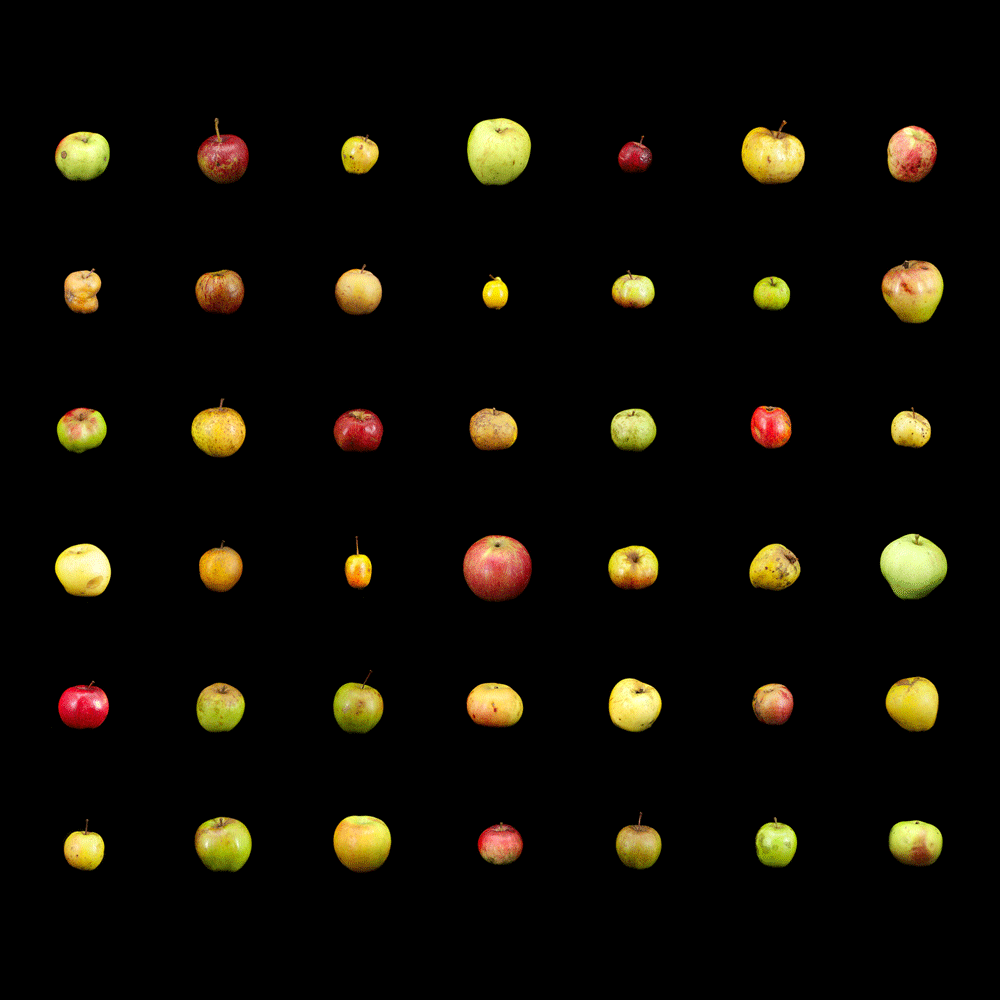
Myself and James Fergusson founded the project in 2019, and since then it has located and mapped over 600 unique apple wildings in Cornwall’s hedges, verges and marginal lands, identifying each tree through a unique what3words tag.
Kestle Barton rural arts space has hosted five editions of the SIA public taste trails, which feed into a process of selecting potential new cultivars. In 2022, the project began to work with Caitlin DeSilvey of the Environment and Sustainability Institute at the University of Exeter to develop ideas for shared research, and in 2023 SIA worked with Forest for Cornwall and the National Trust to establish the Wilding Mother Orchard (WMO) near Helford, Cornwall. It’s the first UK orchard solely dedicated to the cultivation of selected wild-grown chance-seeding apples.
The logic is simple. Every apple that grows from seed is a unique new variety, and the apple genome is huge – bigger than the human genome! This extreme heterozygosity means that each apple growing from a casually discarded snack has the potential to become a useful new variety adapted to a local climatic niche.
Searching for appealing apples in this genetic tombola of mouth-puckering crabs and exhaust-fumed Royal Gala offspring could be a fool’s errand, but we have been trying, and we think we are starting to succeed!
How did your collaboration with Ffern first come about?
The content curator at Ffern, Danny Farnham, visited one of the early iterations of the Some Interesting Apples taste trials at Kestle Barton having been aware of my previous work, Suburban Herbarium, a project that is also concerned with overlooked flora and biodiversity. Danny had followed the project as it has evolved over the years, so when Ffern developed their autumn collection they got in touch about working on a collaboration that would tell the story behind Some Interesting Apples in an engaging way while also creating interesting and relevant content to sell their fragrance.
We worked with director Elena Heatherwick to make a three-minute short, shot on 16mm film to tell the story of the project. We also worked with musician and sound recordist Alice Boyd to document the real-life taste trials that help us decide which apples to propagate in the Wilding Mother Orchard.
In what ways does Some Interesting Apples blend with your work as a Marine & Natural History Photography lecturer for Falmouth?
I am module lead for the first- and second-year land pathway: where telling engaging stories about landscapes, biodiversity and our natural heritage is important. The second-year students were able to participate in the project this year on a field trip to Kestle Barton, where they got the chance to sample several of the apples involved.
From a research perspective, I am interested in heritage, the natural world and why we ascribe value to certain aspects of those over others. As far as this relates to apples, I find it interesting that there is at least some interest around heirloom apple varieties mostly thanks to Common Ground’s Apple Day, and in Cornwall through a council scheme at the turn of the millennium to plant heritage orchards - although you’ll only ever find four or five very similar kinds of apple in a supermarket!
People who care become attached to the local distinctiveness of certain varieties and then get alarmed when they realise that the heritage apple varieties they love might not survive in a climate-changed world, but they often don’t appreciate that we are surrounded by unique wild apple volunteers that may be better adapted to future conditions. So, the project is kind of about adding new robust variety to this living apple museum through long term observation and selection of the chance seedlings.
External links
Learn more about the project on Instagram
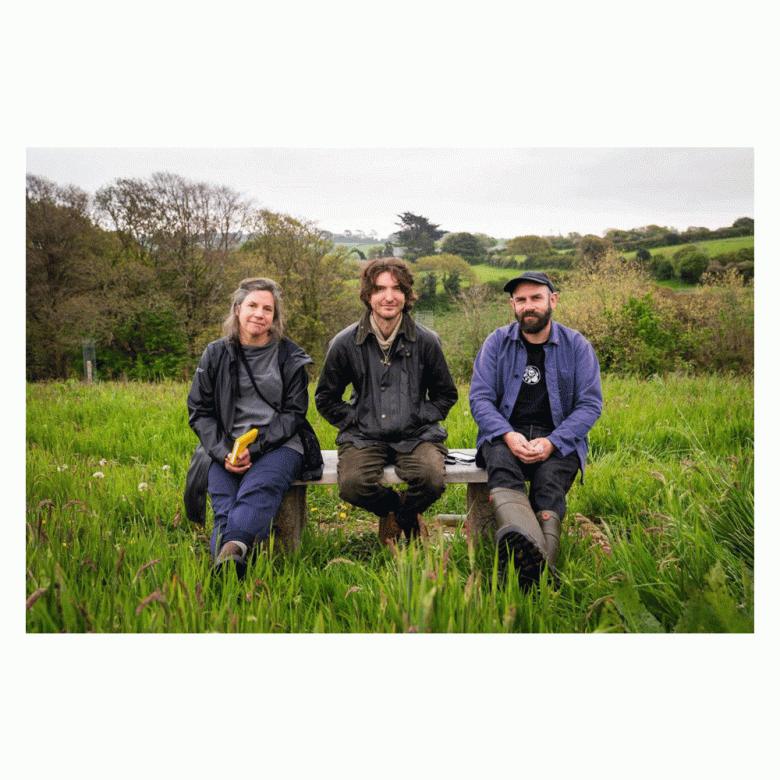
Leading image: Caitlin DeSilvey, William Arnold, James Fergusson. Credit: William Dax/SWNN.
Images from the short film. Credit: Elena Heatherwick.
You might also like

Disruption: Falmouth harbour/docks area

Online Photography alumna on founding film and photo festival

Editorial Photography student wins Nikon Student Photographer of the Year

Editorial Photography student on industry praise and shooting at Wimbledon
