


Photography BA(Hons)
Define a new era of contemporary photography.
Course overview
Ready to define a new era of contemporary photography? We’ll support you to craft a unique artistic voice as you experiment with techniques and processes, utilising our specialist studios, equipment and digital and analogue post-production spaces. As you develop a portfolio of original work, your technical know-how will be matched by a deep understanding of the critical and societal impact of your practice. With industry masterclasses, guest lectures and collaboration opportunities, you’ll gain the professional experiences to establish a sustainable career.
You will:
- Explore and develop your ideas through workshop-based teaching, with sessions in our Learning Hub, around the campus and beyond
- Have access to professional-standard photography facilities, including studios and darkrooms, and a range of digital and analogue cameras
- Experiment with and question the role photography plays in our society and culture
- Develop valuable skills in creative problem solving, critical thinking, negotiation and collaboration, alongside project management
- Engage in creative collaborations and work experience with industry professionals and organisations, building your professionalism and expertise in creative enterprise
- Shape your practice by working with tutors who are practising artists, photographers, curators, writers and thinkers
- Exhibit your work throughout the Photography degree, gaining feedback along the way and testing new ways to engage audiences
Lead images by Lizzie Blackie, Mary Coates, Serena Burgis and Alex Wilson.
Course details
On this Photography degree, you'll have the opportunity to gain a BA(Hons) degree over three years or the option to study Photography BA(Hons) with Integrated Foundation Year and/or a professional placement.
Across the duration of the course, you’ll build a self-directed practice that defines your unique way of representing the world. You’ll gain a wide range of technical skills utilising specialist equipment and processes from analogue to digital, studio to location, camera to print. Underpinning your practice will be a grounding in the history, theory, professional contexts and working practices of photography.
Discover the full course details:
- Three year degree
- Four year degree with professional placement
- Four year degree with Integrated Foundation Year

| Graduates include internationally exhibiting artists, award-winning filmmakers, digital content creators and freelance photographers who’ve worked for the likes of Calvin Klein, Rolling Stone and WWF |

| Graduate successes in 2025 include Niamh Shergold, (past winner and 2025 nominee, British Journal of Photography’s Portrait of Britain), Alice Poyzer (PhotoVogue Vision Grant) and Viviana Almas (New Contemporaries Programme) |
|
| Students Alexander Norman, Daisy Tearle and Sasha Leharne were Association of Photographers (AOP) Awards 2025 finalists |
Year one will give you a firm foundation in photographic processes and techniques as well as the critical and cultural contexts of the discipline. From day one, you’ll be encouraged to take ownership of your learning journey and engage with opportunities to embed yourself in our supportive creative community.
Modules
Foundation
Through an investigation into both practical and theoretical aspects of Photography, you’ll gain a foundational understanding of ways of learning and developing new knowledge
Process
In this module, you’ll learn to confidently use specialist photographic facilities and equipment. From digital to analogue, studio to darkroom, you’ll explore some of the key photographic processes and techniques.
Agency
Through practical projects that encourage you to take agency over your learning journey, you’ll develop a conscious awareness of the intersection of photography with education, wellbeing, sustainability and social responsibility.
Progress
This module is all about consolidating your competency in the use of specialist photographic facilities and equipment. You’ll further progress your technical and craft skills in a range of different approaches while exploring professional working practices and industry contexts.
Approaches
In this module, you’ll be introduced to a broad range of practical and theoretical approaches to photography, as well as developing critical thinking skills through investigation, analysis and reflection.
Action
How can we use our creative practice to benefit our environment, community, stakeholders and society? In this module, you’ll be encouraged to take a critical view on the relationship between images and the larger contexts they operate within and are influenced by.
You’ll engage with a wide range of genres and possible applications of your work, exploring the critical and professional constraints of audience engagement and perception. You’ll also develop a deeper critical understanding of how photography operates in the world.
Modules
Commitment
Develop a practical understanding of contemporary professional practice with a commitment to creatively respond to set briefs within the context of commissioned work.
Engagement
Through close and careful observation of the material world around us and our relationship to it, you’ll produce creative expressions of ideas and emotions utilising approaches that are contextually appropriate.
Situation
You’ll further develop your critical understanding of how photography is situated and intersects with some of the most urgent global issues in our culture and society.
Collaboration
Collaborate on a creative output with external partners. To develop professional practice and an awareness of a variety of roles within the photographic and creative industries. Explore ethical, sustainable and inclusive working practices within the creative industries.
Experimentation
In this module, you’ll be encouraged to be curious, tolerate uncertainty, test ideas and play with possibilities. You’ll experiment with a range of techniques and processes and investigate how they relate to conceptual frameworks.
Context
You’ll develop your independent creative practice and build an awareness of the intended audience and situational contexts of your work.
You can choose to take an optional professional placement after your second year on a three-year programme, or after your third year if you’re studying for a degree with an Integrated Foundation Year.
You’ll be responsible for finding your own placement, with support from the Employability team.
Choosing this option will enhance your industry experience and skills while studying.
How you’ll study during your professional placement
You’ll spend time working in a professional context, as part of a business or organisation. This can be in one role, or up to three, and must be for a minimum of 24 weeks.
You’ll develop in-demand workplace skills, deepen your insight into industry and grow your network of contacts, all of which could help you get ahead in your career after graduation.
Throughout this year, you’ll develop a portfolio of work that includes critical self-reflection on what has been learned from the experience. You’ll be required to evidence your experiences, the skills you’ve learned and your professional growth.
In the final year, you’ll focus on your future aspirations and ambitions and how you can work towards achieving them. At the end of the year, you’ll have a complete body of work that represents your unique perspective as a creative practitioner along with the professional tools to launch yourself into the creative industries.
Modules
Investigation
You’ll carry out an in-depth critical investigation into a topic that’s related to your creative practice.
Development
Translating your research into practice, you’ll refine and experiment with appropriate techniques and processes as you test creative concepts in response to a chosen area of study.
Fulfilment
You’ll produce a sophisticated body of work that represents who you are as a creative practitioner, demonstrates your critical engagement with the medium and reflects appropriate industry expectations and contexts.
Ambition
You’ll develop and apply the practical skills needed to realise your ambitions, including creating a professional identity as an emerging creative industry pioneer.
Why study an Integrated Foundation Year route?
If you’re taking on a new subject that you haven’t studied in depth before, have been out of education for a while or have a non-standard educational background then an Integrated Foundation Year degree may be the right choice for you. It is a four-year degree with an Integrated Foundation Year to start, which allows you to explore the primary elements of your subject before progressing on to the remaining three years of the BA(Hons) degree.
What you'll study in your Foundation year
If you choose this pathway, you'll study five core modules in your Foundation year. These are all designed to help you explore the foundational elements of your subject. You'll gain relevant technical skills, learn to experiment and take risks, develop an understanding of professional practice, have opportunities to work across disciplines and collaborate with other students on live project briefs.
Modules
Explore
You'll begin your foundation year by working collaboratively with others to explore themes of the future. You'll take risks, experiment through play and be supported to break through barriers.
Technique
You'll take subject-specific workshops and develop essential technical and practical skills in your area of study. You'll also enhance your analytical and organisational abilities.
Apply
You'll work with your peer group to think beyond discipline by addressing a societal or global issue. You'll then showcase your work to your peers and deliver and accompanying evaluation of your process.
Industry
You'll enhance your creative and practical skills in your subject specialism by responding to typical industry briefs, underpinned by focused research and experiments. You'll also gain industry insights through guest lectures and workshops.
Launch
You'll develop your unique identity in your specialism through the production of a self-initiated body of work. Your final project will be the bridge to your next year, fully supported by evaluative reviews and critical analysis of the work you have created.
After the Foundation year, you progress into Year One of the full three-year degree, equipped with a deeper knowledge of your subject, a clear understanding of your strengths, and develop a practical and technical skillset and the confidence to excel in your chosen subject.
If you apply for and enrol onto a degree with an Integrated Foundation Year, you’ll have the option to switch onto a five-year version including a placement year. That means you’ll complete the first three years of your course before completing a placement in industry in your fourth year and returning to Falmouth for the fifth year of your programme.
We regularly review course and module content to ensure our students receive a high-quality and rewarding academic experience. As such, there may be changes made to the curriculum which are not immediately reflected in the content displayed on our website. Optional modules may be updated to maintain the best experience. Any students or applicants affected will be informed of approved changes directly.
Our students & graduates
Our Photography BA students develop their creative practice through hands-on projects, industry briefs and access to professional-grade facilities. From fashion and filmmaking to editorial and fine art, students explore photography in all its forms while building the skills and confidence to succeed in the creative industries.
Discover more about their student projects, and the successful careers they build after graduating.
In this episode of Ones To Watch, Photography BA(Hons) graduate James Bannister tells us about his creative process and his career highlights to date.
Meet freelance photographer and director James Bannister
Photography graduate James Bannister works with creatives worldwide as a freelance photographer and director. We talked to him about his approach to visual storytelling, the importance of finding your unique voice and the highlights of his career since graduating.

Inspiring Alumni: Serena Brown, Freelance Photographer and Creative Director
"Studying at Falmouth gave me a strong creative and technical foundation to step confidently into the industry after graduating. It taught me the importance of narrative and meaningful human connection, values that continue to shape my work to this day."
Meet Serena
Photo: Hydar Dewachi
Photography alumna selected for New Contemporaries 2025
BA(Hons) Photography alumna Viviana Almas has been selected for New Contemporaries, a prestigious showcase of the most exciting emerging artists living and working in the UK. As one of only 26 selected artists in 2025, Viviana will receive one-to-one mentorship from an arts professional and will take part in two exhibitions at South London Gallery and MIMA Middlesbrough in 2026.
Read the full story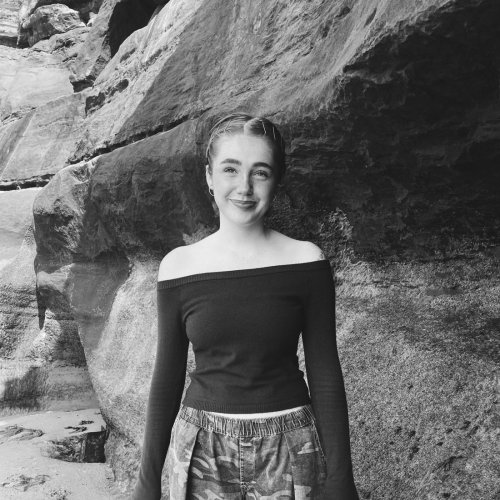
Photography graduate wins Portrait of Britain for second year running
For the second year running, BA(Hons) Photography graduate Niamh Shergold has been named a winner of the Portrait of Britain, cementing her place as one of the UK's most exciting emerging photographers.
Read more about Niamh's storyStories from our community
Explore student projects, graduate successes, staff news and industry insights from the Institute of Photography

Online Photography alumna sees her biographical work exhibited in Brighton
12 August 2026
For visual artist, commercial photographer and MA Photography (Online) alumna Emma Collins, the work...

MA Photography Senior Lecturer launches major show at the National Gallery of Scotland
07 August 2026
Wendy McMurdo: The Digital Mirror is the National Gallery of Scotland’s latest exhibition, chartin...

Photography alumnus on winning Getty Images Young Photographer of the Year and working at Wimbledon
30 July 2026
Just one year after graduating, Benj Gilbert has won Getty Images Young Photographer of the Year at ...

Online Photography alumna on founding film and photo festival
28 July 2026
Throughout the summer, Ryedale Film & Photo Fest is bringing a curated selection of photography, sho...

Marine Photography alumna documents endangered devil rays for BBC Wildlife Magazine
14 July 2026
From creating an eight-page cover feature for BBC Wildlife Magazine to producing a short film and sp...

A microscopic breakthrough in Marine & Natural History Photography | Degree Show Stories
06 July 2026
BA(Hons) Marine & Natural History Photography final-year student Aryah Nagarajan has made a microsco...

Editorial Photography student wins Nikon Student Photographer of the Year
02 July 2026
Second-year BA(Hons) Documentary & Editorial Photography student Max English has been awarded Nikon ...

Award-winning online Photography alumnus on switching careers in his 50s and gaining Royal Photographic Society recognition
10 June 2026
After spending 33 years working in financial services marketing, MA Photography (Online) alumnus Nic...

Photography student reflects on making the Photo London Student Awards shortlist
03 June 2026
Final year BA(Hons) Photography student, Madison Hafner, has recently been nominated as one of just ...

Online Photography alumni see work featured in month-long London exhibit
12 May 2026
Work by graduates from Falmouth’s MA Photography (Online) course can be seen in On Top of ...

Falmouth graduates see their student work recognised at this year’s British Wildlife Photography Awards
09 April 2026
The British Wildlife Photography Awards (BWPA) is a visual celebration of British wildlife that this...

Photography lecturer shoots editorial commission for The New York Times
11 February 2026
BA(Hons) Photography (Online) lecturer, Celine Marchbank, has recently captured the 96-year-old Ghan...

Falmouth graduate wins Portrait of Britain for second year running
10 February 2026
Niamh Shergold discusses the story behind her winning image.

'Volcanic Field Map' by Linda Jarrett.
How an MA Photography project sparked change in emergency planning
05 February 2026
Linda Jarrett discusses her final major project on Auckland's volcanic risk.

Photography students capture fascinating marine life in Egypt on annual diving trip
03 February 2026
BA(Hons) Marine & Natural History Photography students recently got the chance to dive into the Red ...

Credit: William Bunce
Still life photographer on fusing creativity with technical excellence
13 January 2026
Since graduating from Falmouth’s BA(Hons) Photography degree in 2010, William Bunce has forged a s...

Falmouth lecturers collaborate with West Cornwall Women’s Aid to facilitate exhibition in Penzance
24 November 2025
Unsettled is an upcoming exhibition that showcases the strength and resilience of women rebuilding t...

From the series 'All Quiet on the Home Front' by Colin Pantall
Falmouth Photography Lecturer explores fatherhood in Italian exhibition
20 October 2025
Colin Pantall's exhibition, 'All Quiet on the Home Front' explores fatherhood, landscape and identit...

RAF Photographer on balancing military service with a master’s degree
03 October 2025
Read how Leah Jones combined military deployment with a master's degree.

Falmouth alumna becomes the first female editor of long-standing surf magazine
23 September 2025
After feeling creatively influenced by Falmouth’s deep connection with the sea, nature and its com...

How you'll learn & be assessed
On this Photography course, you'll build valuable technical, critical and professional skills through practical workshops, seminars, lectures, tutorials, critiques, field trips and masterclasses with industry professionals.
At Falmouth, we use a 'digitally enhanced learning & teaching' approach. Your experience will always be predominantly in-person, including seminars, tutorials and studio teaching, with some, more targeted elements, being online either live (synchronous) or pre-recorded (asynchronous). You can read more here.
100% of your assessment will be coursework, with no formal examinations.
Assessment methods
- Foundation year assessments are 100% coursework based
- Portfolios
- Projects
- Exhibitions
- Journals
- Presentations
- Essays
Facilities
- Fully equipped professional-standard studios with industry standard flash and continuous light, infinity coves and a full range of backdrops
- State-of-the-art digital post-production suites with complete Adobe Creative Cloud Package and Capture One
- Fully equipped black and white darkrooms for printing from any format to almost any size
- Machine film processing for B&W, Colour C41 and E6 and hand processing facilities
- Colour darkrooms for RA4 printing from any format up to 5x4
- Alternative and sustainable photographic processes
- Photography rental store housing a vast range of analogue and digital camera equipment for stills and moving image plus lighting, specialist equipment and location shooting kits
- Professional standard print lab for producing high quality prints on industry standard equipment and on various media up to B0

Virtual tour
Discover where you’ll spend your time as a student with our 360° tour, showcasing our facilities, accommodation, town and scenery.


Photography Facilities
Housing dark rooms, post-production suites, full professional studios and gallery, our Institute of ...

Library Facilities
Offering extensive collections, our two libraries provide a wealth of digital resources, magazines, ...

Sports Centre
Our Sports Centre, on Penryn Campus, includes a spacious gym with up to 90 of the latest, new statio...
Meet the team
You’ll learn from a team of practicing professionals, offering experience in editorial, documentary, fine art photography, advertising, publishing, writing and curating. You’ll also connect with our network of visiting professionals who offer extra teaching, portfolio reviews and placement opportunities.
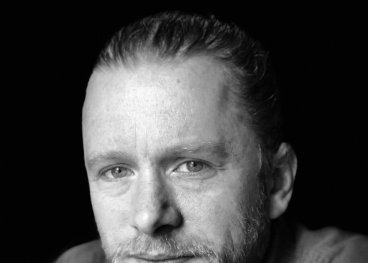
Steven Barritt
Course Leader, BA Photography
Steven Barritt is an artist, photographer and lecturer based in Cornwall. His photographic practice ...
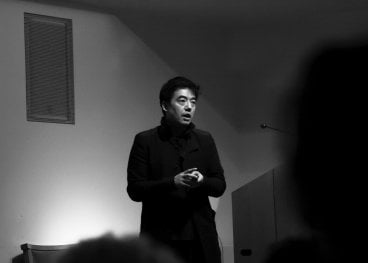
Dinu Li
Senior Lecturer, BA Photography
Dinu Li is an interdisciplinary artist working with the moving image, photography, installation and ...

Oliver Raymond-Barker
Lecturer
Oliver Raymond Barker is an artist and educator based in Cornwall. He works with the mechanics and a...
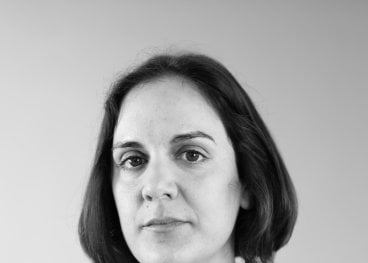
Dr Catarina Fontoura
Course Leader, Photography BA(Hons) (Online)
Catarina Fontoura is an artist, educator and writer. She has submitted her PhD thesis in History of ...

Kate Lowe
Lecturer Photography Integrated Foundation Year Degree
I am a photography educator and joined the IFY team in June 2023. Back in 2011, I began my career as...

Tom Skinner
Senior Lecturer
Tom works with photography and film through image-making, curation, writing and teaching. He graduat...
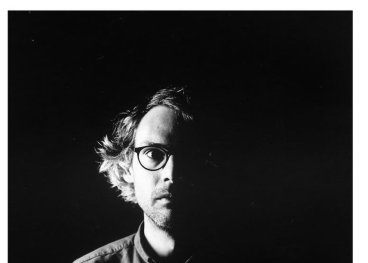
Oliver Udy
Head of Photography
Oliver Udy is a photographer, publisher and general facilitator of things.Udy joined Falmouth Univer...

Karen Brett
Senior Lecturer
Karen Brett is an artist working with photography, moving image & sound who graduated with a BA ...

Rosie Blake
Associate Lecturer, BA Photography and BA Fashion Photography
Rosie is a commercial fashion photographer and an educator at Falmouth University with creativity at...
Some members of staff only teach on specific modules, and your course might not feature every staff member who teaches on the course.
Got a question about this course?
If you want to know more about the course structure, our application requirements or what our graduates have gone on to achieve, our friendly course team is here to help.
Chat to OliCareers
Our Photography graduates have worked as:
- Internationally exhibiting artists
- In-house photographers for global brands
- Freelance fashion photographers for campaigns including Calvin Klein, Gucci and Stella McCartney
- Award-winning filmmakers
- Producers and creatives for social media
Today’s creative industries are thriving and diverse. Discover the Falmouth graduates whose lives have been shaped by their creativity, explore where a degree at Falmouth could take you and learn about our Employability service.


How to apply
| Course route | UCAS code |
|---|---|
| Photography BA(Hons) three year degree | W640 |
| Photography BA(Hons) with Integrated Foundation Year | FY21 |
| Photography BA(Hons) with professional placement | PY38 |

Application advice & interview information
Go to ToolkitFor starting your studies in 2027
UK applications: 13 January 2027 (for equal consideration)
Applications after the 13 January will be considered on a first-come, first-served as long as there are places available. Apply for this course now.
International fee payers
International fee payers can apply throughout the year. But we recommend applying as early as possible, to make time for visa and travel arrangements.
We consider all applications on their own individual merit and potential.
Our diverse community is creative, innovative and entrepreneurial. We recognise that these qualities aren’t always shown in academic grades alone. That’s why, while many of our applicants achieve high academic grades, we also welcome those who can demonstrate their potential through an exceptional portfolio or performance.
We welcome applications from all subject backgrounds, whether you’ve specialised in STEM, the arts or humanities. Find out more about our Entry Requirements here.
BA/BSc(Hons) three year degree: minimum 64 UCAS Tariff points
BA/BSc(Hons) four year degree with professional placement: minimum 64 UCAS Tariff points
BA/BSc(Hons) four year degree with Integrated Foundation Year: minimum 32 UCAS Tariff points
At Falmouth, we'll consider the equivalency of your specific qualifications against our entry requirements and support you through your application journey.
View our International Entry Requirements
Language requirements
For applicants whose first language is English we require you to have or be working towards GCSE English Language Grade 4 (C), or equivalent.
If English is not your first language you will need to meet the same standard which is equivalent to the IELTS Academic 6.0 overall score, with at least 5.5 in Reading, Writing, Speaking and Listening. We accept a range of in country equivalencies and approved tests.
If you need a student visa to study in the UK, you may need to take a recognised language test. You can read our English Language Requirements for more information.
Similar courses

Photography BA(Hons) (Online)
With a distinct focus on global digital communication, this online photography degree will equip you...

Work by Hannah Mittelstaedt
Commercial Photography BA(Hons)
From creating photographs and films for high-end advertising and marketing campaigns to producing vi...

Marine & Natural History Photography BA(Hons)
Harness your passion for photography and filmmaking to inspire audiences about nature and the enviro...

Fashion Photography BA(Hons)
Develop your unique artistic voice and springboard into the industry as an innovative fashion photog...

Documentary & Editorial Photography BA(Hons)
On this fast-paced degree, you’ll learn to use the power of photography to communicate with a glob...
