Documentary & Editorial Photography BA(Hons)
Expose truths, prompt emotion and provoke action through visual media.
Course overview
This degree underwent a name change in 2024. It was previously known as Press & Editorial Photography BA(Hons).
If you want to use your camera to expose truths, prompt emotion or evoke action, this Documentary & Editorial Photography course is for you. With expert tuition from industry-connected lecturers and access to specialist photographic facilities, you’ll learn to tell compelling visual stories for the media.
On this photojournalism course, you'll explore documentary, portraiture, news, sport, music and fashion as well as immersive multimedia narrative photography. You’ll develop sophisticated photographic and multimedia skills while gaining professional experiences that will give you the critical edge when you graduate.
You will:
- Learn from experienced, industry-connected lecturers that offer unparalleled access into the ever-evolving photography industry
- Work like a professional photographer from the start, while gaining valuable industry insight and technical know-how
- Develop essential skills in creative problem solving and collaboration, and an understanding of photographic law, ethics and human rights
- Have full access to our state-of-the-art educational photographic facility, which includes the latest camera equipment, studios and post-production technology
- Enjoy opportunities for local, national and international work placements
- Take part in optional local and international study trips, to places including London and New York
- Get the opportunity to present your work to leading names in industry through our annual Press Awards and have the option to display your work at an exhibition in London
Lead image by Alice McDonald.
Course details
On this Documentary & Editorial Photography course, you'll have the opportunity to gain a BA(Hons) degree over three years or study Documentary & Editorial Photography BA(Hons) with an Integrated Foundation Year and/or professional placement options.
You’ll learn to tell compelling and original visual stories by developing comprehensive and sophisticated photographic and multimedia techniques. You’ll develop a deep understanding of how impactful photographic stories are constructed, explore the relationship between image and audience, nurture critical communication, collaboration and professional skills and discover the importance of media law and ethics.
Discover the full course details:
- Three year degree
- Four year degree with Integrated Foundation Year
- Four year degree with professional placement

| Graduates have worked for the BBC, MIND, National Geographic, PA Media, Pinnacle Photo Agency, Press Association, Shutterstock and The Times |

| Student Anna Roth was named Nikon Student Photographer of the Year at the UK Picture Editors Guild Awards 2024 |
 | Course location projects have included the 24 Hours in Bethnal Green challenge and a street photography week in New York |
You’ll start by building a thorough grounding in the fundamentals of photographic techniques, the history of photography and the basics of professional practice. Through a series of modules, you’ll develop skills in studio lighting, editing and production software, website building and presenting. You’ll also be introduced to concepts of critical thinking, analysis and reflection.
Modules
Essentials of Photographic Narrative
You’ll get an introduction to the core technical skills and visual understanding required of a documentary and editorial photographer. Through live briefs that mimic real world jobs, you’ll also explore the narrative models used by journalists and documentary makers.
Professional Presence
From ethical practice, marketing and copyright to managing finances, in this module you’ll get to grips with the business side of being a professional photographer.
Photography Histories & Visual Culture
You’ll deepen your contextual awareness by exploring the diversity and complexity of visual storytelling and global audiences throughout history.
Photographic Narrative in Context
You’ll learn the importance of contextual awareness when working as a documentary and editorial photographer. Through the creation of a portfolio that incorporates a variety of genres and outputs, you’ll develop your understanding of audience, markets and purpose.
Critical Approaches to Reading the Image
How do images convey meaning, and how do people read them? Developing your critical analysis skills, you’ll explore issues of gender, race and identity, critical approaches to audience and the role of the image in shaping public knowledge.
In year two, you’ll add moving image to your artistic toolkit. You’ll apply your new photographic and analytical skills to video and multimedia, taking creative risks as you continue to develop your unique approach to visual narrative storytelling. Building on your professional experience, you’ll also organise and complete a work placement.
Modules
Audio Visual & Interactive Storytelling
You’ll learn how to marry story, content and context to create audio visual and interactive work that resonates with an audience. You’ll also develop skills in story identification, genre constructs and conventions, audio capture and editing, video capture and editing, researching, interview techniques, narrative functionality and hardware usage.
Law, Ethics & Human Rights
Examining historical and recent case studies where ethics have been called into question, you’ll uncover the legal and ethical frameworks affecting the production and dissemination of photography, journalism and broadcast media.
Audiences
Working both collaboratively and independently, you’ll produce a variety of creative content that focuses on audience engagement. This practical work will be backed by a theoretical understanding of audience across a range of media and contexts.
Cultural & Critical Context
Through lectures and seminars, you’ll examine the generic conventions used across journalism, documentary, editorial, photojournalism and visual storytelling, and how they shape public knowledge. You'll learn to critically contextualise practices with social, cultural, technical and political contexts.
You can choose to take an optional professional placement after your second year on a three-year programme, or after your third year if you’re studying for a degree with an Integrated Foundation Year.
You’ll be responsible for finding your own placement, with support from the Employability team.
Choosing this option will enhance your industry experience and skills while studying.
How you’ll study during your professional placement
You’ll spend time working in a professional context, as part of a business or organisation. This can be in one role, or up to three, and must be for a minimum of 24 weeks.
You’ll develop in-demand workplace skills, deepen your insight into industry and grow your network of contacts, all of which could help you get ahead in your career after graduation.
Throughout this year, you’ll develop a portfolio of work that includes critical self-reflection on what has been learned from the experience. You’ll be required to evidence your experiences, the skills you’ve learned and your professional growth.
You’ll start your final year deep in dissertation research, while pursuing guided independent photographic work for your final major portfolio. Reflecting on the work completed in the early part of the academic year, you’ll build your final major project and prepare a professional toolkit for entry into industry.
Modules
Developmental Portfolio
The developmental portfolio is driven by your own unique aspirations and strengths, providing the skillsets, confidence and direction to deliver a cohesive and resolved Final Major Portfolio, as well as guiding future prospects.
Dissertation
Your dissertation is an opportunity for you to explore your own interests and specialisms. While writing, you’ll engage with research and analysis into the historical and professional concepts, practices and theories that have been introduced during the course. Although supported by workshops, seminars and specific supervision, the emphasis of this module is student-led independent learning.
Final Major Portfolio
Building on previous experience, and especially upon the strengths of your developmental portfolio, you’ll design individual and unique outputs that speak to an identified audience. Evidencing a deep and clear understanding of context and purpose, your creative work will be dictated by you with the support of your tutors. Your final submission will be highly professional, creative and critically engaged.
Professional Futures
In this final stage, you’ll fine tune your professional profile with support from industry mentors, ready to step out into the workplace.
This module is shared with the Commercial Photography BA(Hons) course.
Why study an Integrated Foundation Year route?
If you’re taking on a new subject that you haven’t studied in depth before, have been out of education for a while or have a non-standard educational background then an Integrated Foundation Year degree may be the right choice for you. It is a four-year degree with an Integrated Foundation Year to start, which allows you to explore the primary elements of your subject before progressing on to the remaining three years of the BA(Hons) degree.
What you'll study in your Foundation year
If you choose this pathway, you'll study five core modules in your Foundation year. These are all designed to help you explore the foundational elements of your subject. You'll gain relevant technical skills, learn to experiment and take risks, develop an understanding of professional practice, have opportunities to work across disciplines and collaborate with other students on live project briefs.
Modules
Explore
You'll begin your foundation year by working collaboratively with others to explore themes of the future. You'll take risks, experiment through play and be supported to break through barriers.
Technique
You'll take subject-specific workshops and develop essential technical and practical skills in your area of study. You'll also enhance your analytical and organisational abilities.
Apply
You'll work with your peer group to think beyond discipline by addressing a societal or global issue. You'll then showcase your work to your peers and deliver and accompanying evaluation of your process.
Industry
You'll enhance your creative and practical skills in your subject specialism by responding to typical industry briefs, underpinned by focused research and experiments. You'll also gain industry insights through guest lectures and workshops.
Launch
You'll develop your unique identity in your specialism through the production of a self-initiated body of work. Your final project will be the bridge to your next year, fully supported by evaluative reviews and critical analysis of the work you have created.
After the Foundation year, you progress into Year One of the full three-year degree, equipped with a deeper knowledge of your subject, a clear understanding of your strengths, and develop a practical and technical skillset and the confidence to excel in your chosen subject.
If you apply for and enrol onto a degree with an Integrated Foundation Year, you’ll have the option to switch onto a five-year version including a placement year. That means you’ll complete the first three years of your course before completing a placement in industry in your fourth year and returning to Falmouth for the fifth year of your programme.
The Integrated Foundation Year pathway for this course is new for entry year 2023 and subject to validation.
We regularly review course and module content to ensure our students receive a high-quality and rewarding academic experience. As such, there may be changes made to the curriculum which are not immediately reflected in the content displayed on our website. Optional modules may be updated to maintain the best experience. Any students or applicants affected will be informed of approved changes directly.
Our students & graduates
Anya Wilding is an artist, photographer and maker based in Cornwall. Since graduating from Documentary & Editorial Photography BA(Hons), Anya has worked with clients including Toast, Finisterre and eBay.
How graduate Anya Wilding built a multi-disciplined creative career
From producing content for major brands like Finisterre, eBay and Toast to co-running a sustainable home goods business, Documentary & Editorial graduate, Anya Wilding has crafted a career that’s defined by her curiosity and connection to nature.

Editorial Photography student wins Nikon Student Photographer of the Year
Second-year BA(Hons) Documentary & Editorial Photography student Max English has been awarded Nikon Student Photographer of the Year after visiting Westminster for this year’s UK Picture Editors Guild Awards.
Read the full story
"Without the guidance of the lecturers and the opportunities I could access through the course, I’m not sure I’d be where I am today."
Jordan Pettitt, graduate
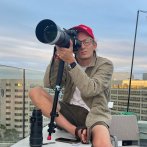
"The industry knowledge I’ve gained has been invaluable, helping me progress as a sports and news photographer."
Benj Gilbert, student
Stories from our community
Explore student projects, graduate successes, staff news and industry insights

Photography alumnus on winning Getty Images Young Photographer of the Year and working at Wimbledon
30 July 2026
Just one year after graduating, Benj Gilbert has won Getty Images Young Photographer of the Year at ...

Editorial Photography student wins Nikon Student Photographer of the Year
02 July 2026
Second-year BA(Hons) Documentary & Editorial Photography student Max English has been awarded Nikon ...

Editorial Photography student on industry praise and shooting at Wimbledon
23 June 2026
Each spring, the next generation of visual storytellers steps forward, as final-year students studyi...

Image: Anya Wilding
How Falmouth graduate Anya Wilding built a multi-disciplined creative career
10 December 2025
Anya Wilding discusses her career as a freelance artist, photography and maker.

Photography lecturer showcases work in renowned Royal Academy Summer Exhibition
28 July 2025
The Royal Academy Summer Exhibition has been held every year since 1769, marking it as a longstandin...

From touring with Cat Burns and Maisie Peters to shooting for the BRITS: Meet Photography alumna Em Marcovecchio
30 May 2025
Since graduating in 2020, Em Marcovecchio has gone from photographing Maisie Peters on Ed Sheeran’...

Students photograph the hidden heart of Bethnal Green in London exhibition
23 April 2025
Documentary & Editorial students had just 24 hours to document Bethnal Green's people and culture.

Falmouth Student Anna Roth Wins Nikon Student Photographer of the Year
08 April 2025
Third-year Press & Editorial Photography student Anna Roth has been named Nikon Student Photographer...

Jordan Pettitt: from photographing the King’s coronation to Wimbledon
21 March 2025
Named as the Getty Images Young Photographer of the Year in 2023, Documentary & Editorial Photograph...

Capturing love and resilience: A Q&A with Photography student Matt Holloway
20 December 2024
Matt Holloway's deeply personal project, Meningioma, explores his mother’s diagnosis with a brain ...

Photography lecturer’s new exhibition exploring ‘havens’ of NHS workers opens in Scotland
09 July 2024
Documentary & Editorial Photography BA lecturer Lottie Davies has presented her new exhibition entit...

'Naseema Begum' by Peter Flude
Falmouth graduate Peter Flude announced as 2023 Portrait of Britain winner
17 January 2024
The winning portrait was originally commissioned by Guardian Labs.

Manchester United fans protest before a premier league game after the club’s proposed super league ventures. Photo credit: Ryan Jenkinson.
Big wins for Documentary & Editorial Photography at UK Picture Editors Guild Awards 2023
25 October 2023
It was a big night for our Documentary & Editorial Photography BA(Hons) community at the UK Picture ...

Friends sunbathe on the dry grass of Southampton Common which resembles a sandy beach during the hot weather as Hampshire and other neighbouring counties were hit with a hosepipe ban in 2022 to protect low reservoir and river levels.
Falmouth photographers among the best in British press photography
31 August 2023
Two photographers from Falmouth’s Press & Editorial Photography BA(Hons) course have been shortlis...

Graduate Spotlight: Photographer Alex Leat
02 May 2023
Meet Press & Editorial Photography graduate Alex Leat.

Falmouth graduate lands Guardian cover story
24 February 2023
Philippa Kelly secured the front page of the Guardian’s Saturday magazine with her project on 100 ...

Institute of Photography Publishes Zine Celebrating Student Work
23 June 2019
Mayn Creative, our in-house photo and video agency, is excited to announce that the Institute of Pho...

Photography Grad Becomes NatGeo Explorer
03 June 2019
Amy Romer has been making some serious waves with her photography. Since graduating from BA(Hons) Pr...

Powerful Photography: Graduate Lands Job at Barcroft Media
23 April 2019
Photography plays a huge part in our lives; from the adverts we see, the articles we read and the so...

Double-Whammy: Two Students Shortlisted for Photographer of the Year
14 March 2019
Every year, the UK Picture Editors’ Guild runs a competition to find Britain’s most talented pho...
How you'll learn & be assessed
On this Documentary & Editorial Photography course, you’ll gain valuable practical experience through tutorials, seminars, lectures, workshops, industry masterclasses and guided independent study, all designed to promote your development as a critical practitioner. You’ll also have the opportunity to learn through live briefs, study trips and work placements – allowing you to experience the professional aspects of documentary and editorial photography.
At Falmouth, we use a 'digitally enhanced learning & teaching' approach. Your experience will always be predominantly in-person, including seminars, tutorials and studio teaching, with some, more targeted elements, being online either live (synchronous) or pre-recorded (asynchronous). You can read more here.
100% of your assessment will be coursework.
Assessment methods
- Continuous assessment with no formal examinations
- Portfolios, journals and logbooks
- Presentations and essays

Virtual tour
Discover where you’ll spend your time as a student with our 360° tour, showcasing our facilities, accommodation, town and scenery.

Facilities
- Photography store housing a vast range of camera equipment for digital, analogue and moving image, plus specialist lighting equipment and location shooting kits
- Colour and black and white darkrooms, including film processing and alternative and sustainable photographic processes
- Underwater photography equipment
- Nine professional photographic studios
- Professional print facility
- Digital post-production suites equipped with latest hardware and software available on both Mac and PC platforms

Photography Facilities
Housing dark rooms, post-production suites, full professional studios and gallery, our Institute of ...

Library Facilities
Offering extensive collections, our two libraries provide a wealth of digital resources, magazines, ...

Sports Centre
Our Sports Centre, on Penryn Campus, includes a spacious gym with up to 90 of the latest, new statio...
Meet the team
Lecturers on this course are not only experienced educators but are practitioners in the field with deep roots in the international photographic community. With an understanding of the demands of industry, they work closely with industry professionals to provide students with essential insights and opportunities.
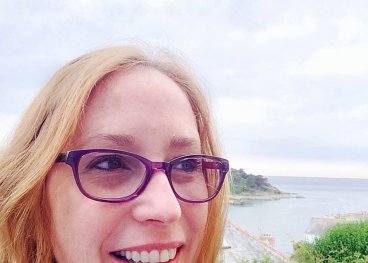
Gretchen Viehmann
Course Leader, Documentary & Editorial Photography BA(Hons)
Gretchen has been the Director of Photography for both the New York Post and the New York Daily...
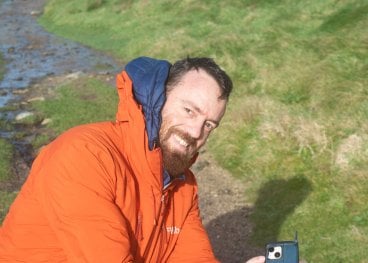
Tom Ingate
Senior Lecturer, BA(Hons) Documentary & Editorial Photography
I'm a photographer, teacher and artist that uses photography and collaborative mixed methods to ex...
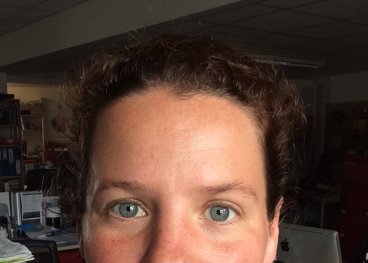
Eva Cooney
Lecturer, Documentary & Editorial Photography
My work as a photographer is rooted in classic photojournalism but since then I have developed a mor...
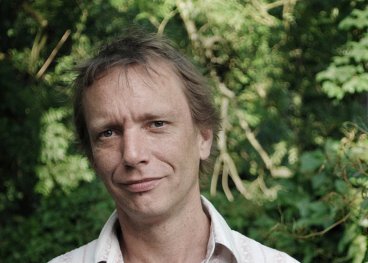
David White
Senior Lecturer: BA(Hons) Documentary & Editorial Photography
I joined Falmouth University in 2011. Prior to my appointment as course leader on Documentary & ...

Lottie Davies
Senior Lecturer, Documentary & Editorial Photography BA(Hons)
Lottie Davies is an artist, writer and educator based in Cornwall and London. Davies’ work has ...
Some members of staff only teach on specific modules, and your course might not feature every staff member who teaches on the course.
Got a question about this course?
If you want to know more about the course structure, our application requirements or what our graduates have gone on to achieve, our friendly course team is here to help.
Chat to OliCareers
As a graduate from this Documentary & Editorial Photography course, you’ll have the skills to carve out a career in a diverse range of roles, including:
- Editorial, news, sports, fashion or advertising photographer
- Fine Art Photographer
- Photo editor, retoucher or archivist
- Cinematographer
- Photographic agent
- Marketing/Creative/Art director
- Stylist
- Studio or gallery manager
- Lighting director
- Web designer
- Digital post-production technician
Our graduates have worked at:
- British Journal of Photography
- The New York Times
- The Daily Telegraph
- The V&A Museum
- Pinnacle Sports Agency
- Rex Features/Shutterstock
- Kurt Geiger
- Martin Parr Foundation
- Motorsport Images
- Shelterbox
- Getty Images
- MIND Charity
Today’s creative industries are thriving and diverse. Discover the Falmouth graduates whose lives have been shaped by their creativity, explore where a degree at Falmouth could take you and learn about our Employability service.


How to apply
| Course route | UCAS code |
|---|---|
| Documentary & Editorial Photography BA(Hons) three year degree | WP66 |
| Documentary & Editorial Photography BA(Hons) with Integrated Foundation Year | FY64 |
| Documentary & Editorial Photography BA(Hons) with professional placement | PY59 |

Application advice & interview information
Go to ToolkitFor starting your studies in 2027
UK applications: 13 January 2027 (for equal consideration)
Applications after the 13 January will be considered on a first-come, first-served as long as there are places available. Apply for this course now.
International fee payers
International fee payers can apply throughout the year. But we recommend applying as early as possible, to make time for visa and travel arrangements.
We consider all applications on their own individual merit and potential.
Our diverse community is creative, innovative and entrepreneurial. We recognise that these qualities aren’t always shown in academic grades alone. That’s why, while many of our applicants achieve high academic grades, we also welcome those who can demonstrate their potential through an exceptional portfolio or performance.
We welcome applications from all subject backgrounds, whether you’ve specialised in STEM, the arts or humanities. Find out more about our Entry Requirements here.
BA/BSc(Hons) three year degree: minimum 64 UCAS Tariff points
BA/BSc(Hons) four year degree with professional placement: minimum 64 UCAS Tariff points
BA/BSc(Hons) four year degree with Integrated Foundation Year: minimum 32 UCAS Tariff points
At Falmouth, we'll consider the equivalency of your specific qualifications against our entry requirements and support you through your application journey.
View our International Entry Requirements
Language requirements
For applicants whose first language is English we require you to have or be working towards GCSE English Language Grade 4 (C), or equivalent.
If English is not your first language you will need to meet the same standard which is equivalent to the IELTS Academic 6.0 overall score, with at least 5.5 in Reading, Writing, Speaking and Listening. We accept a range of in country equivalencies and approved tests.
If you need a student visa to study in the UK, you may need to take a recognised language test. You can read our English Language Requirements for more information.
We want someone who:
- Has visual skills, technical ability and engages with photographic narrative.
- Can communicate verbally and through writing.
- Knows about photographic history, contemporary practitioners and current affairs.
- Is curious about the world, and eager to explore through photography and storytelling.
Similar courses

Photography BA(Hons) (Online)
With a distinct focus on global digital communication, this online photography degree will equip you...

Work by Hannah Mittelstaedt
Commercial Photography BA(Hons)
From creating photographs and films for high-end advertising and marketing campaigns to producing vi...

Marine & Natural History Photography BA(Hons)
Harness your passion for photography and filmmaking to inspire audiences about nature and the enviro...

Photography BA(Hons)
On this dynamic course, you’ll explore the world of contemporary photography and develop a unique ...

Fashion Photography BA(Hons)
Develop your unique artistic voice and springboard into the industry as an innovative fashion photog...
