

Music BA(Hons)
Become a multiskilled, professional musician on this industry-facing degree.
Course overview
Whether you’re an aspiring performer, session musician, composer, music educator or sound artist, our Music degree will prepare you for a sustainable career in the modern music industry. Our expert tutors and guest lecturers will support you to hone your practice while experimenting with genres, styles and technologies.
Collaborating with other musicians, producers, sound engineers, stage techs and songwriters in professional facilities, you’ll have the opportunity to develop projects around ensembles, session bands and vocal groups as well as music for film, immersive experiences and experimental performance.
You will:
- Learn to play in a range of musical styles and genres, in a variety of professional contexts
- Develop an experimental, critical and creative approach to making your work
- Play regularly in ensembles, including session bands, vocal groups, contemporary music groups and laptop orchestras
- Benefit from guest speaker artists and ensembles. Visitors have included Adrian Utley (Portishead), Graham Fitkin (composer), Kenny Werner (pianist), Ed O’Brien (Radiohead) and Kevos (ensemble)
- Have the chance to gain industry experience, from shadowing a professional composer or interning with a record label, to working with an orchestra
- Have the opportunity to investigate study options with our prestigious international exchange partners, such as CalArts (USA), Griffith University (Australia), LASALLE (Singapore) and Nagoya University (Japan)
Course details
On this Music degree, you'll have the opportunity to gain a BA(Hons) degree over three years or study Music BA(Hons) with a professional placement option.
This Music BA will provide you with a range of experiences and enable you to develop a unique musical identity, a diverse set of musical and academic skills, strong critical awareness, and a good understanding of the contemporary musical world.
By the end of the Music degree, you’ll have a varied portfolio of work and a keen sense of enterprise. You’ll be equipped to identify, create and respond to the many musical opportunities that exist in the professional world.
The first year of the Music degree is all about upskilling and getting immersed in AMATA (Academy of Music & Theatre Arts) and Falmouth. You’ll develop your core music making practice, learn key studio and audio skills, as well as begin to develop fundamental theoretical and contextual knowledge of contemporary music and sound practices.
Modules
Musicianship & Performance
This module aims to develop your skills in performance practices and musicianship. You will explore the biomechanical, physiological and psychological demands of musical performance while developing your listening skills, aural skills, creative interpretation and stylistic understanding of music.
Composition & Creativity
This module offers you a chance to try your hand at three contrasting creative scenarios, each supported by analysis of current and past examples. In doing so, you will develop your analytical, compositional and creative skills.
Expanding Musical Vocabularies
This module will introduce you to a range of musical terms, theories, techniques and notations before helping you to apply them in creative and practical scenarios.
Specialist Music Practice 1
In this module, you will increase your knowledge and skills in your area of specialist practice and develop co-creation, collaborative and communication skills through collective music making and studio practice sessions.
Music and Sound: Context and Cultures
You’ll examine key concepts and debates in music and sounds studies whilst thinking critically about the relationship between music, sound, and culture.
Studiocraft
You'll learn to record, edit, mix and master audio in a recording studio environment using microphones, audio interfaces, mixing desks and digital audio workstations (DAWs).
Your second year is focused on specialising: gaining a range of music-making experiences and starting the development of your entrepreneurial and brand thinking as you explore the world of professional music making. You’ll identify, acquire and apply new skills as part of the optional modules, and you will have the opportunity to work with students from across the University on interdisciplinary projects.
Modules
The Creative Professional
In this module you will develop and expand on your skills and knowledge to become a creative professional musician. You will interrogate your musical skills, aligning these with specialist practices and their professional contexts.
The Business of Music & Sound
You’ll be introduced to intellectual property regulations and the subsequent risks of exploitation across the creative industries. You’ll learn the necessary business skills to work sustainably within the music and sound sectors with confidence.
Specialist Music Practice 2
Building upon the work undertaken in the Specialist Practice 1 module in your first year, you will continue to increase your knowledge and skills to further develop co-creation, collaborative and communication skills through collective music making and studio practice.
Music & Sound: Resonant Futures
In this module you will question and explore the relationship between music, sound, technology, context and culture in ways that seek to imagine and speculate on the future of music and sound.
Optional modules
Enterprise: Innovative Music Business Practice
Within the context of the ever-changing and shifting music business, this module enables you to approach your practice with agile, innovative, sustainable and ethical business skills and knowledge; from legal to financial, marketing to planning.
A/V Radical Artistry & New Media Aesthetics
This module unleashes the potential of multimodal creation, encouraging you to re-imagine your artistic identity by exploring the rapid acceleration and monumental shifts of the contemporary media landscape. You will explore the dynamic creativity of social media, vlogging, AI, TV, music videos, advertising, and graphic design.
Composing Music for Media
You’ll develop a critical understanding of music-image relationships and conduct practical work across a range of media. You’ll also enhance your composition and production skills through being shown industry-standard workflows and techniques.
Session Musicianship
In this module you will develop an understanding of the skills, techniques, communication methods and working practices of session musicians in a variety of genres and contexts.
Immersive & Interactive Audio
You’ll be introduced to a range of technologies, techniques and applications of immersive and interactive audio. The module is highly interdisciplinary and relevant to film sound, game audio, digital arts and experience design.
Advanced & Experimental Performance
This module aims to develop your abilities in the art of musical communication, flow, interpretation, expressivity, experimentation and versatility in performance. You’ll be introduced to improvisational and creative techniques to advance your practical skills and ideas.
Resounding: Situated Songwriting & Composition
This module encourages you to think about how your practice is entangled with various places—geographic, imaginary, speculative, utopian, abstract and psychological. It introduces you to new critical frameworks and artists who process complex issues like the Anthropocene, the internet, dark ecology and the climate crisis through their music.
Voice and Listening: Life, People and Planet
The module will develop your vocal and listening skills alongside your creativity and in relation to an increased awareness of concepts in voice studies and relevant contemporary social, political and environmental themes.
You can choose to take an optional professional placement after your second year on a three-year programme.
You’ll be responsible for finding your own placement, with support from the Employability team.
Choosing this option will enhance your industry experience and skills while studying.
How you’ll study during your professional placement
You’ll spend time working in a professional context, as part of a business or organisation. This can be in one role, or up to three, and must be for a minimum of 24 weeks.
You’ll develop in-demand workplace skills, deepen your insight into industry and grow your network of contacts, all of which could help you get ahead in your career after graduation.
Throughout this year, you’ll develop a portfolio of work that includes critical self-reflection on what has been learned from the experience. You’ll be required to evidence your experiences, the skills you’ve learned and your professional growth.
The final year of your Music degree is geared towards solidifying your artistic and professional identity, knowledge, skills and networks in line with your chosen area of music specialism. You’ll develop your showcase portfolio, enhance your entrepreneurial practice skills and carry out career design work as you prepare to take your first steps into industry.
Modules
Music & Sound: Dissertation
In this module you will expand on your music and sound subject-based intellectual skills developed in your first and second years through an independently-driven written research project.
Professional Development
This module enables you to continue developing your specialist skills, contextual knowledge, experience and entrepreneurial mindset in preparation for the Showcase Portfolio module, careers and/or artistic practice beyond your degree.
Your Future
This module enables you to understand, develop, practice and analyse skills pertinent to your chosen career path in sustainable ways; both now and in the future. You will further develop legal, financial, marketing and digital skills that relate to specialist areas of the music sector and be able to critically analyse trends and future opportunities that relate to your career.
Showcase Portfolio
This module is the culmination of your practice during your Music degree and you will produce, showcase and evaluate a professionally and artistically competent and research informed portfolio of creative work.
We regularly review course and module content to ensure our students receive a high-quality and rewarding academic experience. As such, there may be changes made to the curriculum which are not immediately reflected in the content displayed on our website. Optional modules may be updated to maintain the best experience. Any students or applicants affected will be informed of approved changes directly.
From module information to course aims and assessment criteria, discover the full course details:
How you’ll learn & be assessed
An inspiring combination of lectures, seminars and tutorials mix creative practice with critical thinking to help you to develop your sound, skills and artistic identity.
Industry insights and expertise will come from our regular guest speakers and artists, like composer Graham Fitkin, Portishead’s Adrian Utley, conductor Marta Gardolińska, producer and guitarist Dan Weller (SikTh), and record label executive Darcus Beese.
At Falmouth, we use a 'digitally enhanced learning & teaching' approach. Your experience will always be predominantly in-person, including seminars, tutorials and studio teaching, with some, more targeted elements, being online either live (synchronous) or pre-recorded (asynchronous). You can read more here.
Assessment is a combination of practical exams and coursework.
Modules vary in their assessment requirements, but all involve varying degrees of student choice, allowing you to design projects and tailor assessment tasks to benefit your development, and relate to your own aims and objectives.
The course assessments are a combination of coursework and practical assessments tasks, including:
- Portfolios
- Studio Practice sessions
- Performances
- Journals
- Essays
- Dissertations
- Presentations
- Case Studies
- Reports
- Viva (oral examinations)
You will receive feedback in a range of formats (e.g. written feedback sheets, feedback tutorials, feedback in live sessions) during each module.

Virtual tour
Discover where you’ll spend your time as a student with our 360° tour, showcasing our facilities, accommodation, town and scenery.

Facilities
AMATA’s amazing facilities include:
- 11 performance and rehearsal spaces
- A flexible theatre space for live performances
- Recording suites live production rooms
- Digital and analogue recording equipment
AMATA Technical Stores house a wide range of equipment for students to book out and use, such as professional standard microphones, amplifiers, PA systems, audio interfaces, synthesizers, cameras and lights and portable recording equipment.
AMATA is a working professional venue, with performances and events running throughout the year.
 |
Graduates are now working as media composers, session musicians, music educators and ensemble leaders |
|
Graduates include international DJ and performer Daisy Moon; creative producer, engineer and musician Jack Shuter, and Anna Roscoe, who released her debut EP Grieving the Living in 2025 |
 |
Graduate Catherine Hillier composed the score for BAFTA-winning British Short 2024 Jellyfish and Lobster and was assistant composer for UKTV’s 2025 series Bergerac |

Performance Facilities
The Academy of Music and Theatre Arts (AMATA) is a purpose-built live venue housing an assembly of f...

Library Facilities
Offering extensive collections, our two libraries provide a wealth of digital resources, magazines, ...

Sports Centre
Our Sports Centre, on Penryn Campus, includes a spacious gym with up to 90 of the latest, new statio...
Staff
You’ll learn from performers, composers, producers, sound artists and musicologists, working across a wide range of musical styles. Our associate staff members include instrumental tutors, composers and songwriters, industry contacts and technical support staff.
Some members of staff only teach on specific modules, and your course might not feature every staff member who teaches on the course.

Dr D Ferrett
Associate Professor in Music, Sound and Culture
Dr D Ferrett is Associate Professor of Music, Sound and Culture and the Research Lead for the Academ...

Sam Murray
Senior Lecturer in Music
Sam Murray is a guitarist, composer, music director and educator with over 25 years experience in th...
Dr Antti Saario
Head of Music
Dr Antti Sakari Saario is an award-winning post-acousmatic composer, sound and audio practitioner, r...
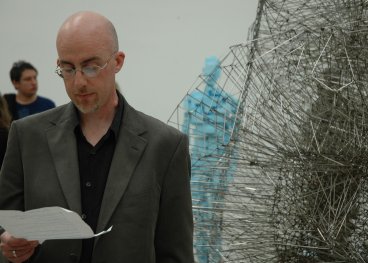
Jim Aitchison
Instrumental Tutor, Music
Jim Aitchison is a composer and artist, working both in the realm of responding to visual artworks a...

Will Parker
Lecturer in Music and Sound
Will Parker is a composer, artist, researcher, and educator specialising in audio-visual creation, i...

Got a question about this course?
If you want to know more about the course structure, our application requirements or what our graduates have gone on to achieve, our friendly course team is here to help.
Chat to Dr Johny LambStories from our community
Explore student projects, graduate successes, staff news and industry insights from AMATA

From first-year nerves to centre stage | Degree Show Stories
08 June 2026
Welcome to Degree Show Stories, our summer series where we go behind the scenes with our final year ...

Sound Design students learn from leading industry professionals at Game Audio Symposium
04 June 2026
Falmouth’s BA(Hons) Sound Design students recently had the exciting opportunity to both meet and l...

Dance & Choreography graduate returns to Cornwall with leading dance company
14 April 2026
BA(Hons) Dance & Choreography graduate Dorka Zatonyi recently returned to Cornwall in her role as En...

Falmouth Honorary Fellow sees her historic pointe shoes restored on BBC’s The Repair Shop
09 April 2026
Acclaimed former ballerina and Falmouth Honorary Fellow, Julie Felix MBE, has built an inspiring car...

Acting graduates perform among national names at Falmouth’s International Arts Fest
24 March 2026
New writing talent from Cornwall was placed front and centre at this year’s Falmouth International...

Music lecturer releases two piano quintets with Métier Records
27 February 2026
Composer and BA(Hons) Music lecturer, Jim Aitchison, has released two piano quintets with Métier Re...

Day in the life of a Musical Theatre student
11 February 2026
BA(Hons) Musical Theatre student, Val takes us through a typical day of studying at Falmouth Univers...

What I learned from collaborating at Falmouth
26 January 2026
Read how collaborating with other students has enriched Kat's learning experience.

Ethan in the recording studio learning about recording songs/vocal reels
Why I chose to study Musical Theatre at Falmouth
08 January 2026
Discover why current student, Ethan chose to study Musical Theatre at Falmouth.

Falmouth students and lecturers collaborate with Hall for Cornwall to bring Christmas panto to life
17 December 2025
From the dress and accessories worn by the Dame in the show’s finale, to the visual effects disp...

Why I chose to study Theatre & Performance at Falmouth
09 December 2025
Find out why Falmouth's Theatre & Performance degree stood out to current student, Kat.

Acting graduate stars as female lead in feature film set in Cornwall
29 October 2025
After spending the summer of her second year on set of the Cornwall-based film Pieces of Us, Sinead ...

One take filming: what shows like Adolescence tell us about acting
21 October 2025
In the second episode of The Studio currently being released on Apple TV, Seth Meyers’ studio boss...

Acting lecturer brings new revival of Olivier Award-winning play to life as associate director
29 September 2025
Amanda Collins, one of Falmouth’s Acting BA lecturers, has spent the last two months working on a ...

Popular Music alumna to release debut album on major label Fiction Records
10 September 2025
Singer songwriter and Popular Music BA alumna Lily Lyons is set to release her debut album Reopen th...

Grieving the Living: Music alumna Anna Roscoe releases debut EP
05 August 2025
For Music BA(Hons) alumna Anna Roscoe, songwriting has always been an essential way to process emoti...
Grieving the Living: Music alumna Anna Roscoe releases debut EP
05 August 2025
For Music BA(Hons) alumna Anna Roscoe, songwriting has always been an essential way to process emoti...

Acting alumni brings student project to world-renowned festival
01 July 2025
What began as a short film created during Piers Mackenzie’s final year at Falmouth has blossomed t...

Third year acting student is nominated for this year’s prestigious Spotlight Prize
13 May 2025
Chosen from a pool of hundreds of graduating drama students across the UK and Ireland, third year Ac...

Falmouth’s Dragons’ Den: where students compete for a share of £6000
17 April 2025
The annual Dragons’ Den competition is an exciting event in the Falmouth University calendar. Held...
Careers
Our Music graduates have worked as:
- Performers
- Composers
- Session musicians
- Music educators
- Ensemble leaders
Today’s creative industries are thriving and diverse. Discover the Falmouth graduates whose lives have been shaped by their creativity, explore where a degree at Falmouth could take you and learn about our Employability service.

A degree in Music, Theatre or Performance combines specialist teaching with entrepreneurial skills in self-promotion to prepare you for the performing arts industry.
What can you do with a Music, Theatre or Performance degree?
How to apply
| Course route | UCAS code |
|---|---|
| Music BA(Hons) three year degree | W300 |
| Music BA(Hons) with professional placement | PY04 |

Application advice & interview information
Go to ToolkitFor starting your studies in 2026
UK applications: 14 January 2026 (for equal consideration)
Applications after the 14 January will be considered on a first-come, first-served as long as there are places available. Apply for this course now.
For starting your studies in 2027
UK applications: 13 January 2027 (for equal consideration)
International fee payers
International fee payers can apply throughout the year. But we recommend applying as early as possible, to make time for visa and travel arrangements.
We consider all applications on their own individual merit and potential.
Our diverse community is creative, innovative and entrepreneurial. We recognise that these qualities aren’t always shown in academic grades alone. That’s why, while many of our applicants achieve high academic grades, we also welcome those who can demonstrate their potential through an exceptional portfolio or performance.
We welcome applications from all subject backgrounds, whether you’ve specialised in STEM, the arts or humanities. Find out more about our Entry Requirements here.
BA/BSc(Hons) three year degree: minimum 64 UCAS Tariff points
BA/BSc(Hons) four year degree with professional placement: minimum 64 UCAS Tariff points
At Falmouth, we'll consider the equivalency of your specific qualifications against our entry requirements and support you through your application journey.
View our International Entry Requirements
Language requirements
For applicants whose first language is English we require you to have or be working towards GCSE English Language Grade 4 (C), or equivalent.
If English is not your first language you will need to meet the same standard which is equivalent to the IELTS Academic 6.0 overall score, with at least 5.5 in Reading, Writing, Speaking and Listening. We accept a range of in country equivalencies and approved tests.
If you need a student visa to study in the UK, you may need to take a recognised language test. You can read our English Language Requirements for more information.
What we're looking for
We want someone who:
- Has musical ability, experience and contextual knowledge.
- Shows creativity and imagination.
- Can write and speak clearly.
- Engages with interview questions and discussion.
- Can critically discuss their portfolio or other musical examples.
- Shows ongoing engagement, motivation and creative potential.
Similar courses

Sound Design BA(Hons)
Explore the boundaries of sound and its potential to transport an audience in different contexts, fr...

Music Business BA(Hons)
Get ready to shape the music business by mastering the skills needed to manage, create and innovate....

CertHE Music Courses
Take your first steps towards becoming a skilled creative music artist with one of our three CertHE ...

Musical Theatre BA(Hons)
Combining training in acting, singing and dance, this practice-led degree will empower you for a car...

Theatre & Performance BA(Hons)
Embrace a world of opportunity to become an original and distinctive theatre maker and performer. As...

Technical Theatre Arts BA(Hons)
This course will provide you with the practical knowledge and skills needed to succeed in the exciti...

Acting BA(Hons)
Push boundaries to become a progressive actor in a highly creative and collaborative environment. Ba...

Popular Music BA(Hons)
Whether it’s underground or mainstream, DIY or commercial, acoustic or electric, this course is fo...

Creative Music Technology BA(Hons)
Develop the creative and technical abilities needed to thrive in the music industry. Exploring compo...

Dance & Choreography BA(Hons)
Launch your career as a dancer and an artist with this skills-focused dance degree. You’ll train i...
