Filmmaking BA(Hons)
A film degree for future filmmakers.
Course overview
On this industry-accredited Filmmaking degree, you'll learn to tell immersive stories through film. You'll hone your visual craft through hands-on experience, all in a specialist facility that mirrors real-world film production.
You'll explore the history and cultural contexts of film, alongside being given the creative freedom to make your own films; collaborating with other talented producers, writers, cinematographers and actors from across the University.
BA Filmmaking at Falmouth supports you to identify ideas, technologies and processes that challenge the norms of conventional filmmaking. This Filmmaking degree gives you the opportunity to explore a range of projects, including short- and long-form cinema, documentaries and more experimental indie filmmaking. You're encouraged from the start to try your hand at camera, post-production editing, grade, sound design, and screenwriting, before specialising in your chosen craft, and carving your own niche.
You will:
- Have the opportunity to work in-house through our production centre, the Sound/Image Cinema Lab. Previous productions include Film4’s Rose of Nevada (Mark Jenkin, 2025), Long Way Back (Simon Harvey, 2022) and Wilderness (Justin Doherty, 2021)
- Learn from award-winning staff and industry experts. Recent visiting professionals include Tom Morgan (Head of Client Services at ENVY Post), Ben Coren (Development Executive at Film4), and Johnie Burn (sound design for Nope, Zone of Interest)
- Build knowledge and skills through technical workshops and masterclasses led by film practitioners that mirror real industry’s practices
- Study on a Film course accredited by ScreenSkills, in a facility that’s part of CILECT and the ENVY Academy
This Filmmaking degree is industry recognised by ScreenSkills, the industry-led skills body for the UK's screen-based industries, and carries the ScreenSkills Select quality mark which indicates courses best suited to prepare students for a career in the screen industries.

From September 2027, this course will be renamed to BA(Hons) Filmmaking. All new first year students enrolling on the course from September 2027 onward will join the course with the new name. All existing students enrolled before September 2027 will retain the previous course title, BA(Hons) Film, throughout their studies.
Course details
On this Filmmaking degree, you'll have the opportunity to gain a BA(Hons) degree over three years or the option to study Filmmaking BA(Hons) with Integrated Foundation Year and/or a professional placement.
Working in multi-disciplinary teams, you’ll create work in a productive and collaborative environment that will ready you to be a dynamic professional in the workplace.
You'll understand how collaborating with others and honing your research skills can help broaden your own thinking and knowledge to give impact, relevance and reach to your creative work.
Our film school boasts ScreenSkills and CILECT accreditations, which are awarded to courses delivering the very best creative thinking, industry-relevant training, exceptional staff, facilities and partnerships.
From module information to course aims and assessment criteria, discover the full course details:
The first year of your Filmmaking degree will focus on developing your film knowledge through lectures, seminars and screenings, as well as nurturing your talent in all areas of short film development and production. You’ll further your understanding of industrial and creative contexts by examining current filmmaking trends in form, style, theme and narrative. You’ll have the opportunity to network with experienced professionals through our series of panel discussions and masterclasses, helping to enhance your industry skills and employability profile. You’ll also have the chance to visit an international film festival.
Modules
Production Cultures 1
This module will introduce you to the creative, technical, organisational and interpersonal skills that are central to successful film production. A series of weekly tasks will develop your knowledge of the language of cinema, while encouraging networking within your cohort. You’ll begin to understand the key industry roles – writer, director, producer, cinematographer, editor and sound designer – needed to produce a short film.
Production Cultures 2
This module will extend the creative, technical, organisational and interpersonal skills developed in Production Cultures 1 to encompass budgeting, design, marketing and film distribution. You’ll also deepen your knowledge of production roles, paving the way for you to specialise in Year 2.
Cultural Contexts
In this module, you’ll consider the key moments and milestones of the development of film as an art form, industrial product and object of academic and critical study. This will prepare you for deeper cinematic research across your Film degree and develop your scholarly research and essay-writing skills.
Industrial Contexts
This module foregrounds a range of contexts, both historical and contemporary, to consider how industry, audience, and film texts are inextricably bound together in industry practice. You’ll collaborate with others to produce a presentation that highlights your research and communication skills.
You'll build on your interests and passions by embarking on specialist pathways of your choice, deploying the skills you learn in a self-initiated project – typically within screenwriting, experimental, documentary or narrative filmmaking. Each week is designed to focus your learning and cinematic knowledge in an environment that recognises and embraces the medium’s changing nature. We also offer the opportunity to engage in placements through a number of external partnerships and opportunities.
Modules
Skills Development
Identifying your own interests, you'll develop skills in a chosen specialism – sound design and editing, editing and post-production, producing, screenwriting or cinematography and art direction – and showcase your growing understanding of collaborative practice, professional processes and industry contexts.
Creative Delivery
Building on the Skills Development module, you’ll work to produce either a narrative film, documentary film, experimental film or screenwriting project for assessment.
Genre
This module aims to develop your understanding of the role genre plays in film industry and culture, both historically and contemporarily, and how the idea of 'the cinematic' is closely connected to genre and has spread in influence to other modes and forms of media entertainment.
Cinema of Experience
This module will inspire you by offering contemporary cinematic examples and conceptual frameworks to situate film and serial narrative/documentary forms in wider cultural, social, political and global contexts, such as gender, race, class and sexuality.
You can choose to take an optional professional placement after your second year on a three-year programme, or after your third year if you’re studying for a degree with an Integrated Foundation Year.
You’ll be responsible for finding your own placement, with support from the Employability team.
Choosing this option will enhance your industry experience and skills while studying.
How you’ll study during your professional placement
You’ll spend time working in a professional context, as part of a business or organisation. This can be in one role, or up to three, and must be for a minimum of 24 weeks.
You’ll develop in-demand workplace skills, deepen your insight into industry and grow your network of contacts, all of which could help you get ahead in your career after graduation.
Throughout this year, you’ll develop a portfolio of work that includes critical self-reflection on what has been learned from the experience. You’ll be required to evidence your experiences, the skills you’ve learned and your professional growth.
In filmmaking practice, you’ll immerse yourself in a year-long project of creative cinematic endeavor, where you will develop an ambitious and innovative piece of work that sits alongside your research. You’ll also produce a festival strategy or equivalent as well as build your professional profile to help launch your career after graduation. Alongside this, you’ll continue to explore the wider social, political, industrial and artistic contexts of film culture and cinema, choosing from a dedicated module examining the voices of The Other, and a dissertation in a cinematic subject area related to your interests. Each module results in a long-form piece of scholarly writing which will position you ideally for postgraduate studies.
Modules
Pitch Deck
Through this module, you'll become immersed in film practice. Assessment will reflect professional creative industry processes, contexts and cultures, resulting in an ambitious, innovative and complex cinematic project.
The Other (optional)
You’ll explore global cinematic practices which have traditionally sat outside the dominant film canon and popular culture. You’ll examine non-traditional screen representations to the evolution of cinematic storytelling techniques and the formal fashioning of film visuals. Starting from a historical perspective, you'll be invited to recognise cinema as a potent and flexible medium of expression and communication for all backgrounds and cultures.
Dissertation
Focusing on academic study, you'll develop high levels of subject expertise and intellectual autonomy as you originate, research, and write a dissertation in an area of your choice.
Final Major Project
You'll be immersed in film practice and assessment that reflects professional industry processes, contexts and cultures. You’ll carry out an ambitious, innovative and complex cinematic project that will help to springboard your career in the film, television and combined creative industries.
Futures
This module will help to prepare you for pursuing a career after graduation. You’ll be supported by the University’s Employability Team and a supervisor from the course to help build your professional profile.
Why study an Integrated Foundation Year route?
If you’re taking on a new subject that you haven’t studied in depth before, have been out of education for a while or have a non-standard educational background then an Integrated Foundation Year degree may be the right choice for you. It is a four-year degree with an Integrated Foundation Year to start, which allows you to explore the primary elements of your subject before progressing on to the remaining three years of the BA(Hons) degree.
What you'll learn
If you choose this pathway, you'll study five core modules in your Foundation year. These are all designed to help you explore the foundational elements of your subject. You'll gain relevant technical skills, learn to experiment and take risks, develop an understanding of professional practice, have opportunities to work across disciplines and collaborate with other students on live project briefs.
Modules
Explore
You'll begin your foundation year by working collaboratively with others to explore themes of the future. You'll take risks, experiment through play and be supported to break through barriers.
Technique
You'll take subject-specific workshops and develop essential technical and practical skills in your area of study. You'll also enhance your analytical and organisational abilities.
Apply
You'll work with your peer group to think beyond discipline by addressing a societal or global issue. You'll then showcase your work to your peers and deliver and accompanying evaluation of your process.
Industry
You'll enhance your creative and practical skills in your subject specialism by responding to typical industry briefs, underpinned by focused research and experiments. You'll also gain industry insights through guest lectures and workshops.
Launch
You'll develop your unique identity in your specialism through the production of a self-initiated body of work. Your final project will be the bridge to your next year, fully supported by evaluative reviews and critical analysis of the work you have created.
After the Foundation year, you progress into Year One of the full three-year degree, equipped with a deeper knowledge of your subject, a clear understanding of your strengths, and develop a practical and technical skillset and the confidence to excel in your chosen subject.
If you apply for and enrol onto a degree with an Integrated Foundation Year, you’ll have the option to switch onto a five-year version including a placement year. That means you’ll complete the first three years of your course before completing a placement in industry in your fourth year and returning to Falmouth for the fifth year of your programme.
The Integrated Foundation Year pathway for this course is new for entry year 2023 and subject to validation.
We regularly review course and module content to ensure our students receive a high-quality and rewarding academic experience. As such, there may be changes made to the curriculum which are not immediately reflected in the content displayed on our website. Optional modules may be updated to maintain the best experience. Any students or applicants affected will be informed of approved changes directly.
Our accreditations
A CILECT School of Film and Television
We're part of the International Association of Film and Television Schools. This means you'll be part of a global network of interconnected film schools able to tap into equipment and expertise around the world.
ScreenSkills Select
As a ScreenSkills Select accredited course we ensure our degree prepares you for industry, equipping you with key skills employers are looking for, and gives you access to links with the local and national screen industry.
Other accreditations
- AVID Training Partner
- Envy Academy Partner
- ARRI Certified Film School
- Kodak Educational Partner
- Albert Certification
- Production Guild of Great Britain

Our students & graduates

Film alumni take home award for Best Adventure at the Kendal Mountain Festival
School of Film & Television alumni Dan Simpkins and Angus Breton, along with the rest of the creative team behind the making of the short film, The Lost Boys of Carbis Bay, recently took home the award for Best Adventure & Exploration at the Kendal Mountain Festival after it was selected out of an impressive 600 global entries.
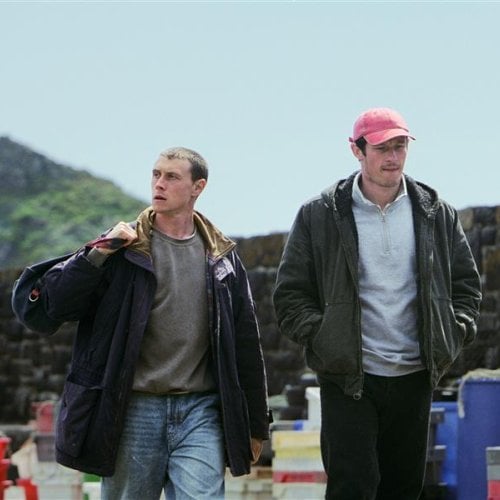
George MacKay and Callum Turner on the set of Rose of Nevada. © Ian Kingsnorth
Discover student-backed films
At Falmouth, Filmmaking BA(Hons) students don’t just study cinema - they help create it. From working alongside acclaimed director Mark Jenkin on his upcoming feature Rose of Nevada, starring Callum Turner and George MacKay, to gaining hands-on experience through the Sound/Image Cinema Lab, our students are immersed in the professional world of filmmaking from day one.
Explore the projectsSchool of Film & Television | Showreel 2026
Stories from our community
Explore student projects, graduate successes, staff news and industry insights

Falmouth’s Film lecturers feature at Cornwall’s first Folk Horror Film Festival
19 October 2026
Falmouth’s Sound/Image Cinema Lab is partnering with The Lost Gardens of Heligan to bring to life ...

Meet the Film alumnus producing a Cornish-language short film
13 October 2026
Since graduating from his BA(Hons) Film course, Andrew Nile has gone on to study a master’s in MSc...

Why this Film student chose a 16mm camera for his final project | Degree Show Stories
29 June 2026
For BA(Hons) Film final year student Luca Vasile-Berde, working with 16mm film for the first time at...

From studying Film to International Business Management at Falmouth
02 June 2026
For BA(Hons) Film graduate Salem Joynes, the collaborative and supportive environment of Falmouth’...

Falmouth students win big at this year’s Royal Television Society Devon & Cornwall Awards
16 April 2026
Students and graduates from across Falmouth’s School of Film & Television have seen their fi...

Falmouth students reveal “incredible learning curve” of working on new Mark Jenkin film
09 April 2026
Falmouth University Distinguished Professor of Film Practice and BAFTA-winning writer and director, ...

Film alumna and BAFTA winner takes her debut feature film to the festival circuit
17 February 2026
After seeing her film featured at Toronto International Film Festival, San Sebastián Film Festival ...

From film student to producer: Libby Gibbons reflects on the joy of working in commercial filmmaking
13 February 2026
Libby Gibbons has gone from studying both a BA(Hons) Film and MA Film & Television at Falmouth to wo...

My experience of collaboration at Falmouth
02 February 2026
Alexandro explains how he collaborates with other students across the University.

“Every day I am grateful this is my job”: film alumnus on creating visuals for outdoor lifestyle brands
20 January 2026
Sam Sherring’s career as a freelance filmmaker and photographer has led him towards filming conten...

Television alumnus wins honorary award at Activists Without Borders Film Festival
05 December 2025
Since gaining his BA(Hons) Television & Film Production, Tom Waller has forged a career in filming, ...

Film alumni take home award for Best Adventure at the Kendal Mountain Festival
02 December 2025
School of Film & Television alumni Dan Simpkins and Angus Breton, along with the rest of the creativ...

Creative Writing lecturer co-writes new horror film set in Cornwall
14 November 2025
Falmouth University’s Sound/Image Cinema Lab (S/ICL) and Creative Writing BA(Hons) lecturer, Craig...

From Falmouth to filming in the Brazilian jungle: alumnus Nella Gocal-McConkey on working in TV
07 November 2025
Film BA(Hons) alumnus Nella Gocal-McConkey’s career path is an inspiring one: from working as a sh...

Film lecturer brings his award-winning documentary to Cornwall for its UK premiere
01 October 2025
After a summer of international success garnering accolades in India from Kookai International Film ...

Film alumnus explores men’s mental health, mining and Cornwall’s community in new documentary
25 September 2025
Dan Simpkins is an award-winning documentary filmmaker and Director of Photography, who since gradua...

World premiere success for Falmouth’s Mark Jenkin at Venice
04 September 2025
Critics praise 'Rose of Nevada' for its bold aesthetic and powerful storytelling.

George MacKay and Callum Turner on the set of Rose of Nevada. © Ian Kingsnorth
Mark Jenkin’s Rose of Nevada to premiere at the Venice Film Festival
29 July 2025
'Rose of Nevada' will make its world premiere at the Venice Film Festival, screening in the Orizzont...

Choosing between Film BA and Television & Film Production BA at Falmouth
23 June 2025
Current student, Alex give a breakdown of the key differences between these two degrees.
George MacKay and Callum Turner on the set of Rose of Nevada. © Ian Kingsnorth
New student-backed films from Falmouth’s Sound/Image Cinema Lab
06 May 2025
Here’s a look at some of this year’s standout student-supported releases.
How you'll learn & be assessed
On this Filmmaking degree, you’ll learn through a series of lectures, seminars, bookable tutorials, and self and peer evaluation.
You’ll benefit from our School of Film & Television’s industry connections with a curated visiting lecturer programme, panel discussions, technical workshops and masterclasses with industry practitioners. Our learning by doing approach to the course means you’ll gain an understanding of your chosen sector and mirror the film industry’s workflow and creative environments.
Each year is also your chance to gain work experience and internships, and we'll encourage you to get involved in industry and academic opportunities and events.
At Falmouth, we use a 'digitally enhanced learning and teaching' approach. Your experience will always be predominantly in-person, including seminars, tutorials and studio teaching, with some, more targeted elements, being online either live (synchronous) or pre-recorded (asynchronous). You can read more here.
100% of your assessment will be coursework.
Assessment methods
- Continuous assessment with no formal examinations
- Visual, verbal and written assignments
- ‘Campfires’ (timetabled group drop-in sessions) and bookable one-to-one tutorials
- Optional dissertation in your final year

Virtual tour
Discover where you’ll spend your time as a student with our 360° tour, showcasing our facilities, accommodation, town and scenery.


Facilities
The School of Film & Television is situated in a dedicated building and features extensive production, post-production and facilities store.
- 129-seat cinema, with Christie M Series 2.5k projection and 7.2 surround sound.
- Four large production studios:
- Production Studio 1: multipurpose studio equipped with three Sony HXC-FB80 studio cameras, chromatte grey screen and full lighting rig. Integral live gallery including 4-input Tricaster Ultra HD production system.
- Production Studio 2: multipurpose studio and support area for studio 1.
- Production Studio 3: multipurpose studio with lighting rig.
- Production Studio 5: Specialist green screen studio with infinity cove & 360 degree subject lighting rig. Access to Xsens motion capture kit and VR/AR/MR equipment.
- Nine Mac Pro edit suites with Avid Media Composer, Adobe Creative Cloud Suite & Da Vinci Resolve.
- Two specialist grading suites featuring DaVinci Resolve and 4K preview screens.
- Two 28-seat ‘Post Hubs’ for post-production software training, equipped with dual screen Apple iMacs. Software available includes Avid Media Composer, Adobe Creative Cloud, Da Vinci resolve and Pro Tools. Avid NEXIS shared storage system for seamless access and integration of projects.
- 25-seat dubbing theatre with Avid S6 mixing desk and Pro Tools Ultimate. Foley/ADR suite with access to a wide range of mics, foley traps and props.
- Three further post-production audio suites – all equipped with Pro Tools Ultimate.
- Digital cameras (HD to 5K) including Arri Alexa, RED Gemini, Sony FX6, Canon C500 and XF305, and Arri SR3 and Bolex 16mm film cameras, plus Odyssey 7Q+ External Recorders.
- Wide range of hot and cold (LED) lighting equipment including systems by Arri, Dedo & Kino Flo alongside traditional blondes and red heads.
- Grip and gimbal systems available include DJI Ronin Gimbal systems, Wally Dolly, Indie Dolly, PD1 Dolly, Ronford Baker Sliders, Libec and Camcrane Jibs.
- Audio equipment includes Sound Devices 633 mixers, recorders and an extensive range of microphones.

Film & TV Facilities
Our industry-level facilities offer everything you need to practice and produce animation, film, TV,...

Library Facilities
Offering extensive collections, our two libraries provide a wealth of digital resources, magazines, ...

Sports Centre
Our Sports Centre, on Penryn Campus, includes a spacious gym with up to 90 of the latest, new statio...

What's the difference between studying Film and Television?
Find out hereMeet the team
You’ll learn from an experienced team of writers, academics and filmmakers, including experimental, short, narrative and documentary feature film directors, producers, cinematographers, editors, screenwriters, script editors, sound designers, editors, and art directors. Our technical and craft team includes specialists in lighting, cinematography and post-production picture editing and grade and sound editing and mixing.
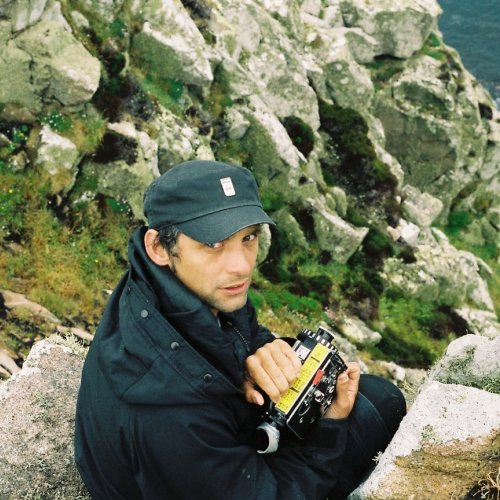
Mark Jenkin becomes Falmouth’s first Distinguished Professor
Mark Jenkin is a BAFTA award winning filmmaker who's worked at Falmouth University as an associate lecturer for over a decade - find out more about his new role.
Read more
Dr Kingsley Marshall
Head of Film & Television
Dr Kingsley Marshall is Head of the CILECT and ScreenSkills accredited School of Film and Television...

Dr Laura Canning
Course Leader, BA(Hons) Film
Laura is a filmmaker and academic where she is Course Leader for the BA (Hons) Film, running final y...
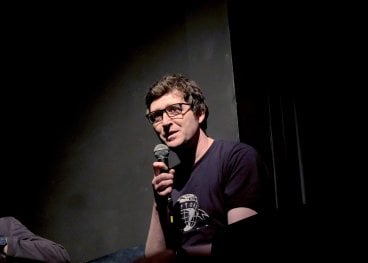
Professor Neil Fox
Professor of Film Practice and Pedagogy
As a proud first-generation university graduate from a working-class background in Luton, it is an h...
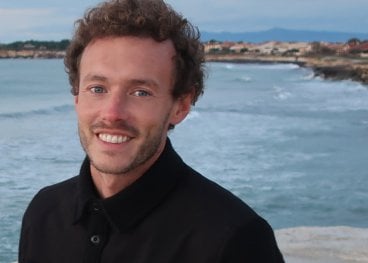
Dr Struan Gray
Senior Lecturer, Film BA(Hons)
Struan Gray is a senior lecturer in the School of Film and Television at Falmouth University, teachi...

Dr Verena Von Eicken
Lecturer
Verena von Eicken is a lecturer at the School of Film & Television. She was awarded her PhD in T...
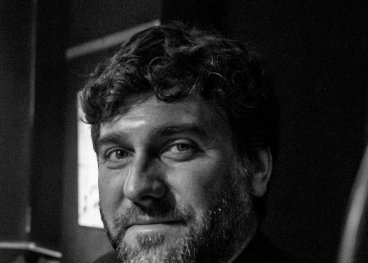
Paul Mulraney
Senior Lecturer, Film
Paul is a Senior Lecturer in the School of Film and Television, teaching general film practice acros...
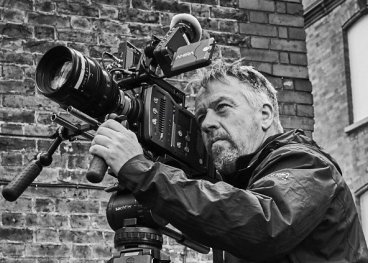
Nick Manley
Lecturer
Nick has worked worldwide in the industry for over 30 years as an award winning documentary ca...

Caroline Deeds
Lecturer in Documentary and Factual Television
Caroline has a background as a fine artist. She studied at Glasgow School of Art and then Centr...
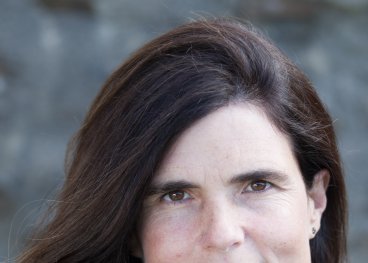
Charlie Fripp
Senior Lecturer, Television
Charlie is a Senior Lecturer at the School of Film and Television. Charlie is a former BBC journalis...

Dr Julian Konczak
Lecturer
Julian Konczak is a filmmaker and creative working across film, moving image, sound, and immersive i...
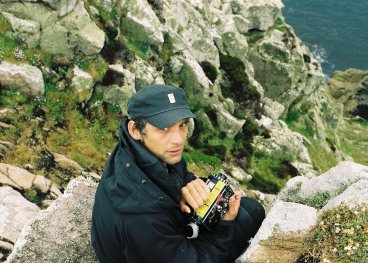
Mark Jenkin
Distinguished Professor of Film Practice at Falmouth University
Distinguished Professor of Film Practice Mark Jenkin is a filmmaker based in West Cornwall. He ha...

Dr Kat Flint-Nicol
Senior Lecturer, Film & Television
Kat is a Senior Lecturer in Film and joined Falmouth in the summer of 2023, having taught at Queen's...

Dean Puckett
Lecturer
Dean Puckett is a writer/ director and film lecturer at Falmouth University in Cornwall. He recen...
Some members of staff only teach on specific modules, and your course might not feature every staff member who teaches on the course.
Careers
Falmouth Filmmaking graduates have worked in the development and production of short and feature films, commercials and major television series, with credits including Deadpool 3, House of the Dragon, Star Wars, Mission: Impossible and Bond franchises, Blade Runner 2049, Alice Through the Looking Glass, Squid Game, and The Great British Bake Off.
Our 20 years of alumni work in production at Warner Bros, Sony, Disney and Universal, and post-production at Halo, The Mill, DNEG, Envy, Technicolor, White House Post, Molinare and Evolution. They’ve secured roles in production design at Lucasfilm, and in the camera department for shows screened on the Discovery Channel, and the BBC.
Our graduates’ work has been featured at BAFTA, BIFA and Academy Award qualifying festivals, secured development from the BFI and BAFTA, and been published in titles including Total Film, The Telegraph, The Guardian and Little White Lies.
Student placements have included NBC/Universal Pictures Hothouse, Envy Academy, Sky, Cannes Film Festival, Mammoth Film, Gorton Studies, Wall to Wall, Big Talk, MTV, BBC, E4 and Channel 4.
We’ve also produced a slate of films through the Sound/Image Cinema Lab, our in-house production centre, including Rose of Nevada (2025), The Severed Sun (2024), Enys Men (2023), A Year in a Field (2023), Long Way Back (2022), Wilderness (2021), Bait (2019), shorts including and The Birdwatcher (2023), Bloom (2023), Mab Hudel (2022), Kestav (2020), Hard Cracked the Wind (2019) and Backwoods (2019).
Today’s creative industries are thriving and diverse. Discover the Falmouth graduates whose lives have been shaped by their creativity, explore where a degree at Falmouth could take you and learn about our Employability service.

What can I do with a Film degree?
If you have aspirations of becoming a screenwriter, producer, director or animator then a degree in Film, Television or Animation provides the foundations for a career in cinema.
How to apply
| Course route | UCAS code |
|---|---|
| Filmmaking BA(Hons) three year degree | W612 |
| Filmmaking BA(Hons) with Integrated Foundation Year | FY69 |
| Filmmaking BA(Hons) with professional placement | PY75 |
Application advice & interview information
Go to ToolkitFor starting your studies in 2027
UK applications: 13 January 2027 (for equal consideration)
Applications after the 13 January will be considered on a first-come, first-served as long as there are places available. Apply for this course now.
International fee payers
International fee payers can apply throughout the year. But we recommend applying as early as possible, to make time for visa and travel arrangements.
We consider all applications on their own individual merit and potential.
Our diverse community is creative, innovative and entrepreneurial. We recognise that these qualities aren’t always shown in academic grades alone. That’s why, while many of our applicants achieve high academic grades, we also welcome those who can demonstrate their potential through an interview.
We welcome applications from all subject backgrounds, whether you’ve specialised in STEM, the arts or humanities. Find out more about our Entry Requirements here.
BA/BSc(Hons) three year degree: minimum 96 UCAS Tariff points
BA/BSc(Hons) four year degree with professional placement: minimum 96 UCAS Tariff points
BA/BSc(Hons) four year degree with Integrated Foundation Year: minimum 64 UCAS Tariff points
At Falmouth, we'll consider the equivalency of your specific qualifications against our entry requirements and support you through your application journey.
View our International Entry Requirements
Language requirements
For applicants whose first language is English we require you to have or be working towards GCSE English Language Grade 4 (C), or equivalent.
If English is not your first language you will need to meet the same standard which is equivalent to the IELTS Academic 6.0 overall score, with at least 5.5 in Reading, Writing, Speaking and Listening. We accept a range of in country equivalencies and approved tests.
If you need a student visa to study in the UK, you may need to take a recognised language test. You can read our English Language Requirements for more information.
What we're looking for
We want someone who:
- Can identify what led them to apply.
- Understands film’s cultural and historical contexts.
- Can develop their potential in communication.
- Can self-motivate, work well in a team and never give up.
Similar courses

Post Production & Visual Effects BA(Hons)
Take your first steps in building a career on this industry-focused course, which covers all aspects...

Television & Film Production BA(Hons)
Discover how to create everything from high-end dramas with full scale crews through to fast moving ...

Animation BA(Hons)
Bring your ideas to life through the world of animation. We’ll support you in developing original,...
