
Professional Writing MA
Forge a successful career in professional writing.
Course overview
Develop the skills to forge a career in writing. On this engaging Professional Writing course, you’ll learn to craft a variety of writing forms, including fiction, poetry and non-fiction, as well as magazine features and marketing copy, for a range of competitive and fast-moving industries.
Immerse yourself in the literary world as part of Falmouth’s lively community of writers and visiting speakers. Learning from active professionals, you’ll study and experiment with all forms of the written word and develop core skills across areas including genre writing, narrative structure, pitching and presenting ideas, research and self-promotion. Graduating with a portfolio and an accomplished working style, you’ll be primed to tackle the industry head on.
Study at Falmouth:
- Explore a broad range of disciplines, developing the skills you need to succeed as a professional writer
- Be guided by our team of writers, publishers, editors and industry professionals
- Join a supportive campus writing community, surrounded by innovators from different disciplines in a region rich with history, arts and culture
- Be inspired by our guest speaker programme, which has previously featured Patrick Gale, Nina Mingya Powles and Raynor Winn, as well as literary agents, editors and publishers

Interested in studying this MA course? Join our virtual Q&A on 29 October.
Find out moreCourse details
Throughout this Professional Writing MA course you’ll be challenged to experiment and develop your voice whilst writing for a broad range of contexts. Building on a foundation of creative problem solving, critical thinking and analysis, you will learn to articulate your ideas clearly in a variety of professional scenarios including pitching and presenting work to industry.
From module information to course aims and assessment criteria, discover the full course details.
From the moment you join the Professional Writing MA, you will begin to develop the skills you need to practise as a professional writer and will be supported to explore a variety of different fields.
You will develop a broad range of creative, practical, critical, cognitive and intellectual skills, which will provide you with a comprehensive understanding of current practices in your specialist area and enable you to recognise and understand opportunities that exist across the contemporary writing and publishing industries.
You will learn how to operate independently and to exercise the advanced critical judgement needed to negotiate, develop and complete a sustained writing project to professional standards.
Modules
Telling Good Stories
This module introduces you to the structures of good storytelling and encourages you to explore and develop core writing skills and key techniques such as character development, point-of-view, use of time and space, and genre conventions through extensive reading and analysis of a range of literary or creative forms, and through the application of these techniques in your own writing.
Making a Living 1: Professional Contexts
This module introduces you to the skills needed to operate across the professional writing industries. You will learn what it means to work a ‘portfolio career’ and you will have the opportunity to discuss and practice the core skills of such a career, such as interviewing techniques, reviewing, pitching, performance, developing writing workshops, purpose-led storytelling and effective uses of social media.
Creative Writing Careers: Building a Portfolio
Building on your learnings from the previous modules, you will begin to develop a significant idea for publication for which you will produce an industry-standard portfolio of material that is ready to be submitted to an appropriate professional body, such as a publishing company or literary agent. This might include a synopsis, market or audience analysis, chapter outlines, a cover letter, cover copy or an introduction.
Making a Living 2: Writing for Business
This module gives you the opportunity to explore and develop the research, writing and editing skills that go into writing for business, non-profit organisations, and for editorial publications including newspapers, magazines and websites. You will produce a portfolio that spans a range of formats and contexts, from press releases to feature articles and web copy.
Final Project
In this module you will work on an individual project, which builds on the work completed in previous modules. Each student is allocated a supervisor who is a specialist in the appropriate field to supervise the broad development of the project, setting deadlines and advising on areas of possible improvement. An essay will contextualize your work regarding current practice and theory.
We regularly review course and module content to ensure our students receive a high-quality and rewarding academic experience. As such, there may be changes made to the curriculum which are not immediately reflected in the content displayed on our website. Optional modules may be updated to maintain the best experience. Any students or applicants affected will be informed of approved changes directly.
Our students & graduates

Professional Writing graduate wins tourism awards for Falmouth tours
After completing an MA in Professional Writing at Falmouth, Will Hazell turned his interest in local history into Falmouth Uncovered, a walking tour business that brings the town's stories to life. His tours have since earned Bronze and Silver at the Cornwall Tourism Awards, combining careful research, strong storytelling and a fresh look at familiar streets.

Professional Writing alumna is nominated at this year’s Romantic Novel Awards
Following the success of her debut novel, MA Professional Writing alumna Claire Frances was a finalist in the prestigious Romantic Novel Awards (RNA) 2026. The author has been shortlisted for the Debut Romance Novel Award for To Hell With It, a romantic comedy published last year with HarperCollins UK’s imprint, One More Chapter.
Read moreStories from our community

Online Creative Writing lecturer wins Royal Society Trivedi Science Book Prize
30 September 2026
Earlier this year, Falmouth’s award-winning BA(Hons) Creative Writing (Online) lecturer, science j...

Professional Writing course leader releases new book with The History Press
29 September 2026
For Falmouth’s MA Professional Writing course leader, Dr Luke Thompson, writing about animals is a...

Meet the creative behind Falmouth's new Content Creation & Branding course
28 September 2026
Dr Kirsty Smith has been making things for as long as she can remember. From getting elbow-deep in m...

Communication Design alumna on holding open studio at Cornwall’s archive hub
03 September 2026
Inspired by the archive collection at Kresen Kernow, MA Communication Design alumna Amelia Temple re...

How Online study at Falmouth University helped turn my hometown into my campus
20 August 2026
An online MA in Graphic Design made sense. Flexibility, studying around work, learning from home —...

Business and Creative Writing graduates collaborate to create children’s publishing house
11 August 2026
“We decided if the landscape doesn’t suit us, then we’ll contribute to the landscape directly ...

Why I chose to study Writing for Script & Screen MA (Online)
11 August 2026
I chose the MA Writing for Script & Screen (Online) for a number of reasons. Firstly, it was the rep...

Studying Creative Writing BA(Hons) (Online) at Falmouth
11 August 2026
I’d put it off for so long, the deadline had become a countdown. For years, I’d talk myself out ...

MA Writing for Script & Screen alumna on award-winning period romance and working at the BBC
04 August 2026
“The quality of education I received at Falmouth gives me the belief I can now compete at the high...

Creative alumna on building a career as a freelance editorial writer
31 July 2026
After developing a strong practical foundation during her BA(Hons) Textile Design studies, which was...

Professional Writing graduate wins tourism awards for Falmouth tours
16 July 2026
After completing an MA in Professional Writing at Falmouth, Will Hazell turned his interest in loca...

Finding my way back to study
02 July 2026
So, I found myself on an MA at Falmouth. I didn’t go back into education to become something new. ...

Journalism graduate builds award-winning podcast career
29 June 2026
Since graduating from Falmouth, journalism graduate Chris Jones has worked across US politics, podca...

Award-winning author and creative writing lecturer releases new book The Spirit of Stone
11 June 2026
The Spirit of Stone is the latest publication authored by Falmouth’s Booker-nominated BA(Hons) Cre...

Credit: Tove Martens
AIGA and Falmouth University explore the future of design education in new podcast
02 June 2026
What does design education look like when your peers live across multiple continents, your studio ex...

Creative Advertising alumna on her varied career as creative director and children’s author
28 May 2026
Having seen her debut novel shortlisted for the Waterstones Children’s Book Prize in 2023, MA Crea...

Falmouth University partner with the Chartered Institute of Marketing
12 May 2026
Falmouth University and the Chartered Institute of Marketing (CIM) have signed a progression agreeme...

Award-winning author and lecturer explores what it means to be ‘seaworthy’ in ambitious collaborative project
11 May 2026
What does it mean to be ‘seaworthy’? That is the question at the heart of Booker-nominated autho...

Communication Design student on creating her own stained-glass business
07 May 2026
Alongside studying MA Communication Design, creative Georgie Morton is forging an exciting business ...

MA Creative Advertising graduates land junior creative roles at We Are Social
30 April 2026
After becoming a creative duo while studying on Falmouth’s MA Creative Advertising course, Nicola ...
How you'll learn & be assessed
This 45-week Professional Writing course covers 3 study blocks and brings together seminars, workshops and your own self-managed practice. You'll work individually and in teams, collaborating with others, developing your own projects and business ideas, and giving and receiving feedback.
- Assessments are coursework based, consisting of portfolios, reviews, creative and practical work, as well as presentations and pitches.
- Formative feedback is delivered throughout the modules, in workshops, tutorials and via the Learning Space. Summative feedback is delivered at the end of every assessment via Turnitin.
Facilities
-
Digital labs, lecture theatres and seminar rooms.
-
Libraries housing 140,000 books, 17,000 DVD and video titles, and exhaustive electronic and journal resources.
-
The Lighthouse – a dedicated writers' room and events space
-
The Soundhouse – podcasting facility

Virtual tour
Discover where you’ll spend your time as a student with our 360° tour, showcasing our facilities, accommodation, town and scenery.

Meet the team
Teaching staff on the MA Professional Writing include award-winning publishers, novelists and writers of non-fiction, published poets, brand communicators, copy-writers, journalists and reviewers.

Dr Luke Thompson
Course Leader, MA Professional Writing
Luke is a writer and publisher from Cornwall. His interests include human-animal relationships, smal...

Dr Marshall Moore
Course Leader and Senior Lecturer
Dr. Marshall Moore hails from North Carolina and relocated to the UK in 2020 after living and workin...

Wyl Menmuir
Senior Lecturer, Creative Writing
Wyl Menmuir is a multi award-winning author of novels, non fiction and short stories.His 2016 debut ...
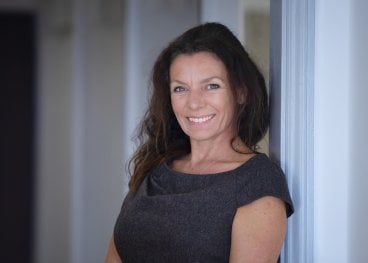
Nicola Coplin
Lecturer
Nic has taught at Falmouth University since 2013. She trained in acting at the Hub Theatre School in...

Dr Adrian Markle
Interim Course Leader, BA(Hons) Creative Writing and BA(Hons) English with Creative Writing
After joining the course team in 2019, Adrian became the Interim Course Leader for BA(hons) Creative...

Clare Howdle
Associate Lecturer: Professional Writing
From writing copy for Discovery Channel as a fresh new graduate, to launching independent surf lifes...

Dr Jo Parsons
Associate Professor of Popular Literature and Culture
Dr Jo Parsons specialises in popular literature and culture from the Victorian period to the present...
What does it mean to be ‘seaworthy’?
That is the question at the heart of Booker-nominated author and Falmouth creative writing lecturer Wyl Menmuir’s latest writing project.
Taking inspiration from his experiences of calmness when sailing, Wyl’s new book Seaworthy will explore how we can all become more ‘seaworthy’ day to day to better navigate the choppy waters of modern life.
What does it mean to be ‘seaworthy’?
That is the question at the heart of Booker-nominated author and Falmouth creative writing lecturer Wyl Menmuir’s latest writing project.
Some members of staff only teach on specific modules, and your course might not feature every staff member who teaches on the course.

Got a question about this course?
If you want to know more about the course structure, our application requirements or what our graduates have gone on to achieve, our friendly course team is here to help.
Chat to AndyCareers
Professional Writing graduates have become novelists, copy and content writers, writers for script and screen, editors and editorial managers, have worked freelance and for companies including branding agencies and streaming services.
Today’s creative industries are thriving and diverse. Discover the Falmouth graduates whose lives have been shaped by their creativity, explore where a degree at Falmouth could take you and learn about our Employability service.

Fees, costs & funding
Tuition fees
£10,950 per year – full-time UK (£250 acceptance fee payable. This is deducted from tuition fees)
£19,950 per year – full-time EU/international (£500-£2,500 acceptance fee payable depending upon your status. This is deducted from tuition fees)
£10,950 per year – full-time UK (£250 acceptance fee payable. This is deducted from tuition fees)
£19,950 per year – full-time EU/international (£500-£2,500 acceptance fee payable depending upon your status. This is deducted from tuition fees)
Tuition fees for September 2028 will be confirmed in summer 2027.
Tuition fees are set annually. The University may therefore raise tuition fees in the second or subsequent years of a course, in line with inflation and/or the maximum permitted by law or UK Government policy. Students will be notified of any changes as soon as possible.
The figures above don't include accommodation and living costs.
Typical course costs
Recurring annual costs
Books: Course books are available from the library but there are some core texts, which, should you wish to buy them, would cost approx. £60-100.
One-off costs for the duration of the course
You do not need any specific software, but a reasonable home or work computer and standard wifi will be required for this course.
If you need to bring equipment or materials with you, these will be outlined in your Welcome Letter.
Adobe Creative Cloud
You may be eligible for a discounted license through Adobe's education pricing, and Falmouth University seeks to provide further discounts when possible. When purchasing your license, please consider that, due to licensing agreements, the renewal cycle may not align with the academic year - you may need to extend your license during the year. For more information please visit Adobe Creative Cloud.
Course equipment and costs: The materials and kit costs for this course are currently under review. Please see the previous year's course cost information below for a rough guideline to support your planning.
Recurring annual costs
Books: Course books are available from the library but there are some core texts, which, should you wish to buy them, would cost approx. £60-100.
One-off costs for the duration of the course
You do not need any specific software, but a reasonable home or work computer and standard wifi will be required for this course.
To engage in the digital learning activity, although you will be able to access IT suites on campus, you will benefit from a laptop to access the platforms and tools we use. You will be provided with free access to the Microsoft Office suite, (including Word, Excel and PowerPoint) while you study at Falmouth.


Similar courses

Writing for Script & Screen MA (Online)
Gain the writing techniques, industry know-how, professional skills and experience of collaborative ...

Comedy Writing MA (Online)
Get the skills, tools and industry insights to push your projects to the top of the commissioning ed...