Marine & Natural History Photography BA(Hons)
Tell powerful conservation stories with your camera.
Course overview
Join a passionate group of environmentalists who believe that images can change the world. On this Marine & Natural History Photography course, you'll become a skilled communicator, exploring important and powerful ecological and conservation issues and bring them to life with your camera.
Combining the rigour of research with the creativity of storytelling, you’ll expose some of the biggest challenges that face people and planet, while celebrating the beauty of nature.
Based in some of the most outstanding landscapes in the UK, you’ll be taught by award-winning and industry-connected photographers, expert filmmakers, explorers and scientists, gaining career-boosting insights and opportunities during your studies.
While developing technical proficiency, we also encourage students to think critically, to ask questions and to challenge patterns of thought and behaviour to make a difference.
Why study this course at Falmouth?
- Cornwall’s diverse marine and land environments will be your studio – you can get from campus to coast or moorland in a matter of minutes
- Rivalling professional studios, our photography facilities and stores are stacked with high-spec digital and analogue equipment and are some of the best of any UK university
- You'll gain insider insights and professional connections through masterclasses, guest speakers, field trips and live briefs
- We encourage adventure – former students have travelled to the Ecuadorian rainforest, Indonesian coral reefs, and Norwegian glaciers on self-funded trips to produce their Major Projects
- You’ll become part of our close-knit, globe-trotting alumni that have picked up huge commissions (BBC, Netflix) and awards for their work
- As part of our supportive creative community, you’ll start building your professional network from day one of your degree
Lead images by James Welch, Rita Hencke, Tom Critchley and Chloe Russell.
Course details
On this course, you'll develop a passionate understanding of earth’s habitats and fragile ecosystems while mastering the technical film and photographic skills to create images that inspire, move and educate audiences.
As well as developing an industry-ready portfolio of original work, you’ll graduate with the professional skills to turn your creative practice into a rewarding career.
Course study options & full details
You can gain your Marine & Natural History Photography BA(Hons) degree in three years or choose to add an Integrated Foundation Year and/or professional placement year. Discover the full course details for each study option, below.

Star icon
| Graduate work in 2025 included Finn Crouch (Blue Planet III), Matt Clarke (Sentient) and Lewis Jefferies (Octopus Invasion) |

Crown icon
| Student Jacob J Watson-Howland’s Streetlit Snowdrop won the British Wildlife Photography Awards 2025 Botanical Britain category |
|
Crown icon
| Course Leader Jo Bradford received the 2025 Solo Satellite Exhibition Prize at the PORTRAITS Hellerau Photography Award |
You'll practice photographic skills alongside research and critical thinking. During this year, you'll explore biodiversity and habitat, as well as the marine environment, and will participate in a number of local field trips to land and marine locations.
Modules
Base Camp
In your first module, you'll be introduced to basic photography skills and camera techniques.
Research and Critical Thinking
Establishing research and critical thinking skills, you’ll learn how to generate ideas, understand the impact of photography and improve your writing.
Biodiversity and Habitat
In this module, you’ll study and photograph the intricate web of life in a local habitat.
Exploring Practice: Land or Underwater
For this module there are two options. You can explore further photographic skills on land or practice them in an underwater environment.
To qualify for the underwater photography option, you must have achieved the PADI Rescue diver qualification (or equivalent ie. BSAC Sport diver) by the start of the academic year.
Communicating Nature
Through lectures and live examples, you’ll learn to communicate scientific ideas through text and photographic sequence.
The Marine Environment
You will explore and photograph the seashore right on our doorstep and learn about important ocean issues.
Alongside studying moving image and still photography, you'll develop your research and critical thinking skills, explore global conservation, and get ready for your own research project. You will also get the opportunity to undertake a short period of work experience.
Modules
Extending Practice: Land or Underwater
Choosing between the Land or Underwater option for this module, you’ll practice advanced techniques through the development of an independent project.
To choose the Underwater option, you must have completed the Exploring Practice: Underwater module in your first year.
Introduction to Filmmaking
Through the process of producing a collaborative short film, you’ll learn how nature and environmental films are made.
Natural History Stories
Examine conservation issues and learn how visual media can have a huge impact.
Photography of the Natural World
In this module, you’ll learn how photographers use images to make a positive difference and produce your own portfolio.
Independent Filmmaking Practice
Working independently, you’ll create and produce your own short film about people and planet.
Work Experience
You will spend a short period of time undertaking work experience in a relevant professional context.
You will be responsible for finding and securing your placement, with support from course lecturers.
You can choose to take an optional professional placement after your second year on a three-year programme, or after your third year if you’re studying for a degree with an Integrated Foundation Year.
You’ll be responsible for finding your own placement, with support from the Employability team.
Choosing this option will enhance your industry experience and skills while studying.
How you’ll study during your professional placement
You’ll spend time working in a professional context, as part of a business or organisation. This can be in one role, or up to three, and must be for a minimum of 24 weeks.
You’ll develop in-demand workplace skills, deepen your insight into industry and grow your network of contacts, all of which could help you get ahead in your career after graduation.
Throughout this year, you’ll develop a portfolio of work that includes critical self-reflection on what has been learned from the experience. You’ll be required to evidence your experiences, the skills you’ve learned and your professional growth.
In the final year of the course, you’ll create your Major Project using still or moving images, or a combination of both. You will support this with an extensive piece of writing about the subject of your project, along with a career plan to help you move into your chosen area of the industry.
Modules
Project Development
You’ll research and begin to develop a major project using still or moving image.
Culture and the Environment
You’ll research and write an extended essay on the subject of your major project.
Major Project
This module marks the culmination of your studies. You’ll complete your Major Project and produce a professional portfolio ready to take into industry.
Professional and Entrepreneurial Practice
With support from lecturers, you’ll develop a clear plan showing how you intend to move into your chosen area of the industry after graduating.
Why study an Integrated Foundation Year route?
If you’re taking on a new subject that you haven’t studied in depth before, have been out of education for a while or have a non-standard educational background then an Integrated Foundation Year degree may be the right choice for you. It is a four-year degree with an Integrated Foundation Year to start, which allows you to explore the primary elements of your subject before progressing on to the remaining three years of the BA(Hons) degree.
What you'll study in your Foundation year
If you choose this pathway, you'll study five core modules in your Foundation year. These are all designed to help you explore the foundational elements of your subject. You'll gain relevant technical skills, learn to experiment and take risks, develop an understanding of professional practice, have opportunities to work across disciplines and collaborate with other students on live project briefs.
Modules
Explore
You'll begin your foundation year by working collaboratively with others to explore themes of the future. You'll take risks, experiment through play and be supported to break through barriers.
Technique
You'll take subject-specific workshops and develop essential technical and practical skills in your area of study. You'll also enhance your analytical and organisational abilities.
Apply
You'll work with your peer group to think beyond discipline by addressing a societal or global issue. You'll then showcase your work to your peers and deliver and accompanying evaluation of your process.
Industry
You'll enhance your creative and practical skills in your subject specialism by responding to typical industry briefs, underpinned by focused research and experiments. You'll also gain industry insights through guest lectures and workshops.
Launch
You'll develop your unique identity in your specialism through the production of a self-initiated body of work. Your final project will be the bridge to your next year, fully supported by evaluative reviews and critical analysis of the work you have created.
After the Foundation year, you progress into Year One of the full three-year degree, equipped with a deeper knowledge of your subject, a clear understanding of your strengths, and develop a practical and technical skillset and the confidence to excel in your chosen subject.
If you apply for and enrol onto a degree with an Integrated Foundation Year, you’ll have the option to switch onto a five-year version including a placement year. That means you’ll complete the first three years of your course before completing a placement in industry in your fourth year and returning to Falmouth for the fifth year of your programme.
The Integrated Foundation Year pathway for this course is new for entry year 2023 and subject to validation.
We regularly review course and module content to ensure our students receive a high-quality and rewarding academic experience. As such, there may be changes made to the curriculum which are not immediately reflected in the content displayed on our website. Optional modules may be updated to maintain the best experience. Any students or applicants affected will be informed of approved changes directly.
Our students and graduates
Our Marine & Natural History Photography BA(Hons) students are immersed in the incredible nature of Cornwall's coast and countryside from day one, and many go on to work as nature and wildlife photographers, documentary camera operators and conservationists after their degree.
Discover more about their student projects, and the successful careers they build after graduating from Falmouth University.

From Falmouth University to filming with Sir David Attenborough for Wild Isles
Sam Stewart has crafted a truly enviable career since graduating from BA(Hons) Marine & Natural History Photography. Here's the latest on his globe-trotting adventures for the likes of Sir David Attenborough, the BBC and Netflix, as well as his tips for budding natural photographers.
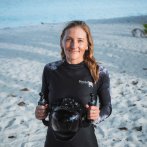
"For anyone who wants to contribute to conservation efforts by raising awareness and driving change through media, this course is a perfect fit."
Jasmine Corbett, graduate

"If you're interested in exploring ways to make a difference in the protection of our natural world, then look further into this course."
Jacob Guy, graduate
Stories from our community
Explore student projects, graduate successes, staff news and industry insights

BAFTA-winning Marine Photography lecturer on working with Sir David Attenborough
30 June 2026
From working on various BBC landmark series such as Planet Earth and Frozen Planet to being part of ...

Editorial Photography student on industry praise and shooting at Wimbledon
23 June 2026
Each spring, the next generation of visual storytellers steps forward, as final-year students studyi...

Master's students exhibit at the Fox Gallery Takeover 2026
17 March 2026
We're delighted to showcase the work of our experimental master's students in the annual Fox Gallery...

'Lepidoptera', 2022, Edd Carr
How Falmouth alumnus Edd Carr is pushing the boundaries of sustainable photography
14 January 2026
Edd's work has featured in campaigns for Vivienne Westwood, Louis Vuitton and Adidas.

Photography lecturer creates short film with sustainable perfume brand Ffern
06 January 2026
‘Sold out for six years in a row’ is the tagline for the organic, seasonal perfume Ffern, a bran...

Image: Anya Wilding
How Falmouth graduate Anya Wilding built a multi-disciplined creative career
10 December 2025
Anya Wilding discusses her career as a freelance artist, photography and maker.

Photo: Hydar Dewachi
Photography alumna selected for New Contemporaries 2025
05 December 2025
BA(Hons) Photography alumna Viviana Almas has been selected for New Contemporaries, a prestigious sh...

Photography alumnus exhibits work at international conservation exhibition in Abu Dhabi
10 October 2025
After being inspired by the “spaciousness and quietness” of the Cornish countryside during his t...

'Hedge, Coxley' by Jesse Alexander, from the series The Nymph and the Shepherd (2017)
Photography Course Leader presents major solo show at Atkinson Gallery
03 September 2025
Showcasing two decades of work, Jesse Alexander presents a body of work that reflects his deep conne...

Online Photography alumnus displays work at popular ceramics studio
26 August 2025
Studying Photography MA(Online) has been described as “one of the best decisions I have made” by...

Photography lecturer showcases work in renowned Royal Academy Summer Exhibition
28 July 2025
The Royal Academy Summer Exhibition has been held every year since 1769, marking it as a longstandin...

From touring with Cat Burns and Maisie Peters to shooting for the BRITS: Meet Photography alumna Em Marcovecchio
30 May 2025
Since graduating in 2020, Em Marcovecchio has gone from photographing Maisie Peters on Ed Sheeran’...

From studying at Falmouth to filmmaking in Bangladesh
02 April 2025
Having studied photography at Falmouth for both his undergraduate degree and his master’s, Mohamma...

© Yas Crawford. 2021. Cellular VIId, from the Series: Cellular Flow
The Royal Photographic Society awards Honorary Fellowships to Falmouth staff and alumni
26 November 2024
Tutor Michelle Sank and Falmouth graduate Yas Crawford have been awarded Honorary Fellowships from T...

Pushing through your creative comfort zone: An interview with Jesse Alexander
29 May 2024
Jesse Alexander is a photographer, writer, editor and educator. With an abundance of experience acro...

Falmouth student relishes adventure at sea with Tall Ships Youth Trust
28 May 2024
Marine & Natural History Photography BA(Hons) student Mim Hughes recently put aside the home comfort...

Commercial Photography BA student lands exciting industry commission
24 May 2024
Maeve Williamson, a second-year Commercial Photography BA student, has landed an exciting commissio...

Online Photography student wins Emerging Artist Award at The Photography & Video Show
24 April 2024
Current Photography MA (Online) student Natalie Persoglio has won the 2024 Emerging Artist Award at ...

Meet science consultant, broadcaster and ‘insect wrangler’ Dr Tim Cockerill
22 April 2024
As well as a career as an ‘insect wrangler’ in TV and film, Tim is a senior lecturer for Falmout...

‘Why We Photograph Animals’: New book from Associate Professor Dr Huw Lewis-Jones
03 April 2024
'Why We Photograph Animals' is a visual overview of the history and future of animal photography.
Explore a full showcase of recent work by our students
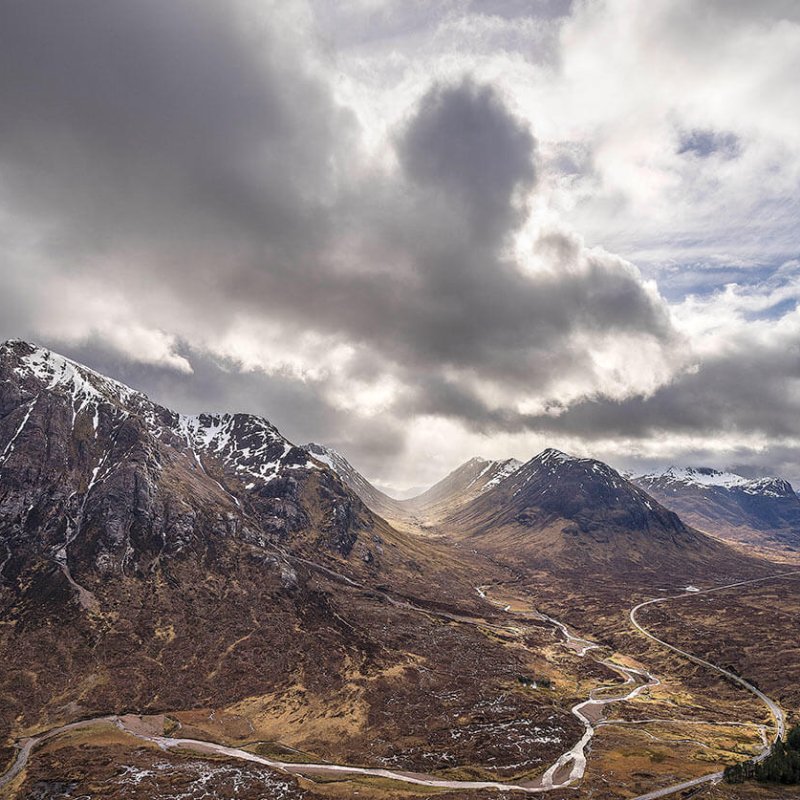
Image by: Nick Jarvis
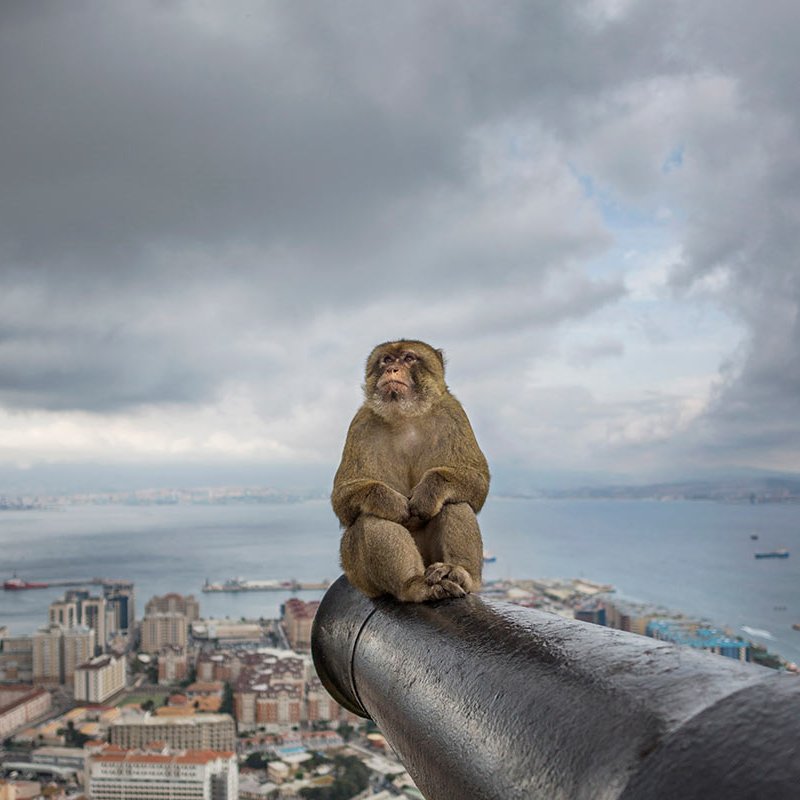
Image by: Arnie Monteith
How you'll learn & be assessed
You’ll learn through field trips, photographic and scientific excursions, technical workshops, lectures, seminar, and tutorials.
The Marine and Natural History Photography course includes an optional underwater programme. In addition to diving in Cornish waters, those undertake this option have the opportunity to practice their skills in the Red Sea.
In the final year of the course students pursue an independent major project. This can use either stills or moving image, or a combination of both, to tell stories from anywhere on the planet.
Students have previously created projects that have documented climate change in Norwegian glaciers, conducted research in the Ecuadorian rainforest, filmed conservation work in the Amazon, and told the story of the indigenous fishing community of the Bajo.
At Falmouth, we use a 'digitally enhanced learning & teaching' approach. Your experience will always be predominantly in-person, including seminars, tutorials and studio teaching, with some, more targeted elements, being online either live (synchronous) or pre-recorded (asynchronous). You can read more here.
100% of your assessment will be coursework.
Assessment methods
- Foundation year assessments are 100% coursework based
- Practice-based modules will be assessed on the presentation of portfolios, including preparatory work.
- Critical studies modules will be assessed on written assignments or presentations.
- In the final year, you’ll be assessed on your major independent project which is supported by an extended piece of contextual writing and a professional portfolio.
- Feedback is given throughout the modules to help you improve your work.

Virtual tour
Discover where you’ll spend your time as a student with our 360° tour, showcasing our facilities, accommodation, town and scenery.

Facilities
- Multiple studios, darkrooms and print suites
- Photography store containing a wide range of professional equipment free to loan.
- Macro and long lenses, macro flash, infrared triggers and time-lapse and underwater cameras
- Specialist underwater cameras for students qualified to dive
- Digital suite with Adobe software
- Photo-microscopy laboratory
- Digital and traditional processing facilities
- Walled garden with fully equipped hide for nature study, photography and filming

Photography Facilities
Housing dark rooms, post-production suites, full professional studios and gallery, our Institute of ...

Library Facilities
Offering extensive collections, our two libraries provide a wealth of digital resources, magazines, ...

Sports Centre
Our Sports Centre, on Penryn Campus, includes a spacious gym with up to 90 of the latest, new statio...
Meet the team
You’ll be guided and supported by practising photographers, scientists and explorers. Their careers span from leading expeditions to working and exhibiting photographs internationally.
Some members of staff only teach on specific modules, and your course might not feature every staff member who teaches on the course.
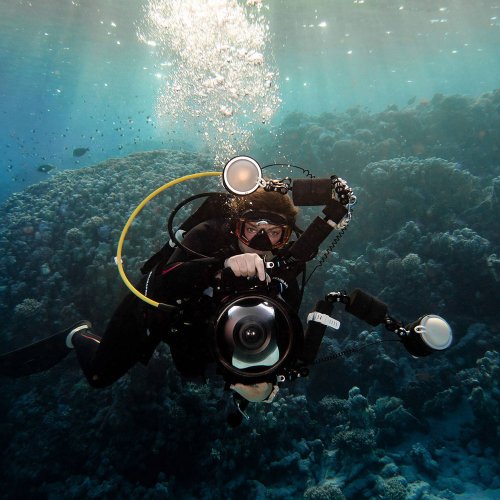
"I’ve had a spectacular couple of years, they have been quite unforgettable in terms of the opportunities I have managed to generate and seize underwater... Attending the British Wildlife Photography Awards and the British Photography Awards shoulder to shoulder with past and present cohorts has been the highlight of my career so far, everyone in that moment is a winner and I could not be more proud of our students.”
- Lecturer Gina Goodman
Read Gina's story
Jo Bradford
Course Leader - BA (Hons) Marine and Natural History Photography
Jo Bradford was born in Hertfordshire, United Kingdom. She lives in the South West of England betwee...

Dr Joanna Henley
Senior Lecturer
Dr Jo Henley is an ocean educator with a PhD in marine science communication, whose research interes...

Guy Martin
Lecturer
Guy Martin is a documentary photographer & lecturer. He has been a member of Panos Pictures sinc...
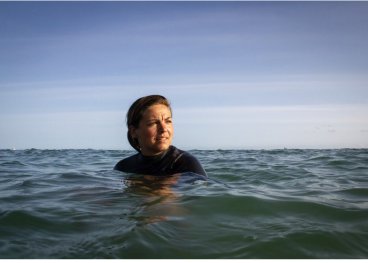
Gina Goodman
Lecturer, Marine & Natural History Photography BA(Hons)
I am a multi award-winning underwater photographer, diving instructor, and enthusiastic lecturer wit...
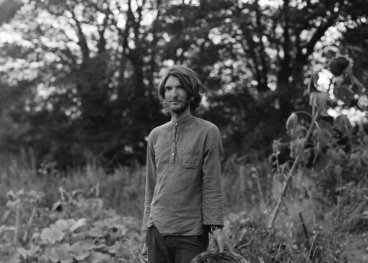
William Arnold
Lecturer, Marine & Natural History Photography BA(Hons)
William Arnold currently teaches on BA Marine & Natural History Photography. He is an experim...
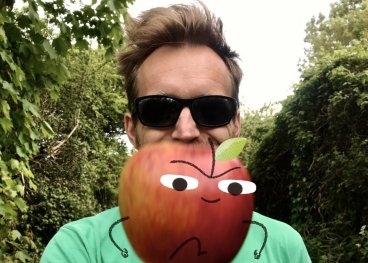
Dr Huw Lewis-Jones
Associate Professor of Environment and Culture
Dr Huw Lewis-Jones is an environmental historian and expedition leader. Huw is a storyteller and ...

Claire Braithwaite
Lecturer BA (Hons) Marine and Natural History Photography
Claire Braithwaite is an artist and photography educator with over 15 years experience teaching acro...

Helen Perkins
Dive Safety Officer
I graduated from Plymouth College of Art and Design in 2000 where I specialised in fine art landscap...
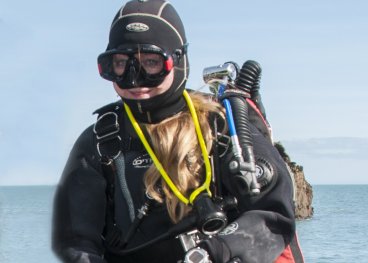
Jane Morgan
Dive Safety Officer and Dive Technician
Jane's career began as an IT trainer at News International in London. However, after discovering a p...

Mark Wallwork
Technician, The Institute of Photography
I studied a BTEC national diploma photography at Wigan and Leigh college in 2002 before enrolli...
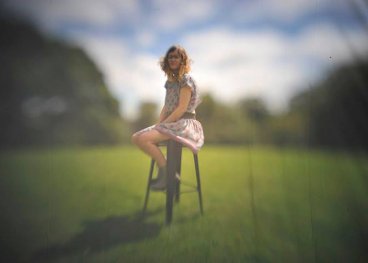
Kate Bell
Photography Technician
I graduated from Manchester Metropolitan in 2007 with a First Degree Hons in BA Photography. During ...

Dr Andy Webster
Associate Lecturer, Marine & Natural History Photography BA(Hons)
Andy Webster (b. 1964, Mansfield, UK) lives and works in Botallack, UK. Andy received a PhD in Ar...

Ted Giffords
Lecturer
Ted Giffords is a BAFTA winning cinematographer, producer, and wildlife filmmaker with more than two...
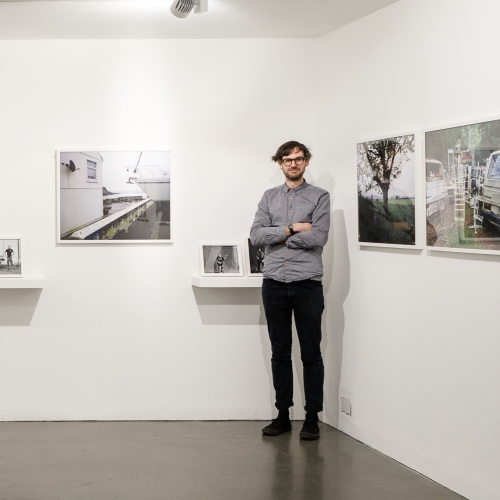
Got a question about this course?
If you want to know more about the course structure, our application requirements or what our graduates have gone on to achieve, our friendly course team is here to help.
Chat to OliCareers
Our Marine & Natural History Photography graduates have worked as:
- Filming for BBC One Show
- Online content for BBC Spring Watch
- International Oil Spill Reaction Team
- PA to Mike Gunton (BBC NHU Creative Director)
- Founder of the Heart of Borneo Project
- Wildlife Cameraman for BBC, Netflix, Nat Geo, Disney
- Researcher BBC NHU
- Tech Assistant at Silverback Films
- Researcher at Nature Picture Library
- Marketing Campaign Executive at National Trust
- Founder of Armstrong Fortescue Expeditions
- Filming Sir David Attenborough
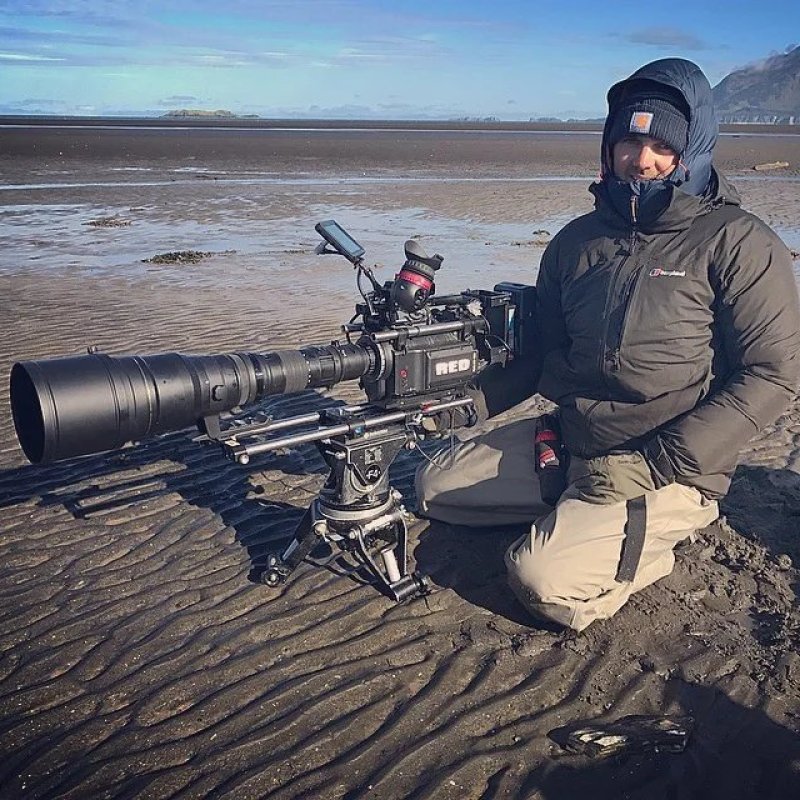
Image credit: Sam Stewart
Today’s creative industries are thriving and diverse. Discover the Falmouth graduates whose lives have been shaped by their creativity, explore where a degree at Falmouth could take you and learn about our Employability service.

A degree in photography opens doors to a broad range of industries such as fashion, advertising, graphic design, web design, architecture, film and publishing.
Similar courses

Photography BA(Hons) (Online)
With a distinct focus on global digital communication, this online photography degree will equip you...

Work by Hannah Mittelstaedt
Commercial Photography BA(Hons)
From creating photographs and films for high-end advertising and marketing campaigns to producing vi...

Photography BA(Hons)
On this dynamic course, you’ll explore the world of contemporary photography and develop a unique ...

Fashion Photography BA(Hons)
Develop your unique artistic voice and springboard into the industry as an innovative fashion photog...

Documentary & Editorial Photography BA(Hons)
On this fast-paced degree, you’ll learn to use the power of photography to communicate with a glob...
